











Aviation Safety

Follow The Yellow-Brick Road

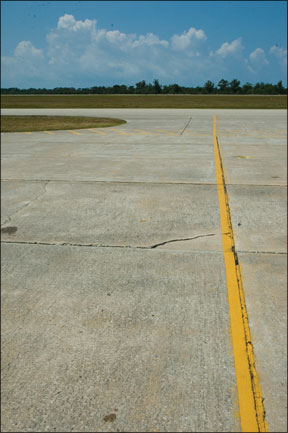
Before we can get to the runway-or the FBO-we have to taxi. Its easy to conceive of the taxi portion of our flight operations to be akin to driving a car, but the only things they have in common is their two-dimensional nature. Instead, taxiing is an operation requiring a skill and experience level similar to landings. Especially since were often closer to other objects than at any other time. How to taxi depends on several variables, including time of day, visibility, aircraft type, the pavement (or lack of it) and its condition, plus surface traffic, among others. But if we focus on a few elements of the taxi operation and pay attention, we should be fine.


Read More »

Botched Bounce

When it comes to botched landings, Ive certainly had my share. In perhaps my worst one, I vividly remember plonking a 182 down on a paved, beachside runway many moons ago. About halfway through a series of six or so times the airplanes nosewheel contacted the runway, I managed to inform my passengers, “This is the worst landing Ive ever made.” Lucky them. Still, we survived the ordeal, and were able to fly the airplane home later that day.

Read More »

Mushroomed

So, there I was, droning along level at 9000 feet. I had just launched from Cheap Fuel Stop, Fla, on a non-stop IFR to Virginia. I was cleared direct Savannah, and was motoring off in that general direction, from southwest of Orlando. Miami Center had turned me over to Orlando Approach. It was a typical Florida spring afternoon, with scattered white puffies in all quadrants, tops to about 7-8000 feet and smooth, clear air above.

Read More »

Going To Extremes

Absolutely excellent article (“Extreme-Altitude Hazards”) by Jim Lockridge in the May issue summarizing issues that confront pilots in the high-altitude environment. I cant recall ever seeing a better or more thorough summary of the topic, and Ive been reading aviation publications for a long time. This subject has been of particular interest to me for over 30 years, after I flew a sailplane to 41,000 feet in a mountain wave west of Boulder, Colo.

Read More »

April 8, 2010, Seattle, Wash., Grumman G-1159 Gulfstream II

The airplane collided with a fuel truck at about 1845 Pacific time while taxiing. Although the two flight crewmembers, three passengers and single flight attendant were not injured, the fuel truck driver sustained minor injuries. The airplanes left wing was structurally damaged. Visual conditions prevailed.

Read More »

April 9, 2010, Santa Maria, Calif., Bell 222U

At about 0124 Pacific time, the helicopter was substantially damaged while preparing for takeoff. Neither the airline transport pilot nor the two flight nurses were injured. Visual night conditions prevailed. One of the tail rotor blades had been strapped to the helicopters tail boom. Following the pilots engine-start operation, as the tail rotor began rotating, the tie-down strap broke.

Read More »

April 11, 2010, Arecibo, Puerto Rico, Beech 95-A55 Baron

The airplane was substantially damaged at 1745 Atlantic time, after impacting the ground during a forced landing. The private pilot/owner and sole passenger were seriously injured. Visual conditions prevailed. The passenger subsequently reported one engine had failed in flight and the pilot elected to shut down the other engine.

Read More »

April 13, 2010, Hong Kong, China, Airbus A330

A Cathay Pacific Airways Airbus A330-342, powered by two Rolls-Royce Trent 777-60 engines, experienced a loss of thrust in both engines during approach. The airplane landed at 230 knots with its two engines producing about 20- and 70-percent power respectively. The pilots apparently had no control over engine power. The airplane was landed safely and no injuries were reported.

Read More »

April 16, 2010, North Las Vegas, Nev., Cozy Mark IV Experimental

At about 1100 Pacific time, the airplane collided with terrain, causing substantial damage. The commercial pilot sustained serious injuries to his back. Visual conditions prevailed. The pilot was performing stall maneuvers to determine if the airplanes canard met specifications. He had tufted the canard to observe its aerodynamic characteristics.

Read More »

April 18, 2010, Zellwood, Fla., Maule M5-235C

The airplane suffered substantial damage when it impacted terrain at about 1915 Eastern time. The commercial pilot was fatally injured. Visual conditions prevailed. After liftoff, smoke was observed trailing from the airplane. It turned right, toward the pilots destination, and climbed to about 60 feet agl. By this time, the smoke stopped.

Read More »
Pilot in aircraft
Sign-up for newsletters & special offers!

Get the latest stories & special offers delivered directly to your inbox.

SUBSCRIBE
