Aviation Safety

IFR On The Fly

Sometimes you just get set up. You got up early, looked out the window at a nearly clear sky and figured youd fly the 80 miles or so to visit a buddy and hang out at his airport instead of yours. You whipped out your tablet for a full briefing and to make sure there were no TFRs. The forecast advertised nothing below 5000 broken and four miles viz all day, so you headed for the airport, did the preflight and motored off over the horizon.
Read More »

Safety On The Ground

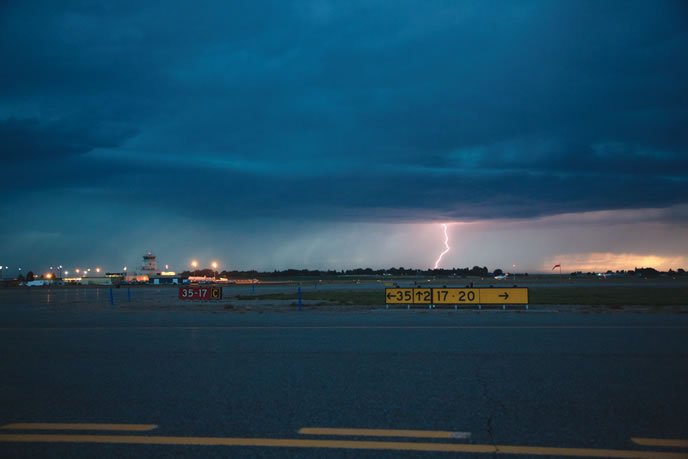
One of the greatest risks lightning poses to aviation involves ground-based operations: people working outdoors are particularly vulnerable. A 2013 report by the American Meteorological Society indicated that lightning safety rules for ground-based aviation are not standardized. Airports set their own standards for ceasing and resuming operations, as do FBOs. Here are some typical guidelines for airport management tied to lightning proximity:

Read More »

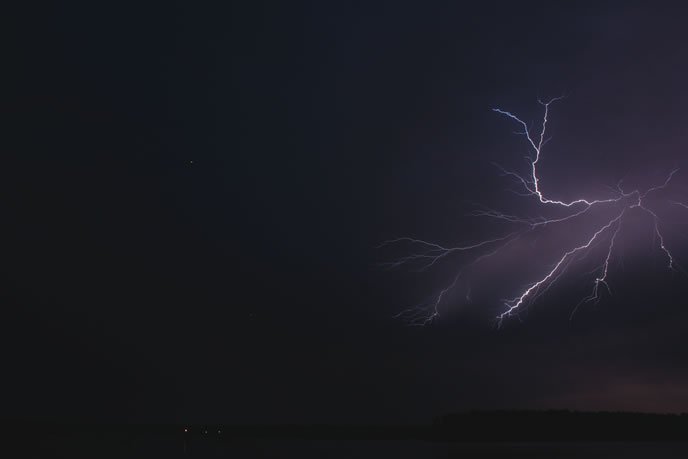
Lightning

Most measurements put lightning in the range of 5000 to 20,000 amps, but 1971s strike to the Apollo 15 launch vehicle was measured at 100,000 amperes.

Read More »

Detection Tools, Then And Now

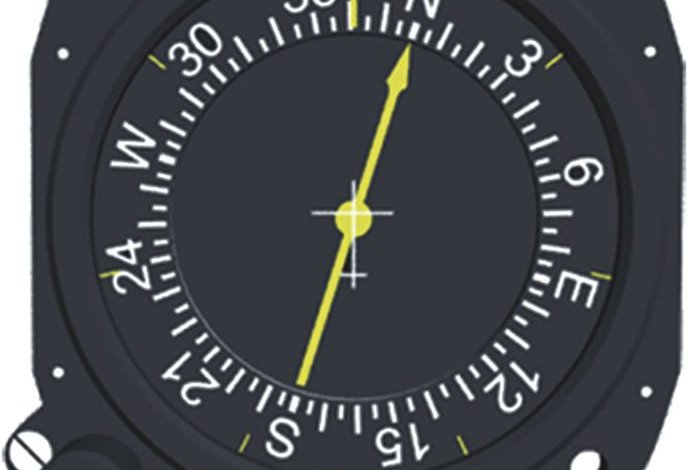
In the beginning, airborne lightning detection was a bug, not a feature. Older radios, especially the automatic direction finder (ADF), tended to fall down when thunderstorms and associated lightning were about. Communications became filled with static and the ADF needle pointed to the lightning, not the desired station. Soon, enterprising pilots figured out the ADF was pointing at a dangerous part of the thunderstorm and used it as an avoidance tool, coarse though it was. Then, weather radar become small and light enough to routinely be fitted to transports, relegating the ADF to pointing at outer markers again.

Read More »

Managing Lightning

Lightning always gets your attention. It should. On average, 51 people die in the U.S. each year from lightning strikes, making it the second-most common cause of storm-related deaths in the country, behind only floods. Hundreds more people are struck by lightning each year in the U.S., resulting in significant injury. Lightning strikes, however, mostly affect people on the ground and generally cause little to no injury to pilots in the air despite NOAA estimates that there are about 25 million lightning strikes in the U.S. each year.

Read More »

See And Be Seen?

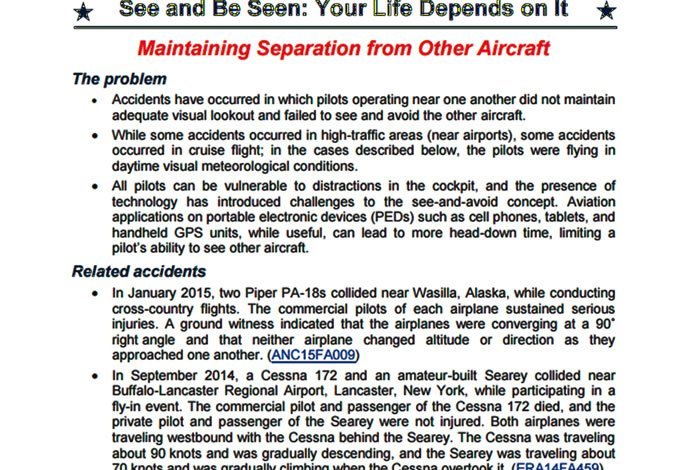
From time to time, someone will pop up with the idea that the time-honored practice of visual traffic separation-often known as see and be seen-is too archaic for modern aircraft. Anything that flies, so the theory goes, should have some kind of automated collision avoidance system which does exist but will solve all potential conflicts between aircraft of all sizes. Someday, perhaps, but until then most of us are stuck using see and be seen.

Read More »

Additional Equipment

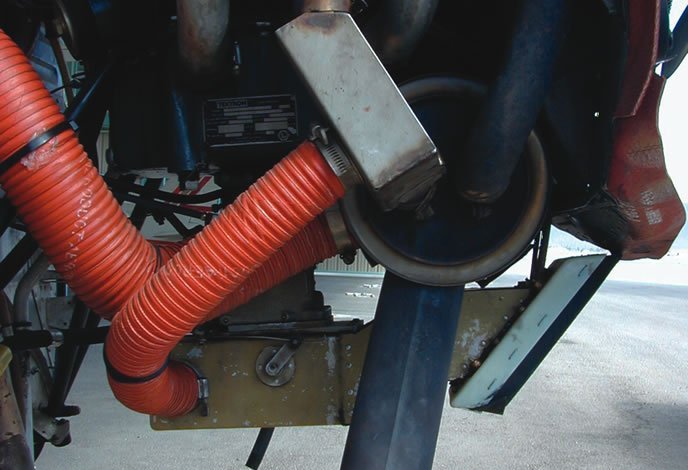
While flames in the cabin pretty much assure a bad day, such events are thankfully very rare. Much more common when an in-flight fire erupts are smoke and fumes in the cabin, and they are potential killers.

Read More »

Preventing In-Flight Fires

To help prevent in-flight fires, always insist on having all maintenance done by certified professionals. During the preflight inspection, ensure that fuel and oil filler caps are secure. Additionally, look for leaks and small puddles of fuel or oil on the ground beneath the engine cowling(s) and fuel tanks/sumps. Checking for fuel and oil leaks on and inside the engine cowling also is strongly recommended.

Read More »

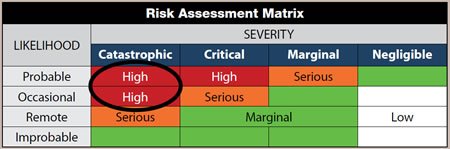
Summary: Risk In The Red

There was a demonstrably high probability this flight would end tragically. If we assess honestly all the risks identified, along with their likelihood (probability) and severity (consequences), its clear that mitigation was needed to reduce these high risk levels.

Read More »
Pilot in aircraft
Sign-up for newsletters & special offers!

Get the latest stories & special offers delivered directly to your inbox.

SUBSCRIBE