Aviation Safety

NTSB Reports: October 2015

At about 1745 Central time, the airplane lost engine power shortly after takeoff. The airplane impacted trees and was substantially damaged. The solo private pilot was seriously injured. Visual conditions prevailed.The FAA reported the pilot was doing touch-and-goes. The engine lost power and the airplane impacted trees and terrain about a mile southeast of the airport. The airplanes empennage separated from the fuselage, and there was heavy damage to the right wing and fuselage.
Read More »

Using Ground Effect

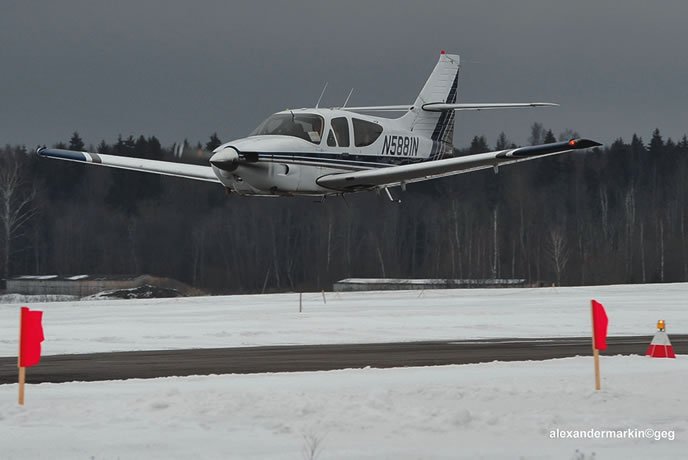
The lack of respect many pilots give to ground effect sort of makes it the Rodney Dangerfield of aerodynamics. Its that momentary sag right after takeoff, and that little bit of float on landing. We know about it, but its often an afterthought: Oh, thats how I screwed up that flare. We all should know ground effect is only encountered…well, close to a flat surface, be it liquid or solid, but sometimes we forget.

Read More »

Crashworthiness

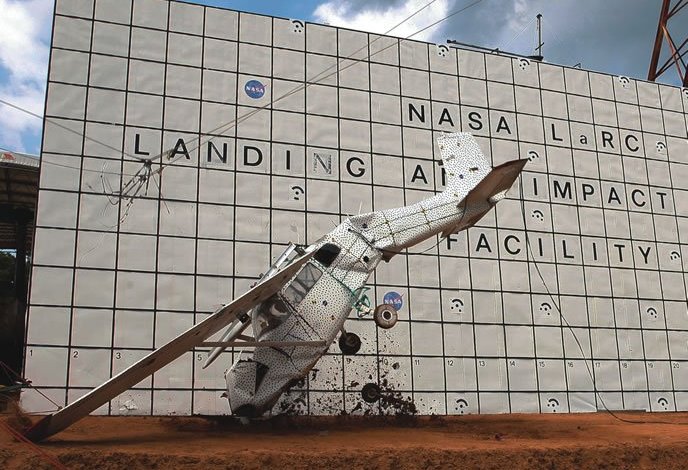
In Septembers issue, we ran a small article about NASAs crash-testing of three Cessna 172s as it researches emergency locator transmitter (ELT) technologies and mountings. A sidebar with that article published still images from an in-cabin video of a test, highlighting the value of shoulder harnesses for occupant protection.

Read More »

Breaking Out

I clearly remember my first experience breaking out on final after an instrument approach. It was late Thanksgiving, on the second leg of a seven-hour cross-country. At the time, I was an IFR noob with very little experience flying in the system, much less in actual IMC. I had been flying above a cloud layer, but with an hour remaining in my flight and the sun setting, the deck had finally sealed off my view of the ground. Fortunately, temperatures were warm, the layer was only a few thousand feet thick and the bases were reported at 1800 feet agl. It seemed like the perfect opportunity to experience breaking out without being anywhere near IFR minimums.

Read More »

Diversion Decisions

It was a stormy day over South Florida, and just as I was near my destination, a late afternoon thundershower decided to camp out over it. The storm wasnt moving, so I diverted to a nearby non-towered airport. Id never visited it before, so I rationalized it: I was multi-tasking.My divert field was VFR, so I cancelled IFR and tuned the CTAF. I was number two for the airport until a bizjet called in on an umpteen-mile final and the guy in front decided to let him go first. Once I finally landed, I discovered a pleasant, well-equipped FBO and settled in to wait for the destinations weather to improve.

Read More »

Cessnas

Cessna Model 172S Skyhawk SP Frayed Control Cable During an annual inspection, an aileron control cable (p/n 0510105-364) was found worn at the pulley cluster (p/n S378-4) in the center overhead ceiling area. Cable must be rotated so access can be gained where cable rests on the pulley at the six o’clock position. The cable […]

Read More »

Bank Angle Vs. G Force

If I see one more graph or chart showing that if Im in a 60-degree bank (Maneuvering Stalls, September 2015), I must be pulling 2G, I think Ill throw up. Presenting this data is an indication of competence in trigonometry but someone is not paying attention to the real world of airplane flying.

Read More »

Asymmetric Loads And Maneuvering Stalls

Almost any time the discussion is about stalling at greater than 1g, it usually involves symmetrical flight, where all portions of the airplanes structure are experiencing the same g-loading. But what if, say, one wing is at 2g and the other is at 3g, as might be the case in a rolling (banking) pull-up from a dive? The rising wing is experiencing greater g loading because its generating more lift. The descending wing, on the other hand, experiences less loading because its not generating as much.

Read More »

Maneuvering Stalls

One of the first things primary students learn in their training is the relationship of airspeed to stalls. Unfortunately, the Primacy Law can take over, leaving some pilots with the unshakable belief stalls only can happen at stalling speed, either clean (VS/VS1) or in the landing configuration (VS0). Thats basically true in 1g flight but not if any additional loading is placed on the wings, as often is the case when were maneuvering. In that situation, stall speed increases, sometimes dramatically.

Read More »
Pilot in aircraft
Sign-up for newsletters & special offers!

Get the latest stories & special offers delivered directly to your inbox.

SUBSCRIBE