Aviation Safety

How It Goes Off The Rails

According to Dismukes and his researchers in a presentation, The Hidden Complexity of Cockpit Operations, conventional wisdom tells us pilots become accustomed to concurrent task demands, interruptions, distractions and disruptions while the truth is pilots routinely manage multiple, competing, concurrent task demands just fine. At least until theres an interruption. The presentation lists four situations when pilots are vulnerable to omissions when performing routine tasks:
Read More »

Think Tactically, Plan Strategically

Pilots routinely make strategic plans for their flights. By expanding that idea a little to imagine some what ifs at various points along the planned flight-weather deterioration, passenger problem, airplane or system malfunction, or other potential hazard-and then decide on alternative plans for each major stage of the flight, the risk of plan-continuation bias and the negative effects of snowballing workload and stress are reduced.

Read More »

Cockpit Multitasking?

The term multitasking originated in the computer industry and refers to a machines ability for perform more than one task simultaneously. Even though modern operating systems with which were all aware provide the illusion of multitasking, true implementation on a computer requires a multiple-core processor. The same could be said for humans.

Read More »

Why Smart Pilots Crash

Ive noticed there is a bias, sometimes spoken aloud, that a pilot who made some sort of a mistake and had an accident was either not terribly bright, lacked basic skills or just plain didnt have the magical right stuff. As an instrument instructor, Ive certainly seen pilots with poor skills or who werent terribly bright or had lousy judgment, and some of them crashed an airplane. Ive also seen some extraordinarily good pilots who were possessed of all the right stuff imaginable, who also made mistakes and crashed.

Read More »

New Certification Standards

The FAA and industry have spent the last three years preparing to replace the existing practical test standards (PTS). As a result, the new airman certification standards (ACS) will go into effect in 2016 for all airman certificates and ratings. This new system can potentially improve the general aviation safety record, but only if flight instructors, designated pilot examiners and FAA inspectors are prepared to teach, test and administer the new system.

Read More »

Requiring Risk Management

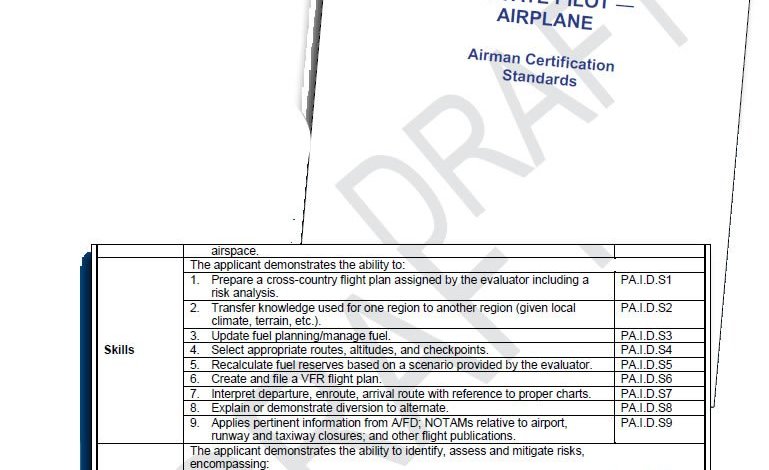
In the new private pilot ACS, Area of Operation 1, Preflight Preparation, Task D, Cross-country Flight Planning (see excerpt at right) lists skill item 3, Recalculate fuel reserves based on a scenario provided by the evaluator. This requirement is largely unchanged from the PTS system. However, under the ACS the applicant must also be prepared to demonstrate knowledge about route planning and the procedure for calculating fuel reserves.

Read More »

Of Rams And Frats

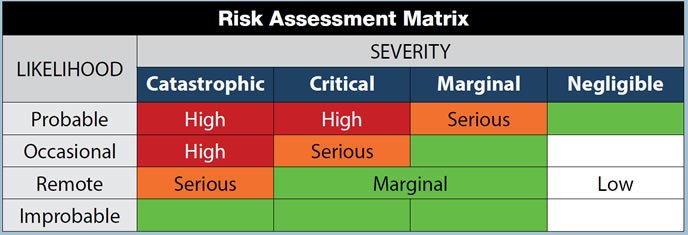
One approach to assessing risk, covered in the FAAs Risk Management Handbook, is to use a risk assessment matrix (RAM) like the one depicted at right. The matrix simplifies part of the risk assessment process, since once likelihood and severity are determined for a given risk its easier to determine when mitigation is required.

Read More »

Teaching PAVE

Flight instructors exist, at a minimum, to impart knowledge gained from experience, preferably their own. In the past, thats how risk management was taught: by telling there I was stories. Since younger, less-experienced instructors dont have the same backgrounds as their senior colleagues, risk management concepts and tools were introduced. Yet some instructors may not fully understand or implement them. Heres a primer on what students need to know.

Read More »

NTSB Reports: September 2015

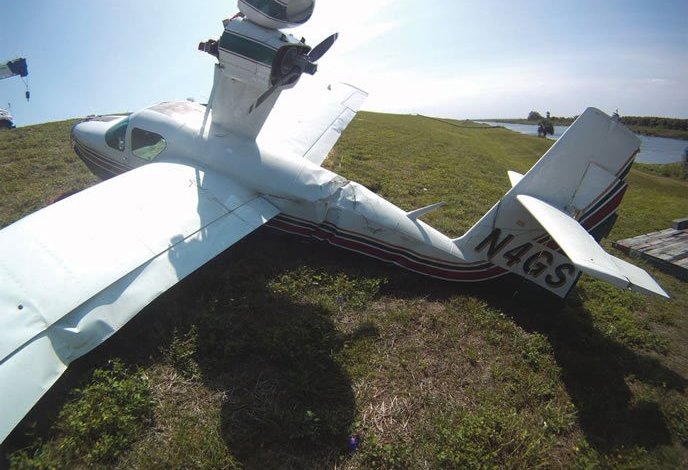
At about 1705 Eastern time, the airplane touched down short of the intended runway. The commercial pilot sustained a minor injury; the pilot-rated passenger was not injured. The airplane was substantially damaged. Visual conditions prevailed.Abeam the runway threshold on downwind, the pilot lowered wing flaps to the first notch and moved the mixture control to full rich but did not turn on carburetor heat. While on final at 500 feet agl and 80 mph, the next thing he knew they were on the ground. He indicated the airplane descended due to a microburst, but there was no rain shower nearby. He also stated the passenger attempted to add full power, but was too late. He stated he did not stall the airplane.

Read More »

Acro Tyro

Just as there are different airplanes optimized for different purposes, pilots fly for different reasons. For some, its just a job, akin to driving a bus. For others, its a means of personal and business transportation. Still more fly for recreation, like sightseeing or aerobatics. Droning along in the stormy clag and hand-flying an ILS to minimums is the epitome of flying skill for some pilots. Others perhaps couldnt fly an ILS if they had to but can fly, say, a loop or an Immelman to perfection, or safely get in and out of a back-country runway. Different strokes for different folks. Fortunate pilots may combine all of these activities, and others, into their flying career.

Read More »
Pilot in aircraft
Sign-up for newsletters & special offers!

Get the latest stories & special offers delivered directly to your inbox.

SUBSCRIBE