Learning Experiences

My First Cross-Country

It was a bright sunny morning in Sarasota, Florida, as I headed out on my first solo cross-country fight. I was in a Cessna 152 I had flown many times; my destination was Ft. Myers, and I had flown there several times with my instructor as well. As I neared Ft. Myers, Florida’s unpredictable summer […]
Read More »

Go By Air

The mission was to help ferry a friend’s airplane from the U.S. East Coast to their new home in Nevada. Their Skyhawk was a tried and true friend, with a number of mods that made the trip less of an ordeal than it might sound. To complete the mission, I had planned a three-day jaunt, […]

Read More »

Geographic Risks

The Pacific Northwest, for the purposes of this article, includes the states of Washington, Oregon, Idaho, and parts of Montana and Wyoming. Thats a huge hunk of territory and comprises more than 250,000 square miles for Washington, Oregon and Idaho alone. The region includes two major mountain ranges-the Cascades and the Northern Rockies-and many smaller ones, as well as several major river basins. There are major cities in the region, such as Seattle, Portland and Boise, but also thousands of square miles of largely empty land and wilderness.

Read More »

Negligent Maintenance

Vintage aircraft often have vintage owners. Familiarity being a source of contempt, long-time owners of aircraft seeing little activity may also see little need to perform preventive maintenance or conduct regular inspections. It was just fine when I parked it; what could possibly have broken while it was sitting in a hangar? can be a familiar refrain to pilots who have owned the same airplane for a significant time. After a while, the pilot/owner is so familiar with the aircraft, he or she can tell somethings wrong just by the slipstream noise.

Read More »

Failure To Communicate

I try to fly our airplane at least once every two weeks because just as its not good for a plane to just sit in a hangar, its also not good when a pilot doesnt practice their skills. Sometimes, even on clear days, I will fly instrument approaches at a nearby Class C airport. I do this for several reasons: to verify that all of the navigational instruments work properly, to practice working with ATC and if things dont work, I am in VFR conditions and am at very little risk.

Read More »

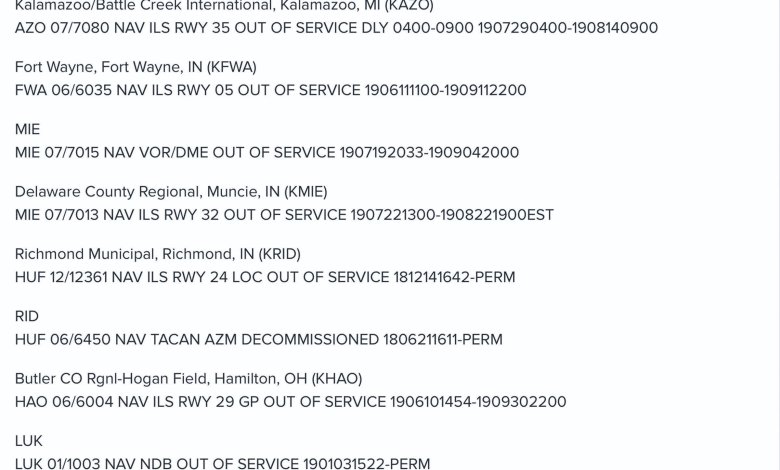
Notam Changes Coming

Notams have had a rocky decade, getting most of the blame in 2010 when the FAA accused U.S. Senator James Inhofe (R-Okla.) of landing on a closed runway in Texas. He maintained he researched applicable Notams as part of his preflight planning, but didnt find one for his destination. The FAA didnt agree and brought an enforcement action against the Senator. In turn, Inhofe developed and in 2012 saw enacted the Pilots Bill of Rights, which among other things mandated an overhaul of the Notam system. Subsequent legislation-2015s Pilots Bill of Rights 2, also by Inhofe-sought to further improve the Notam experience for pilots. Its the legislation that created the BasicMed option to traditional FAA medical certificates.

Read More »

Hold Everything

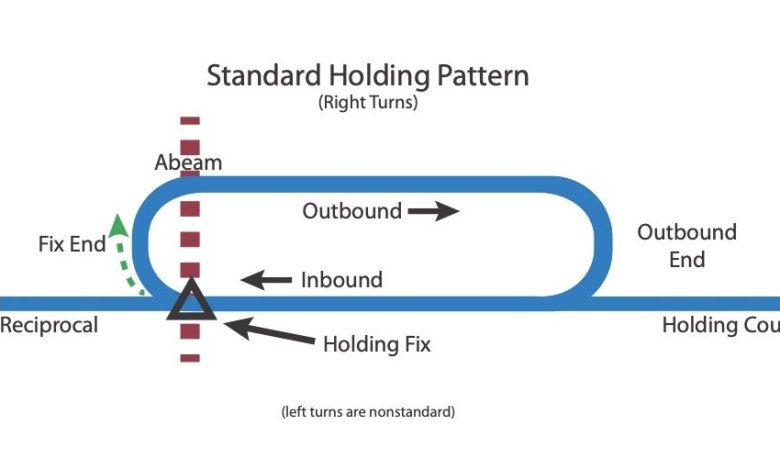
Full disclosure: I suck at holds. I can find the fix and figure out the recommended entry method without too much trouble. And I usually turn the correct direction upon crossing the holding fix. Usually. After that, things start to become loosely held, and it might take me a couple of laps to nail the wind correction angles. Throw in a descent while in the hold and my cockpit gets busy. I guess thats why the FAA a few years ago added holding patterns to the maneuvers required to accomplish an instrument proficiency check. Its all my fault.

Read More »

NTSB Reports

The pilot purchased the airplane the day prior to the accident. He departed the airport and performed maneuvers in the local area, then returned and completed four normal wheel landings. On the fifth landing, at about 30 mph, the tailwheel settled to the runway. When the tailwheel touched down, the pilot stated he felt a rumble “like a machine gun” and the airplane veered to the right. He applied left rudder, and the airplane subsequently veered left off the runway, the right main landing gear collapsed and the right wing spar sustained substantial damage when it impacted terrain. Examination revealed the tailwheel was cocked to the right, perpendicular to the fuselage.

Read More »

Throttled

After the airplane was returned to me, my gut was telling me something was wrong. Some of the work was, in short, a bit sloppy. I took this as a sign to go over everything, including 10 hours of high-speed taxi tests before the first flight, but clearly it wasn’t enough. I recall looking at the throttle and how unprofessional it looked, in particular, “full throttle” on the right side only opened the throttle to 75 percent. The left seat throttle lever opened and closed the carbs fully, so I decided I could live with it.

Read More »

ADS-B Shenanigans?

Thank you for printing in Augusts magazine the short letter I wrote, highlighting an issue I encountered just south of the Albany, N.Y., Class C airspace-a Cub showing an ADS-B altitude of 500 feet below sea level. (By the way, I passed the same Cub today at very close range. This time he wasnt showing up at all on ADS-B). In your response, you asked readers to report other anomalies, so heres one from a week or so ago.

Read More »
Pilot in aircraft
Sign-up for newsletters & special offers!

Get the latest stories & special offers delivered directly to your inbox.

SUBSCRIBE