Learning Experiences

Rock The Prop?

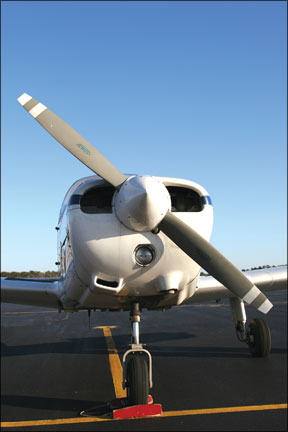
I recently rented a Cherokee for a short flight. When I went up to the rental office, I was handed the book for the plane containing all of the pertinent information particular to it. On the books cover I found a notice stating in large bold print: “After flight please place the propeller in the vertical position.” I understand the reasoning behind that request is to signal fuel truck drivers to fill the tanks of any aircraft with a vertical propeller. One of the very first things I do as a renter after opening the door of an airplane I intend to fly is to make certain all switches are in their proper place. Afterward, I begin the in-cockpit portion of my pre-flight: Engage the battery to ensure all lights and beacons are working.
Read More »

The Correct Fuel

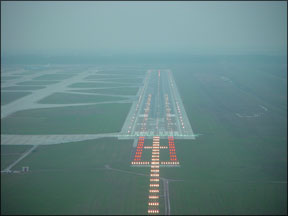
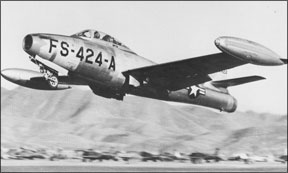
There are many stories about pilots loading jet fuel in a piston-engine aircraft, but using aviation gasoline in a jet engine is less dramatic. I had departed an air base in northern Japan on a cold January day, en route to a base in southern Japan, flying an F-84 fighter jet shortly after the end of the Korean War. During the flight at about 25,000 feet, I noticed the left tip tank was not feeding its main fuel tank. After landing at an emergency base in central Japan, the aircraft was refueled with 100-115 octane aviation gasoline, the only fuel available. While climbing out, I noticed the fuel was burning faster and at a higher engine temperature. The destination had a 100-foot ceiling and one mile visibility. Because of the rapid fuel burn, a diversion was out of the question. I made three ground-controlled radar approaches without seeing the runway because the controller kept losing me in clutter.

Read More »

In Detention

I am a moderately experienced pilot, having amassed approximately 3500 hours over 30 years of flying. This occurrence is one Im not particularly proud of, but is instructive nonetheless. I was flying a PA-32-301T Saratoga to our home in Missoula, Mont. Fortunately I was alone; my wife might have decided right then and there to not fly with me in the future if she had been a passenger on this flight. I was over the valley, north of Bozeman. After reading a recent article in Aviation Safety discussing the pros and cons of the operation, I decided to run all the fuel from the right tank before switching to the left. As the last drops flowed from the right side, the engine coughed. I reached down and slammed the fuel selector to the left tank, hit the fuel pump and the engine died! I went through the emergence procedure by memory.

Read More »

Staying Okay

Im fortunate my wife wanted to learn to fly when I decided it was time for me to learn. We shared (and truly understood) the emotional highs and lows experienced by each other during our three-month journey to the private certificate. July 5 of 2004 was very foggy. Our instructors were bored, so they called us to see if we wanted to do some actual IMC. We jumped at the chance. At this point I was six weeks into my training, Id soloed and done one cross-country, but I didnt know what an approach was. The forecast was 800 overcast for the day, so all was good for an ILS return. I took off first; my wife was 10 minutes behind us with her instructor. After VOR tracking and other exercises, it was time for an approach back into home plate. My instructor “remembered” the localizer frequency, but never identified it. He reviewed the plate as I flew the vectors provided by ATC. Once I was on course, he took the controls.

Read More »

What Are The Odds?

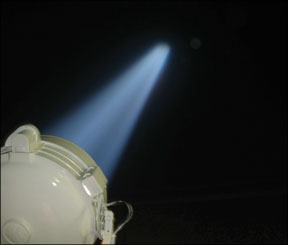
It was a good, late fall night for flying. Dark, but clear and crisp, with light winds. I was flogging a nearly new Skyhawk from the Washington, D.C., area along V222 down to Asheville, N.C., for a weekend in the mountains. The flight was smooth, so far, with the autopilot-less hawk needing only a gentle nudge every now and then to maintain altitude and heading. So far, the needles told me I was keeping it right on the airways centerline. The cabin heater was keeping us warm, the engine was droning along and my passenger was sleeping. We had another hour or so before starting to let down from our cruising altitude of 8000 feet. There was plenty of gas and ATC wasnt busy. The panel lights were turned way down. All was right with the world. As I neared the end of a very long airway leg terminating at Hickory, N.C., I could see the citys lights ahead. I also could see one particular light, waving around-a searchlight. Some used car dealer having a sale, no doubt.

Read More »

The Right Way

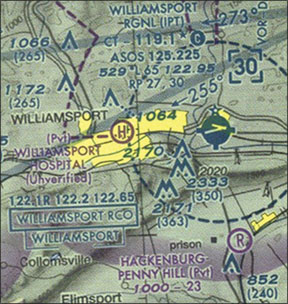
Ive always liked visiting unfamiliar airports; one can learn a lot by watching how other pilots deal with each facilitys different quirks. Its educational. At least the watching is-arriving at an unfamiliar airport can be nerve-racking. Or worse. My favorite unfamiliar airport story involves the Williamsport (Penn.) Regional Airport (IPT). This night flight was long enough ago that the Piper Aircraft Company still had a manufacturing presence on the field. I was a mere private pilot, working on my instrument rating. Although I was night-current, I took some extra precautions for this flight. I had plenty of fuel, for one thing, along with current VFR charts. Since I also was an instrument student, I brought along a set of approach plates, opened to IPTs airport diagram. I had reviewed the runway layout, made sure someone would be there to greet me and my passenger, and was well within the airplanes weight and balance limitations. The flight went smoothly and soon we were letting down through a clear night sky with the citys lights beckoning. Like a moth to the flame.

Read More »

Unintended Consequences

Having begun my pilot training with more than a few gray hairs, I spent almost the same number of hours in my 172, trying to perfect the important-to-me skill of smooth landings. Michigans weather exposed me to continuous crosswinds, along with a generous sprinkling of snow and ice-covered runways along the way. My Midwest landing and takeoff experience was rounded out in the summer by incorporating grass and short-field training from those with grayer (or less) hair. As the years and hours accumulated in the fickle, “occasional” cloud-covered Michigan skies, the next confidence builder was to obtain an instrument rating. Hours spent in a simulator, along with hood time and, eventually, a few flights in actual following the glideslope to the runway added to my confidence that landings could be routine.

Read More »

Ahead Of The Airplane

Im a private pilot with (at the time) 1800 hours over 35 years. I have owned three airplanes, and now fly a Piper Archer. I had decided to reward myself with an instrument rating as a retirement present. I had to work during my ground school as the 60-year-old mind does not function like that of the 20-year-old, and the flying also was a challenge since hand/eye coordination is in about the same shape. Still, I had a fun time learning from my young CFI-I, who had been a good friend for some time. We flew mostly by his schedule, in weather, and even picked up ice during some training flights. It was great experience. When the time came for the long dual cross-country, we planned to fly from our base in Davenport, Iowa, to Iowa City and make a VOR approach to a full stop. We then would pick up a new clearance, fly to Omaha for an NDB approach and pick up my daughter who was stationed at Offutt AFB. Wed fly back to Davenport for an ILS.

Read More »

End Of The Line

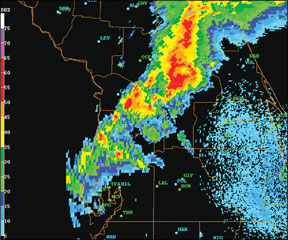
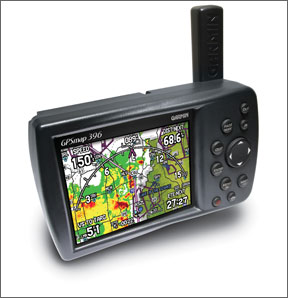
It had been a perfect day, so far. My early-teen kids and I had flown to Tampa, Fla., for a family reunion. Bidding fond farewells, it was time to motor back to the Washington, D.C., area and put the airplane, the kids and me to bed. Of course, it was summertime and, of course, a fast-moving cold front stretched from the Gulf of Mexico well into New York. A pre-launch glance at the FBOs Nexrad display showed a well-defined mass of yellow and red splotches, embedded in green, parallel and west of my course, but moving east. It was definitely time to go. Soon, we had climbed to 11,000 feet and cleared the Florida peninsula. Cruising a couple of miles offshore, we were in the clear, but eyed the dark clouds closing in from the west with trepidation.

Read More »

Our First IFR Trip

My husband and I were excited about our first cross-county trip from Florida to Maryland to visit family, with a few stops along the way. We were both fairly new pilots, my husband with less than two years experience and me with three, plus a recent IFR rating. I told my husband that although I am IFR rated, Im not comfortable in actual IMC for very long and I needed to build my confidence by going IFR in VFR conditions with intermittent IMC. Since he was not instrument-rated at the time, he agreed to my plan.

Read More »
Pilot in aircraft
Sign-up for newsletters & special offers!

Get the latest stories & special offers delivered directly to your inbox.

SUBSCRIBE