Learning Experiences

Checklist Discipline

The Aeronca Champs checklist was simple, befitting most small aircraft of the late 50s: “CIGAR” stood for Controls, Instruments, Gas, Attitude, Run-up and, sometimes, Runway. Time and experience brought along more-complicated airplanes and checklists, but it was still hard to mess up by using CIGAR. Following USAF pilot training, I became an instructor pilot in the T-37. Its checklist was a bit more complicated. When students asked about checklist sequencing, there was the standard answer: Checklist discipline. Not too much to question, but not too much to mess up, either.
Read More »

Hearing Is Believing

Although many learning experiences come from our own cockpits, we also can learn from listening to the pros. The howling snowstorm outside my house had forced me to cancel my plans to practice local instrument approaches. I still wanted to do something aviation-related, and this day that meant listening to the nearby approach control frequency.

Read More »

Bird Strike!

Even after many years safely operating general aviation aircraft, their ability to simultaneously frighten and educate never ceases to amaze me. One example came on an otherwise benign summer weekend afternoon. I had checked out one of the military flying clubs Piper Arrow IIs for a local flight. I had a trip coming up in another couple of weeks and wanted to make sure everything I remembered about the airplane was, in fact, correct.

Read More »

Just Out Of Annual

It was a beautiful October day. Clear sky, unlimited visibility, calm wind, smooth ride. My trusty 1960 Cessna 210 was humming along at 5500 feet, taking my pilot wife and me back home to Lebanon, Mo. (LBO). Suddenly, there was the deafening sound of silence from the front. The engine decided to stop without so much as a cough, sputter or warning. Funny how busy one can get in a few short seconds in a now-quiet cockpit. Boost pump on high, mixture full rich, switch tanks as my wife reached for the emergency checklist. We were about 20 miles from our destination. Maybe I could get the engine to start again, even for just a few more miles. My wife remained calm, although I could see the concern as she scanned the beautiful Ozarks hills and trees for an off-field landing spot.

Read More »

Sumpin’s Up

Its dusk as I taxi onto the runway. The winds were calm and weather unremarkable for this nice summer evening. As the takeoff roll begins, so do my checks. Gauges green. Ambient sounds were normal but just a little slower acceleration than usual-possibly due to the higher density altitude. Slight back pressure and she lifts off normally. Climbing through 300 feet agl with a safe airspeed, I retract the flaps. I keep the gear down since I havent reached a safe altitude, as my instructor taught me.

Read More »

Three Green?

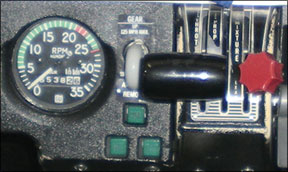
The weather wasnt too bad for my Thanksgiving holiday trip south to see the folks, but the headwinds were fierce. So I decided the smart thing to do would be stopping at North Carolinas Charlotte/Douglas International Airport (CLT) for fuel, a stretch of the legs and another dose of weather information before pushing on. The flying clubs Hershey-bar-wing Piper Arrow I rented for the trip had seen better days, but nothing was amiss. Until, that is, I put down the landing gear as I neared the runway at CLT. I heard the system operating, felt the gear thunk into place and noticed the increased drag, but didnt have any of the three green lights I expected.

Read More »

Getting Down

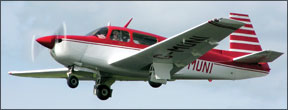
After some 3000 hours of flight time-not including military flight experience-gathered over a 50-year period, I recently had occasion to fly into the Portland (Ore.) International Airport (PDX) several times over a short time span. The Mooney 201 I bought new in 1989 was my chosen aircraft. At the time, PDX was undergoing major runway renovations, with Runways 10L/28R closed for all operations and 21 closed to landings. On an earlier flight, I was directed onto the right downwind for Runway 3 and to start my descent from 2000 feet after crossing over the tower. Even with idle power, full flaps and gear down, it takes a little while to slow down a Mooney and descend. On that flight, I extended my downwind past the end of the runway before turning base. All worked well.

Read More »

Get-There-Itis

Most of us have likely experienced the flying version of get-there-itis. My return home from AirVenture this year had all the contributing ingredients at play. After hustling around the grounds to catch all the sights on a hot, muggy day, and then dodging lightning and rain during the ultimately aborted afternoon airshow, I pre-flighted for my long flight home to Bridgeport, Conn. (BDR), at 1830 local. I filed for 13,000 feet to catch favorable tailwinds at altitude, set up the oxygen and settled in for an uneventful four-hour flight in my Beech Travelair. Nearing my destination, NY Tracon did their part to keep me occupied by changing my direct routing to one of the circuitous STARs for BDR. The amendment required me to program the six waypoints in my older GPS. And of course, just after Id completed this task, ATC changed its mind again and assigned the other procedure.

Read More »

Blinding Ice

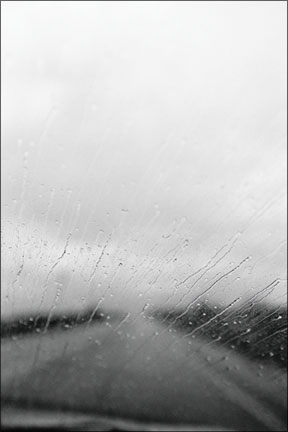
It was late March, and an early spring blizzard was lashing the Rockies before heading toward the upper Midwest to wreak further havoc. Warm moist air to the west of the mountains was being pushed upgrade by the prevailing winds; as the air expanded, it cooled, resulting in a major dump of powder on the appreciative ski areas, but rather nasty weather for travelers. Splat! The windshield in front of me went from dry to a solid block of ice in less than a second-and I couldnt see a thing. One moment I was cruising along, admiring the Rockies just west of the Eagle County (Colo.) Airport, and the next I was totally blind. I had been monitoring the ceiling-progressively lowering as I climbed along the west side of the mountains, and the OAT, which had been dropping and now read 28 deg. F. A sudden gout of water had hit the windshield, and the already super-cooled liquid had frozen into an opaquely solid mass as soon as it hit. Indeed, the change from liquid to solid was so instantaneous the ripples caused by the impact were preserved. As a relatively new pilot, I fly for fun, in VFR weather and remain in awe of those who would stray into the path of ice-known or even just possible.

Read More »

Green Light At Bitburg

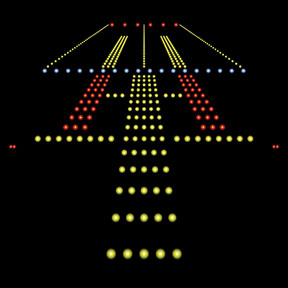
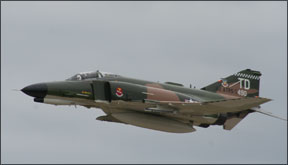
A thick, black fog silenced every sound. It was the right weather for night air defense alert duty at then-West Germanys Bitburg Air Base in the 1970s. The weather was so bad I guessed the nearest alternate was somewhere in Africa. So, it was time to settle down for a night of popcorn and movies. After all, who in the Ramstein command post would be crazy enough to approve a scramble into this kind of weather? I dont remember the scramble until I woke up to a 25-degree deck angle as my F-4E Phantom passed through 20,000 feet. Who was the idiot who did this to us? My focus was on the instruments and the intercept, but my thoughts were on fuel, alternates and getting home that night. There was just enough fuel for an approach at Bitburg and weather divert to Solingen. Bitburg was variable, reporting mile or less in the thickest, blackest fog I can remember. The GCA controller was steady, calm and professional-and it helped. We all were going to earn our beer money that night.

Read More »
Pilot in aircraft
Sign-up for newsletters & special offers!

Get the latest stories & special offers delivered directly to your inbox.

SUBSCRIBE