Learning Experiences

Learning Experiences: 01/06

Its Not A River In Egypt
Having completed an IFR ground school and earning a multi-engine rating a few months before, I was preparing for a career change to professional pilot. A classmate had asked me to fly his wife from Lees Summit, Mo., to Norman, Okla., to pick up their two children, a 12-hour round-trip drive. I chose the aircraft I obtained my multi-engine rating in, a Model 55 Baron/Colemill Conversion, and asked a close friend/instructor to accompany us. My now ex-girlfriend came along.

The first indicator of a problem was when we had to use a ground cart to get the engines started. In the run-up, every system behaved as it should. After an uneventful flight and ab…

Read More »

Learning Experiences: 12/05

While most light-airplane icing encounters are safely and successfully resolved, theres no such thing as a little ice on them. After years of thinking a trace here or there-or even a quarter-inch or so-was no big deal, I recently discovered one reason for known-icing approvals.

It was a crisp, brisk fall day over Arizona; I was flying my Bonanza east from California and planned to stop in Winslow, Ariz., for fuel, a snack and to stretch my legs. Somewhere between Prescott and Winslow, on an IFR flight plan, I encountered some benign-looking clouds at my altitude. Although the outside air temperature was below freezing, I thought nothing of punching into these white, puffy clouds. I ha…

Read More »

Learning Experiences: 11/05

Carb Temp
It was October 2004. I was flying a mid-70s vintage Cessna 172 from Paris, Texas, to Houston. I had received my Private pilot ticket about three months prior. There was not a cloud in the sky, winds were out of the south at about 12 knots; temperature on the ground was about 73 F. It was an absolutely beautiful day and perfect for flying; the kind of day that those of us who have the deep passion for flying clamor for. Just enjoying the scenery and the calm peacefulness that this sport imparts.

Though I had been officially checked out in the Cessna, all of my training and most of my 90+ hours (at that point) had been in a Piper Warrior. The Warrior, as is the case…

Read More »

Towered Near-Miss

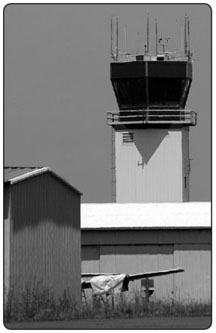
[IMGCAP(1)]After an IFR flight of nearly four hours from our home base on the East Coast, my wife and I approached our destination. Under the overcast, where the visibility was excellent, we canceled IFR and soon reported the field in sight. We were advised to enter a left downwind for the east-west runway; I was flying our Mooney while my wife was handling the navigation and communication duties.

The tower was busy with three inbounds from the southeast, at least two singles and a twin in the pattern, plus us, inbound from the east.

Soon, we were advised to enter the left downwind for the northeast/southwest runway and the tower sequenced us to follow the second single, now on left b…

Read More »

Winged Low Rider: Learning Experiences 09/05

I was flying a Piper Arrow out of the Tamiami airport, south of Miami, for some touch-and-go landings on a windy, crystal clear morning after a cold front had blown through. I taxied out, did the run-up and took off, making right traffic. Even with a right quartering crosswind, I managed to complete three circuits uneventfully.

After my fourth landing, I noticed the view out the windshield looked different: The nose appeared lower than normal, about eight inches or more. Not good. Fully engaged in the touch-and-gos go portion, I was too fast to stop in the runway remaining. I also worried that applying maximum braking and trying to stop would cause a prop strike. I really had no idea…

Read More »

On Guard: Learning Experiences 08/05

Pilots should routinely monitor the VHF emergency frequency 121.5, especially when they are not in contact with ATC by operating IFR or using VFR flight following. The circumstances surrounding the recent airspace incursion around the Washington DC TFR would have been different for many people as well as for the pilots had they been monitoring 121.5 MHz. As an active member of the military aviation community, it is my experience in a number of these events, ones that do not make the press, this simple expedient has not been followed. Pilots are reminded that Notam FDC 4/4386, in effect since September 2001, specifies that all aircraft operating in United States national airspace, if capabl…

Read More »

For Want Of A Nail: Learning Experiences 07/05

We have all heard the story of how a horseshoe nail was lost, leading to the loss of the horse and its rider, and the message he carried into battle. Because the message was never received, the battle and the war was lost. Its as apocryphal today as when it was written. Examples include the shuttle Challenger tragedy-caused by a defective O-ring-and the Eastern Airlines Lockheed L-1011 that crashed in the Florida Everglades because someone nudged the autopilot switch off while working on a simple landing-gear problem but didnt notice it.

The point is that accident chains usually start from very simple events, pick up steam from other links in the chain and then snowball out of contro…

Read More »

Opposing Traffic: Learning Experiences 06/05

[IMGCAP(1)]After a great day at the Block Island State Airport (BID) my wife and I departed IFR back to the Brookhaven Airport (HWV), a non-towered airport on Long Island. A marine layer began to move in, not uncommon in this area in August. After a brief climb through 200-foot ceilings, we broke out into bright sunshine and were soon cruising at 6000 feet.

I was concerned that the same marine layer was moving in on the entire south shore of Long Island. I tuned in the weather at HWV and within 15 minutes of departing BID the ceilings went from 1500 scattered to 1100 broken. Over the Hamptons, the controller asked which approach I would like into HWV. With the latest weather reporting ce…

Read More »

Night Ice: Learning Experiences 05/05

It was Thanksgiving week, a few years ago. The plan was to fly our Piper Arrow from Bowling Green, Ky., (BWG) to Atlantas Dekalb-Peachtree (PDK) to pick up a friend, then to Gatlinburg, Tenn., (GKT) for two others, and return home. It seemed like a neat little plan, easily done using a well-mantained, trusted and reliable airplane.

The forecast was for light rain all day, with temperatures dropping to 33 degrees F after overnight; ceilings around 800 feet. My plan was to be back home by 1800 local, well before the cold front was supposed to move in. I filed for PDK at 7000 feet and took off at 1300 local in light rain. I was on the gauges the whole way, with a 15-knot headwind.

Checki…

Read More »

Learning Experiences: 04/05

Ice In The Desert
Heading to Mesa, Ariz., from Dallas, Texas, we landed my twin Travelair for fuel in El Paso. It was a cool February morning, at about 0200. Weather included scattered clouds with a 30-knot headwind. Talking to a cargo pilot who had just flown the same route in reverse, I learned the winds were strong but there was no ice or other problems.

Off we went. It was a very dark night, with a high cloud layer blocking any moonlight. About 45 minutes after takeoff, I noticed what appeared to be a storm cell ahead of us. I made a slight course change but minutes later showers started to hit the plane.

The headwinds increased to over 50 knots and it was raining hea…

Read More »
Pilot in aircraft
Sign-up for newsletters & special offers!

Get the latest stories & special offers delivered directly to your inbox.

SUBSCRIBE