











It had been a perfect day, so far. My early-teen kids and I had flown to Tampa, Fla., for a family reunion. Bidding fond farewells, it was time to motor back to the Washington, D.C., area and put the airplane, the kids and me to bed. 288
End Of The Line
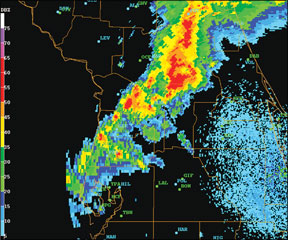
It had been a perfect day, so far. My early-teen kids and I had flown to Tampa, Fla., for a family reunion. Bidding fond farewells, it was time to motor back to the Washington, D.C., area and put the airplane, the kids and me to bed. Of course, it was summertime and, of course, a fast-moving cold front stretched from the Gulf of Mexico well into New York. A pre-launch glance at the FBOs Nexrad display showed a well-defined mass of yellow and red splotches, embedded in green, parallel and west of my course, but moving east. It was definitely time to go. Soon, we had climbed to 11,000 feet and cleared the Florida peninsula. Cruising a couple of miles offshore, we were in the clear, but eyed the dark clouds closing in from the west with trepidation.

Key Takeaways:
- While flying with his young children, the pilot encountered a severe, fast-moving thunderstorm line stretching across their intended flight path from Florida to D.C.
- Despite limited onboard weather equipment and ATC's inability to provide a safe passage through, the pilot faced the critical decision of how to navigate the impending weather.
- Prioritizing safety, the pilot chose to divert and land at Wilmington, NC, arriving just before the storm hit, and stayed overnight to wait for clear weather.
- The experience reinforced the crucial lesson of planning ahead, not being in a hurry, and being willing to wait out severe weather when confronting summer thunderstorms.
Key takeaways sponsored by Aviator Pro | Start Your Training ->
See a mistake? Contact us.

