Features

Practicing For Emergencies (Without Going Broke)

One of the sad realities of general aviation becomes apparent upon reading a score or so NTSB accident reports: While true in-flight emergencies are rare, pilots who do not fly for a living have a less-than-stellar record of success when they stare one in the face. It is a blunt corollary to the simple fact that anything a human doesnt practice regularly doesnt get done well the next time its needed. Thats why pilots who take recurrent training every six months tend to have far, far fewer accidents than pilots who only grudgingly take a flight review every 24. No matter how we try to sweep the mess under the rug, skills atrophy fast and anything we dont practice regularly we, sadly, screw up. Those who study human behavior have long been telling us this stuff, they just use bigger words. We know it. We know perfectly well that if we are faced with an emergency when we go flying tomorrow that how we handle it has already been determined. If weve thought about that particular emergency (or one very similar) and how we will deal with it, the odds of handling it correctly are astronomically higher than if we havent given it any thought. If weve actually rehearsed dealing with the emergency in the last six months, the odds that well deal with it correctly go way, way up. Being human, we do well what we do often. We do landings all the time. We dont do fires in flight nearly as frequently.
Read More »

GPS Errors

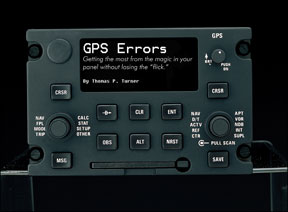
Theres no question ours is an era of great advances in safety and position awareness. Its the rare IFR airplane that isnt equipped with at least a portable, moving-map GPS; theres not an IFR-certified airplane in production that doesnt include a GPS-driven “glass cockpit” as at least an option-one thats almost always added. The capability of GPS comes with great complexity. There are very different operating interfaces with units from competing manufacturers. Its a little surprising, then, that pilots seem to make the same errors and omissions pretty much regardless of the unit involved. What are these common GPS errors? What can we do to avoid them? David Zitt is the Flight School Manager of Sportys Academy, the flight instruction arm of Sportys Pilot Shop in Batavia, Ohio. He and his instructor staff work exclusively in GPS-equipped airplanes, some with full “glass cockpit” panels but most conventional round-gauge airplanes meeting the definition of Technologically Advanced Aircraft (TAA) through the installation of moving-map GPS. Zitt notes that “each [GPS] unit has its own pitfalls,” but finds common pilot mistakes regardless of the type of GPS installed. Prime among them is “instrument fixation” during the transition to TAA flight, a focused stare and excessive concentration on which button to push when the pilot is not completely familiar with the GPS used.

Read More »

Icing And Tailplane Stalls

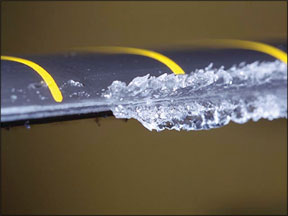
Even as the wreckage of Colgan Flight 3407 cooled in a Buffalo, N.Y., neighborhood in mid-February, the debate over flying turboprops into known icing was reigniting. Whether icing was the cause isnt known, and actually isnt relevant to the fact that this accident reminded everyone in the industry of an unresolved safety question: Are turboprops equipped with pneumatic boot de-icing systems really capable of handling all the icing they might be expected to encounter? And if they arent, how can pilots be trained to safely recover an airplane thats been iced up beyond the equipments capability or, worse, survive an icing encounter in an airplane with no ice protection? Another early question arising from this tragedy involves reports of what might be considered inappropriate control inputs as the Bombardier Q400 departed controlled flight. According to the NTSB, information retrieved from the flight data recorder indicates the stall-warning stick shaker and stick pusher activated soon after landing gear deployment and wing flap extension to 15 degrees down. At that time, the aircraft then pitched up 31 degrees, far in excess of a normal maneuver in a transport-category airplane. While its entirely possible the pitch up involved the autopilots automatic and simultaneous disengagement, its also possible the maneuver was commanded from the flight deck. Why would the crew pitch up so severely? One explanation involves the crews presumption the tail had stalled. In such an event, the appropriate response is to pitch up, not down as would be the case if the wing entered a stall. Generally, the only way a tailplane is going to stall in normal operations is if its leading edge somehow becomes contaminated, as would be the case if ice accumulated.

Read More »

Putting It Down

One of the more unpleasant realities of personally flown aircraft is that ones exposure to the risk of coming to a stop in a fashion other than intended is higher than we care to admit. While many of us fly our entire careers without so much as a scratched airplane or an engine hiccup, others are not so fortunate. Those of us with an IQ above room temperature accept there is a true risk of being involved in a crash. Once the premise is accepted, the question becomes what to do about it. One answer is to think about it beforehand and act accordingly, especially when it comes to considering occupant protection, developing a personal checklist and preparing for when something ugly happens. Years of research and feedback from the school of hard knocks has shown time and time again that the single most important thing we can do to protect ourselves in the event of a quick stop is to wear all of the available restraining systems in whatever seat we occupy. There has been full-scale human impact research going on since World War II, and it is absolutely consistent in its results: An unrestrained occupant has a lousy chance of surviving any kind of crash impact. Even low-speed collisions generate G loads in the double digits, and no human being in the world is strong enough to “brace” for those loads (nor prescient enough to predict their precise direction even if it were possible). A seatbelt is the first line of defense; it keeps the occupant more or less in the seat and stops a major killer in accidents-that of being thrown out of the vehicle. (And, as comedian Bill Cosby once noted, it helps the ambulance driver find you.) While folklore is full of anecdotes about people who survived because they were “thrown clear,” inquiry into those stories has shown that virtually every one is a myth. A human isnt designed to hit the ground, a tree or wall going 30 miles per hour, much less whistling along at 70. The degree of pulverization of bones, soft tissue and internal organs when that occurs is the stuff of which pathology textbooks is made.

Read More »

Ramp Safety

Every pilot, to one degree or another, spends time contemplating risk management. While aviation is known to be potentially risky, most aviators adopt the strategy of actively managing risk as a means of minimizing the exposure to danger. Each and every flight involves a series of choices and judgments, either conscious or not, that ideally insures the safe completion of the flight. Outside the cockpit, we spend a significant portion of time reading accident reports, attending safety seminars or even going through the new FARs. Virtually every aspect of flight safety is scrutinized. I say “virtually” since there is one area which is generally given very little consideration. That is what happens on the ramp. How safe (or dangerous) is it to be in the vicinity of an airport ramp? It is exceedingly difficult to derive a useful statistical comparison (like fatalities per 100,000 flight hours) since there is a broad spectrum in ramp activities; from a sleepy grass strip where hand-propping might be the greatest danger, to a large metropolitan airport where the intensity of activity can appear to create a blur. The risks and frequency of events are likely to be completely different across the spectrum of airports. However, knowing what has happened to other pilots and operators might make you pause to think next time you walk across the apron while talking on your cellphone or glancing at the likely departure procedure. Instead, we need to recognize the hazards of being in an area where bad things can and do happen, and then look at the ramp in different way.

Read More »

Preflighting Your Prop

Unless youre among the small number of personal aircraft owners lucky enough to own a jet, your airplane has at least one propeller. It might be a fixed-pitch, metal or wooden affair, a multi-composite blade reversible spun by a turbine engine or one of the more ubiquitous constant-speed offerings from Hartzell or McCauley. And you might have more than one of them. No matter: Even a basic fixed-pitch model is a fairly expensive component, spinning away for hours on end, its tips approaching-in some cases exceeding-the speed of sound. If you have a constant-speed or full-feathering version, you also have a small collection of very expensive and specialized parts regularly subjected to massive forces. Contrast all that with what many pilots seem to think: A prop is a poorly designed handle with which to help move the airplane back in its hangar. In fact, according to the pros, treating your propeller like the critical component it is and lending it a little TLC every now and then can go a long way toward preventing costly maintenance. Or worse. The average propellers main enemy? Its not the wet-behind-the-ears private pilot who insists on using it to muscle the airplane in and out of the hangar. Its not even the guy who taxis over runway lights and into potholes while talking on a cell phone-more about him in a moment. Instead, prop shop managers and manufacturers reps tell us its aviations oldest bugaboo: corrosion. Look at just about any metal prop out on the tiedown line. Youll probably find its leading edge is rough, with small pits and-if it hasnt been painted recently-some whitish discoloration. Thats corrosion, and its slowly eating away at the prop.

Read More »

Gusty Go Around

One of the first things student pilots learn-right about the time theyre learning to land-is how to go around. If theyre like me, they got a lot of practice adding full power and reconfiguring the airplane in those first few frantic hours. Early in my flying career, I learned the airplanes configuration mattered. I was flying a Cessna 150, with wing flaps that were fully deployed at 40 degrees. Some other Cessnas Ive flown could only muster 30 degrees, a design change the company presumably made because it didnt affect landing distance all that much while making go-arounds easier. That well-worn 150 also didnt have pre-select detents in its flap switch as later Cessnas do. When asking for all 100 of those ponies to carry me and my instructor over the threshold and up for another trip around the pattern, I was holding full throttle, re-trimming and “milking” up the flaps while maintaining heading and airspeed, listening to the instructors critique of my aborted approach. It could be a busy time, especially if the instructor felt like introducing a system failure. Those were the days. A go-around in each airplane Ive flown since is always some variation on that same basic theme. But the workload varies. For example, there often is landing gear or a prop control to add into the mix, along with manual “Johnson” bar wing flaps that can be immediately retracted or the slower-than-Christmas electric variety. Dont forget carb heat or cowl flaps.

Read More »

Anatomy of a Crosswind Landing

It never fails. You reserve the airplane for an early morning departure on the family vacation. Then the kids and the packing and the delays add up, so you launch hours late, and arrive at beautiful Lake Runamuck as one of the kids becomes spectacularly ill, the other is screaming about the dead batteries in the GameBoy, the turbulence reaches its glorious maximum, the winds are 270 at 15 gusting to 20, and the 75-foot wide runway is oriented north and south. The last two pilots in the pattern were using Runway 18, so you figure youll follow the crowd. You remember the maximum demonstrated crosswind component for this airplane is 17 knots. You know its not a limitation, but you consider it was a professional test pilot who did the demonstration, so, as you havent really done any serious crosswind practice for at least a month-okay, okay! It was six months ago and it wasnt pretty-so, maybe, despite your ingrained determination to complete the mission, you should admit to yourself your ability to control the airplane and make a safe landing under these conditions is not a sure thing. As common sense kicks in, you leave the pattern, add a little power and climb about 500 feet, then pull the power back, lean the mixture and take a minute to decide what to do. You recheck the airport diagram and see there is an east-west grass runway. Its only 2000 feet long. Why didnt you consider it? Well, because no one else is using it, its not paved and the FBO where you rented the airplane says no grass runway operations. It seems to you that right now, in high summer, landing on a grass runway into the teeth of a 15-to-20 knot breeze is a heck of lot smarter than landing at a 90-degree angle to that same wind. So, you announce your intention to land on Runway 27, fly the pattern and make a normal landing. Your spouse comments on how nice it is to land on the grass. You taxi in, holding the ailerons carefully for the wind and tie down the airplane. As you are picking up the bags to walk into the FBO you hear a horrible squealing noise as one of those airplanes in the pattern for Runway 18 loses control on the rollout, scrapes a wingtip and describes a graceful curling path right into the airport fence. You run to the site and help the stunned pilot and passengers out of the airplane.

Read More »

Flight Training for Fatigue Awareness

The news stories were hard to miss: On February 13, 2008, a go! Airlines flight crew, already weary from prior days of cycle-intensive flying, felt the warmth of the sun through the cockpit windscreen as they guided their 50-seat Bombardier regional jet to Hilo from Honolulu. The captain felt he just had to close his eyes for a minute; he succumbed, as did his first officer. The next thing they knew, ATC was calling. The flight was already well past the destination after some 20 minutes of snoozing, the crew mumbled something about radio problems, turned around and landed safely. They later conceded to investigators they had slept through prior calls. The first officer even noted he could hear the calls in his sleep-he just couldnt respond. go! Airlines, a division of Mesa Air Group, suspended the two pilots that day; in April the airline terminated them citing evidence that both airline pilots apparently fell asleep on the flight deck. The outcome for other sleepy pilots has too often been more tragic than comic. Even though studied to near exhaustion, the insidious effects of fatigue, sleep interruption and sleep deficit continue to plague pilots in their planes. You dont need to be an airline or corporate pilot, flying multiple segments two and three days in a row, to find yourself struggling to stay awake in the cockpit. You dont even need to fly long leaps across multiple time zones. Fatigue sets in from issues as innocuous as a business or vacation trips with upset routines-later bedtimes, earlier rising, more late-night alcohol or unusual eating times all can contribute. Even something as simple as disrupted rest cycles for two or three days contributes to a sleep deficit. And like financial deficits, a shortage of good rest must eventually be repaid. If not, the body may force compensation against your will-and next thing you know, youre asleep at the yoke.

Read More »

FIKI: Do You Really Need It?

The phrases “all weather” and “single-engine airplane” belong in the same sentence only for a select few pilots whose tolerance for risk is best described as elastic. What has always been true, remains true: One mans routine trip through cold clouds is another mans (or womans) agita-inducing nightmare. Of late, the industry has made remarkable strides in giving even the most risk-tolerant pilots better tools to detect threatening weather and deal with its consequences. Still, even for many experienced pilots, structural icing represents an exceptional terror. Ice forecasting has improved-even in the last five years-but intensity forecasting is still uncertain at best. And many pilots worry-irrationally in our view-about the FAA-legal definition of known icing. When is it legal to depart? When is it not? Do so-called inadvertent ice protection systems really buy you any risk mitigation? (Short answer: yes.) For some pilots, worrying about these fine details leads to distracting hand wringing. It really shouldnt. Seeing an opportunity in this conundrum, Cirrus Aircraft (formerly Cirrus Design) recently developed and will soon certify and ship what is, in our view, the most sophisticated and possibly effective integrated approach to ice protection for any single-engine piston airplane weve seen. And thats saying a lot, given the excellent TKS-based known-ice package that Mooney has offered for years, not to mention inadvertent and certified systems for Beechcraft and Cessna models, including the composite Bend, Oregon-built Corvallis line. Prior to Cessna buying the then-Columbia Aircraft Company, Columbia had dabbled in electric ice protection systems, but without much success. TKS is now the market leader in new aircraft de-icing systems. By way of definition, “inadvertent” means a system is designed to provide some margin of protection without being certified for flight into known ice.

Read More »
Pilot in aircraft
Sign-up for newsletters & special offers!

Get the latest stories & special offers delivered directly to your inbox.

SUBSCRIBE