













Register

GPS Errors

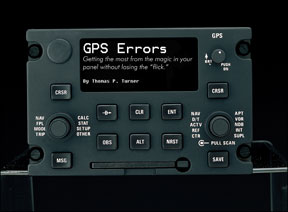
Theres no question ours is an era of great advances in safety and position awareness. Its the rare IFR airplane that isnt equipped with at least a portable, moving-map GPS; theres not an IFR-certified airplane in production that doesnt include a GPS-driven "glass cockpit" as at least an option-one thats almost always added. The capability of GPS comes with great complexity. There are very different operating interfaces with units from competing manufacturers. Its a little surprising, then, that pilots seem to make the same errors and omissions pretty much regardless of the unit involved. What are these common GPS errors? What can we do to avoid them? David Zitt is the Flight School Manager of Sportys Academy, the flight instruction arm of Sportys Pilot Shop in Batavia, Ohio. He and his instructor staff work exclusively in GPS-equipped airplanes, some with full "glass cockpit" panels but most conventional round-gauge airplanes meeting the definition of Technologically Advanced Aircraft (TAA) through the installation of moving-map GPS. Zitt notes that "each [GPS] unit has its own pitfalls," but finds common pilot mistakes regardless of the type of GPS installed. Prime among them is "instrument fixation" during the transition to TAA flight, a focused stare and excessive concentration on which button to push when the pilot is not completely familiar with the GPS used.

Gemini Sparkle

Key Takeaways:

  • Pilots consistently make common GPS errors across all phases of flight, regardless of the specific unit, due to system complexity and varied operating interfaces.
  • Frequent mistakes include insufficient pre-flight programming, over-reliance on the moving map, misunderstanding sequencing logic for approaches and holds, and critical misconfiguration of navigation modes (e.g., GPS/VLOC switch).
  • These errors significantly increase pilot workload, compromise situational awareness, and pose substantial safety risks, particularly during critical flight segments like approaches and missed approaches.
  • Avoiding these pitfalls requires thorough, model-specific training from experts and the diligent use of customized GPS checklists to ensure proper setup and operation.
See a mistake? Contact us.

Theres no question ours is an era of great advances in safety and position awareness. Its the rare IFR airplane that isnt equipped with at least a portable, moving-map GPS; theres not an IFR-certified airplane in production that doesnt include a GPS-driven “glass cockpit” as at least an option-one thats almost always added.

The capability of GPS comes with great complexity. There are very different operating interfaces with units from competing manufacturers. Its a little surprising, then, that pilots seem to make the same errors and omissions pretty much regardless of the unit involved. What are these common GPS errors? What

288


Ready to Sell Your Aircraft?

List your airplane on AircraftForSale.com and reach qualified buyers.

List Your Aircraft
AircraftForSale Logo | FLYING Logo
Pilot in aircraft
Sign-up for newsletters & special offers!

Get the latest stories & special offers delivered directly to your inbox.

SUBSCRIBE