Features

Understanding the Difference Between a Headwind and a Tailwind

I have a 100-knot airplane. Oh, sure; the airspeed indicator usually reads much higher than that. But when it comes down to what really counts-rate of movement over the ground-my shiny, expensive, 160-knot airplane is frequently relegated to speeds closer to those of an 18-wheeler on the Interstate below me. The reason? Headwinds. Eastbound, westbound-any direction-its not a matter of whether Ill have a headwind, but how strong it will be. If I plan a trip for Tuesday, on Monday the chosen route will afford a nice little nudge. On Tuesday, the fickle fates will deal a howling 40 knots on the nose. After an unplanned fuel stop, Ill drag into my destination about two hours late, landing only after being forced to shoot an ILS to near-minimums and well after the FBO has closed. The only food available will be a warm Pepsi and a package of cheese crackers. On Wednesday, that same route will once again have a nice little tailwind. Such is my life. Of course, there are good, logical reasons for headwinds. Lets explore them.

Read More »

IFR GPS: Good, Bad Or Just Ugly?

Any instrument-rated pilot who “grew up” before the mid-1990s probably still shakes their head at the way GPS navigation has revolutionized the way we fly IFR. If, Rip van Winkle-like, that same pilot awoke today after a 20-year snooze, he or she would find many different responsibilities and procedures have resulted. The same is true for someone whos been flying IFR all along but is just now making the upgrade to an IFR-certified GPS. What different rules, techniques and pilot responsibilities do you need to know? How has the workload changed, and are those changes for the better? While no one, including me, would seriously advocate going back to the “old ways” of flying IFR, we also must acknowledge that with the additional capabilities and accuracies of GPS come new and different ways of getting from Point A to Point B, along with skills, techniques and responsibilities for which we might not be trained or prepared.

Read More »

The Part 135 Way

On a recent foggy morning in Hagerstown, Md., I sat waiting for the visibility to improve enough for me to depart on a Part 135 passenger flight. Every airport in the region was socked in with less than a quarter mile visibility, when a somewhat agitated passenger came up to me and asked what we were waiting for. I explained that the visibility had to improve before we would be legal to depart. In an incredibly ill-timed coincidence, we heard the sound of a single-engine piston departing from somewhere in the cloud outside the door, and my passenger snidely inquired why that plane could leave, but we couldnt. I felt like I had been asked to explain Bernoullis principle to a five-year-old. It was a deceptively complicated question, and one that should be of interest to pilots flying in their own aircraft under FAR Part 91.

Read More »

Windy Conditions in Mountainous Areas

Some of the more memorable flights Ive made over the years involve flying over or through mountainous terrain. The terrain itself, of course, is visually interesting, with vivid colors and shapes, contrasting with the overwhelming monotony other geographic areas may present. I will long remember a late afternoon, eastbound flight over New Mexico, with some of my favorite music blasting over the headphones as I watched the terrain underneath change to its nocturnal state. I was overflying the terrain, though: The airplane performed as it always does at 13,000 feet msl. The weather was utterly benign, yet Im glad I was cruising instead of taking off or landing. On another occasion, I found myself looking at decent weather but strong winds aloft for a flight over other portions of New Mexico, plus Arizona and Nevada. I scrubbed that flight due to the forecast winds at altitude, which were at or above the airplanes stall speed.

Read More »

True Short Field Landings

The short-field approach and landing is something we all learned as student pilots. Commercial students get to show some additional expertise. However, both the private and even commercial requirements are a bit relaxed and dont really prepare us for that maximum performance, white-knuckle experience of putting the airplane down on that postage stamp some joker sadistically calls a runway. When we say “short-field approach and landing,” were really talking about two entirely different situations with different techniques. Obstacles at the approach end of the runway determine how we will make the approach-whether we can “drag it in” a few feet off the ground, or if we have to make a steep descent to clear the FAAs standard-issue 50-foot tree right at the runway threshold.

Read More »

Dont Like The Weather? Wait An Hour

If you take a big look at the general weather patterns across the entire contiguous U.S., youll see a rather marked difference. The eastern U.S. from about the Mississippi River to the Atlantic has a pattern that is often the least flexible, with adverse weather that can be frustratingly stable. Weather not very friendly to airplanes can persist there for days. Still, though, the worst weather-i.e., convective activity-is usually transient. Next is the area from the Mississippi to the Rockies. This area can get some rather severe weather, too, but the worst of it usually doesnt last long. While you may have to avoid the thunderstorms, tornadoes, ice storms, etc., an early start or short delay will usually make the difference between “dont-go-there” weather and reasonable VMC. Of course, like anywhere, it can still have its periods of low IMC that just hang there with no hope of a quick reprieve. The next area that we can generalize is from the Rockies all the way to the Pacific coast. Here, other than predictable isolated cells or cell clusters, severe weather is far less common. Indeed, other than the infamous coastal fog layers that can last for weeks, the weather in the West is seldom even IMC for more than a few hours at a time.

Read More »

Power-Off Approaches

Takeoffs, as a friend and CFI likes to inform her students, are optional. Landings, however, are mandatory. Within the soaring community, the line was “Get one free landing with every takeoff!” And therein is the most sobering aspect of facing a power-off landing: the reality the old stand-by go-around option we enjoy for other situations is eliminated. So while making all the usual efforts to restart an engine after it stops, the savvy pilot must simultaneously make a quick assessment of available options-and adjust to flying the aircraft as a glider. That means trimming for best glide while working the restart prospects and looking for the best suitable landing area available. And you must take these steps quickly: Altitude equals time to touchdown; the lower the failure altitude the less the time available, and the smaller is the radius of territory you have to consider. Gravity will prevail; your job is to make the arrival survivable, maybe even a great landing that leaves the airplane ready to fly again-once the engine problem is fixed, of course. Ultimately, an engine failure in a single-or, say, flameout of both engines after flying through a flock of birds-presents a situation demanding the best of your stick-and-rudder skills along with all your top judgment and experience.

Read More »

Max-Range Flying

Most pilots never need to eke maximum range out of the airplane. For others long-range flying is the norm, the reason for having an airplane in the first place. There are many considerations-some objective, some subjective-when youre planning a maximum-range flight. Lets define maximum-range flying as any flight planned to travel near the maximum distance the airplane can fly with the fuel on board, and have legal fuel reserves. When we think of max-range flying in light airplanes were usually thinking about a flight of three to seven hours, depending on characteristics of the specific airplane. If you take off with minimal fuel but are planning to use most of what youve got, however, even a short flight entails some maximum-range thinking.

Read More »

Fighting Fires

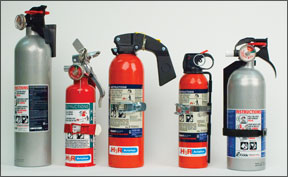
An in-flight fire is most pilots greatest fear, surpassing even a mid-air collision. Although relatively rare, the unique combination of combustible materials and ignition sources available in the typical personal airplane means an in-flight fire must be dealt with quickly and decisively. Doing so usually means disabling systems to deprive the fire of its fuel or ignition sources, and employing a fire extinguisher to smother it. A quick landing, even if off-airport, may be necessary. The problem? Our cockpits feature an abundance of materials capable of sustaining a fire. Carpeting, insulation, upholstery and paper charts are present in even the most basic airplane. This is true even if every scrap of fabric has passed an FAA-approved burn test. Throw in a fuel line or two-whether routed through the fuel selector, flowing via a capillary line to a fuel pressure gauge, or resulting from the designers basic need to move fuel from the tanks to an engine-and youve got another, much more combustible material.

Read More »

Briefing The Slam-Dunk Approach

Where you are, droning along in IMC, when suddenly youre almost on top of the final approach fix and havent planned for the procedure, much less set up the cockpit. How are you going to get safely from the FAF to the runway? It doesnt really matter why you find yourself here. Maybe you spent too much time at altitude without oxygen and it suddenly dawned on you where you are and what you need to do. Maybe the right engine just committed harikari and is dangling from the wing. Maybe a passenger needs urgent medical assistance. It doesnt matter. The problem is youre about to shoot an approach for which you havent briefed yourself or configured the airplane. What are you going to do

Read More »
Pilot in aircraft
Sign-up for newsletters & special offers!

Get the latest stories & special offers delivered directly to your inbox.

SUBSCRIBE