Features

Going Around

It has been said that every approach to a landing—whether from the VFR traffic pattern or an ILS, and everything in between, should be treated as a a go-around situation. If conditions are conducive to actually, you know, landing, then by all means do so. But be prepared—spring-loaded, some advise—to execute a go-around balked landing or rejected landing, whatever the term du jour is. That’s all well and good, but there are two problems. The first is determining when to go around. The other and larger problem is what happens when pilots make that decision. Sadly, they often mishandle the maneuver and wind up in the weeds next to the runway or prang it onto the pavement just past the threshold.
Read More »

Avoiding Cockpit Distractions

On October 12, 1997, popular musician John Denver flew his new-to-him LongEZ into the Pacific Ocean off Monterey, Calif. He died on impact with the water. According to the NTSB, “witnesses saw the airplane in straight and level flight about 350 to 500 feet over a residential area, then they heard a reduction of engine noise. The airplane was seen to pitch slightly nose up; then it banked sharply to the right [and] descended nose first into the ocean.” The probable cause statement included, “…the pilot’s diversion of attention from the operation of the airplane and his inadvertent application of right rudder that resulted in the loss of airplane control while attempting to manipulate the fuel selector handle.” The distraction of reaching and repositioning the airplane’s fuel selector led to the distraction.

Read More »

The Sparks That Let You Fly

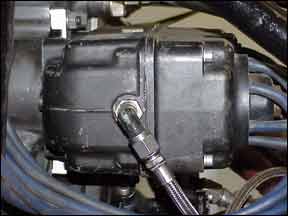
It really only takes three things to make our piston engines go: air, fuel and, of course, a spark to set things burning and those pistons churning. We, the pilots, are responsible for making sure our engines have enough fuel to mix with air (and enough air, for that matter) to make it all burn. We pretty much know where the air and fuel come from, but what about that spark? The answer is an engineering marvel, but an ancient one. As pilots in the 21st century, more than 100 (nearly 110!) years after the invention of the first flying aircraft engine, we rely, amazingly, on nearly the same technology to generate spark today as did the Wright Brothers.

Read More »

The Utility Myth

Not a winter goes by without someone sending me an e-mail that includes the sentence, “You aren’t really suggesting I don’t fly my airplane in IMC in the winter?” It’s usually from the pilot of a very capable piston single or light twin that is not certificated for flight in icing conditions; often the pilot includes something like, “I live in the Great Lakes and we get icing a large part of the year.” Sometimes I get a similar question about passenger and baggage loads. “The engineers at [insert airplane manufacturer name here] wouldn’t have designed the airplane with six seats if it couldn’t carry six adults, or at least four adults and two kids. Do you really mean I can’t fill the seats and the fuel tanks?” A current trend is questions about synthetic vision systems in glass cockpit panels or cutting-edge heads-up displays. “With an essentially VFR depiction of the runway, I can make a zero-zero takeoff and even a zero-zero landing ‘if I have to’, can’t I?”

Read More »

Extreme Stalls

One of the first few things primary students learn is the stall. More accurately, we learn how to enter them and recover from them, the idea being to avoid them and, when we can’t do that, to survive the event. At first, all these stalls are more or less straight ahead. But as we gain time and experience, our fiendish instructor will introduce other types of stalls, like the cross-controlled variety we might get into when botching a turn from base to final in the pattern. You probably mastered straight-ahead stalls early on—you wouldn’t have gotten very far in your training if you hadn’t—and were trained to avoid the cross-controlled variety by carefully planning and executing your turns when low and slow, like when in the traffic pattern.

Read More »

Pressing On

I’ve done relatively little scud-running over the years. That’s mainly because I earned an instrument rating at about the same time I started using personal airplanes more and more for transportation rather than recreation. It’s difficult to say which came first—the utility an instrument rating affords or the need to use an airplane for personal transportation—but in my case, the two developed at about the same time. My most memorable scud-running flight involved flogging a Skyhawk between Columbus, Ga., and Knoxville, Tenn., one summer afternoon. Writing about it now, I don’t recall the exact reason I determined getting an IFR clearance wasn’t the way to go, but that’s the decision I made. I presume it had something to do with either the airplane or the weather.

Read More »

Moving Targets

Twice in a lifetime is two times too many; two times when the operator of a moving machine stared a hole right through me and rendered me invisible. In both cases perfect conditions prevailed—nothing obstructed the view, yet our machines converged at a good clip. My first experience came at the hands of the driver of a 1977 Cadillac. My solution was to lay down a vintage motorcycle. It wasn’t my preferred choice, but obstacle and traffic conflicts made lateral maneuvering unwise. The second time came courtesy of two pilots in a Skyhawk during a VFR arrival to a non-towered airport in Florida’s panhandle.

Read More »

A Tale Of Two Pilots

In this article, I will ask readers to suspend disbelief until you have read the article completely. I am sure you will have your own opinions, about both the article and my own motivation in writing it. I believe, however, that most of you will appreciate the message I am trying to convey and that you will also observe how the stakeholders in aviation safety may be approaching the subject in completely different ways. The key questions are not only about how effective they are individually but how they can remain complementary.

Read More »

No-Return Takeoffs

If you’re accustomed to flying “real” weather, you’ll eventually be confronted with the question of whether to make a takeoff in zero-zero conditions. When you can’t see the other end of the runway, you probably can’t get back in if something happens. And even if you can see it, the overcast might still be too low to allow a successful approach. The natural reaction might be to stretch out in the FBO’s lounge until the fog burns off, or not even bother going to the airport in the first place. And those are good choices. The zero-zero takeoff isn’t something to approach lightly, but the risk it presents can be managed. Here’s how.

Read More »

A Turnback Fails

Failure of an airplane’s single engine shortly after takeoff is an event all pilots dread. When it happens, we’re low and slow. We lack the potential energy of speed and altitude, have little time to respond and few options. When such a failure happens, it’s natural—in some ways—for a pilot to want to be back on the runway he or she just used. It’s right there—behind us—and seemingly offers several solutions to our problems. One thing the runway has going for it is, well, it’s a runway. We know it’s a perfectly good runway because we just used it. Another attraction is resources: There’s usually a maintenance facility or at least a mechanic who can set things right. If only we can make it back to the runway we just departed, this pesky engine failure will be okay.

Read More »
Pilot in aircraft
Sign-up for newsletters & special offers!

Get the latest stories & special offers delivered directly to your inbox.

SUBSCRIBE