Features

Minimum Airspeed

Most of us use airplanes to go places fast, or at least faster than other forms of personal transportation. Some of us use them to go slow, to check out the fall colors, to look for wildlife and other features on the ground or, being in no real hurry, because we can. Regardless of which mission you’re flying, each flight includes two segments when we’re at something close to the airplane’s minimum controllable airspeed: takeoff and landing. But flying at minimum controllable airspeed can have other uses. For one, it’s a great way to teach a student how to handle an airplane when landing. For another, it can help even rated pilots hone some long-forgotten or disused skills. A third reason can involve checking an airplane’s control system and major surfaces for proper rigging or confirming its flight characteristics.
Read More »

Out Of Range

No airplane is perfect for every mission. Designers make compromises in the hope of producing an airplane that will find enough buyers to be a marketing success. But buyers have proven they sometimes want what manufacturers won’t provide, so we have a lively market in aftermarket mods. One popular mod is for more powerful engines in airframes like the Cessna 172. The results include better climb, a little faster cruise and, unfortunately, higher fuel burn. All aftermarket modifications to an airplane come with drawbacks. They can be as simple as a bit of added weight and a logbook entry or complicated enough to require a lengthy supplement to the paperwork. The more we alter the airplane’s original performance, the more we need to understand the mod’s impact on the airplane’s other characteristics.

Read More »

Seven IFR Prep Tips

Approach, could you read back the arrival waypoints…we can’t seem to find that arrival….” The request got my attention because it came from the aircraft somewhere ahead of me in the soup of a thick overcast, headed to the same airport. The controller had just warned of a pending change to my arrival plans by changing those of the flight ahead of me. Taking that change as a cue, it was easy to turn to the last plastic-protector page in my little IFR folder—where I’d already inserted the appropriate page. It was less luck than experience, which had tutored me on the likelihood of a traffic conflict with another airport’s arrivals.

Read More »

A Pilot Training Reform Report Card

Two years ago, at AOPA’s Summit in Long Beach, California, both the association and the Society of Aviation and Flight Educators (SAFE) announced pilot training reform efforts. AOPA, alarmed at the pilot dropout rate, focused more intently on student retention while SAFE’s efforts zeroed in laser like on the relationship between training and safety and how poor training may reduce retention and flying activity in general. In the meantime, the NTSB just concluded a study on amateur-built aircraft safety and it focused a two-day forum exclusively on that topic. Two years later, it’s fair to ask: Have we made any concrete improvements in training? The short answer is that SAFE recognized from the outset that training reform would be an evolutionary process, not something that would occur overnight or even over months. The organization made a number of recommendations, including better accident analysis, improved flight training curricula and delivery, and CFI accreditation, to name three. We’ve seen significant progress on some of these issues, but less on others. Here’s a summary of where we stand.

Read More »

Lack Of Commitment

Failure of a single’s engine is something on which primary students spend a lot of training time. In addition to running the emergency checklist and maintaining control of the airplane, looking for and maneuvering to land on a suitable surface are stressed. Managing the energy stored in altitude and airspeed is but one part of this training; properly performing the emergency checklist is another.

Read More »

Automation—Friend Or Foe?

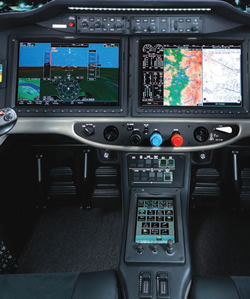
Automation is a routine part of our lives now, dictated by sweeping new technologies and consumer preferences. Arguably, the trend toward automation began in aviation in the 1970s. It has been debated and resisted by many in the aviation community, but the game has recently changed for both the airlines and general aviation. Yet, our culture is still firmly grounded in the Lindbergh white scarf era, aided and abetted by a pilot training system with roots traceable to the period just after that epic flight.

Read More »

The Long And Short Of Landings

You wouldn’t think that two common landing-phase accidents at opposite ends of the runway would have same root cause and the same corrective technique. Landing short (impacting terrain or obstacles just prior to the runway) and landing long (touching down at a point where the aircraft cannot be stopped before running off the end of the runway) account for six percent of all landing accidents, according to AOPA’s Air Safety Institute. Remove loss of directional control on the runway from the picture, plus touchdowns prior to the runway, and those extending beyond the far end of the landing surface account for almost one-fifth of the remaining reports.

Read More »

Handling Turbulence

The hangar conversation followed lines one expects on a gusty, blustery, bombastic-air day—with turbulence the topic of the moment. “As soon as Flight Service passed on that Pirep about moderate-to-heavy turbulence ahead, I slowed to VB,” explained the ATP cooling off with some colleagues after his heavy day flying a FAR 23 business jet. “Told the boss she we needed to live with slower or risk not outliving the air.”

Read More »

Automation? Friend Or Foe?

Automation is a routine part of our lives now, dictated by sweeping new technologies and consumer preferences. Arguably, the trend toward automation began in aviation in the 1970s. It has been debated and resisted by many in the aviation community, but the game has recently changed for both the airlines and general aviation. Yet, our culture is still firmly grounded in the Lindbergh white scarf era, aided and abetted by a pilot training system with roots traceable to the period just after that epic flight.

Read More »

Outside The Envelope

When was the last time you cracked open your aircraft’s flight manual or pilot’s operating handbook? You know, the thick book in which you’ll find information on the aircraft’s limitations, equipment, normal and emergency procedures and performance charts? If you’re like most non-commercial pilots flying the same aircraft day in and day out, it’s probably been a while. That’s not necessarily a bad thing. When you first start flying a certain type, spending a quiet evening with its manuals is a good decision. Even through the first several hours, referring to the book is common. But after a few years and several hundred hours, pilots tend to know—without looking at the book—what the aircraft will do under certain conditions. If and when there’s a question—say, the emergency gear-extension procedure, or to ensure the loading is correct—the book is right there to answer the questions.

Read More »
Pilot in aircraft
Sign-up for newsletters & special offers!

Get the latest stories & special offers delivered directly to your inbox.

SUBSCRIBE