Features

Can You Hear Me Now?

From my perch on the shop level, I see two types of airplanes and pilots: First, there’s the pilot who thinks nothing of flying the clag with a tired and vulnerable audio system and avionics suite left over from the Nixon administration. We’ve all heard him—the guy with the garbled and distorted audio that barely gets him taxi clearance to the runway. On the other end of the spectrum is the owner who’s invested twice the value of the aircraft in ultra-modern avionics including a high-end audio panel plus a generous set of $1200 Bose headsets for every seat in the cabin. What do these pilots and their aircraft have in common? Neither might be prepared to troubleshoot a failed audio system on the fly. Effectively dealing with audio failures and avoiding them in the first place takes some planning, a touch of system knowledge and in many cases a modest investment in the right kinds of backup gear.


Read More »

The Day The Waypoints Died

Imagine you’re cruising high above an undercast, in smooth, clear skies. The GPS in your panel shows you making good time, with about an hour remaining to your destination. The Center frequency has been fairly quiet; you know there are a lot of other IFR airplanes out there, but everyone is settled into cruise so all you hear are the handoffs to the next sector or approach facility, or the occasional clearance for an approach into a rural airport. Then, without warning, your GPS advises it’s lost a usable signal. The magenta line by which you’ve been navigating direct to your destination airport disappears and you have no more groundspeed or position information. Everything else seems normal—it’s not an electrical failure, at least not to the airplane’s entire system—but you no longer have GPS navigation.

Read More »

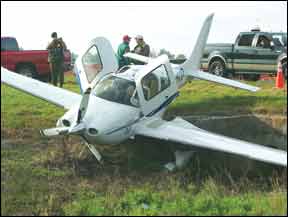
Staying On The Runway

Ever wonder why we often refer to an airport as a “field?” One reason involves the relatively poor handling characteristics of early airplanes. What little was known about aerodynamics back in the day meant most airplanes were fairly unpleasant to fly and handled like the powered kites they were. Takeoffs and landings had to be into the wind, thanks to those abysmal handling characteristics. The airports in use then were, in fact, large fields, always allowing pilots to point into the wind for takeoff and landing. Thankfully, those days are gone, although those airplanes still can be fun to fly. Meanwhile, progress in designing both airplanes and airports has resulted in beautifully engineered facilities and machines capable of using them.

Read More »

When The Lights Go Out

Radio silence: that’s what most pilots say got their attention and made them realize they had encountered an in-flight electrical failure. Too bad, because by the time the radios no longer worked, odds are that your electrical system had sucked all the life out of your primary back-up device, your main battery. Many modern personal airplanes come with back-up electrical systems from the factory. But if you fly an airplane equipped as if was the standard just a few years ago, you had better hope you were in day VFR conditions if you found yourself in this pickle. Otherwise, it was going to be a mighty tough night and/or IFR flight without navigation equipment or communication radios (or lights, or power for flaps or landing gear). From my experience, electrical systems have to be an Achilles heel of any light piston aircraft. That said and even among modern aircraft, aircraft designers, in their infinite wisdom, have done anything but standardize the systems.

Read More »

Adding It All Up

Are we at risk of things that never happen? Can we be hurt by what we don’t know? The answers are “Yes” and “Yes.” From the start of training, one thing our instructors and mentors try to infuse in us is that knowledge is power, but only if we suitably use that knowledge and apply it to the tasks at hand. Conditions—of the weather, to be sure, but also the airplane and facilities we plan to use, as well as our own skills—tend to drive the risk to which we’re exposed. And the more conditions depart from the expected, the greater is the risk of something going wrong.

Read More »

Back In The Saddle

Although winter flying can be some of the most rewarding available to an active pilot, not all of us can work out the timing, the short days and the weather enough to go aviate in the cold and damp. Along the way, we’re suddenly not as good at this flying “thing” as we were a few short months ago. But the coming spring promises longer days and warmer temperatures. It’s flying season again, time to unlimber your airplane, even as you ponder your atrophied skills. You don’t need a BFR, and you’re not ready for an IPC, even if you may need one. You just need to get back in the saddle after a few months away. Find your airplane keys, or schedule your favorite airplane at the club/FBO, then put together a plan for the upcoming flight.

Read More »

Air France Flight 447

Modern jetliners just aren’t supposed to fall out of the sky. It’s simply not acceptable (it’s not acceptable when smaller aircraft do it, either, by the way). Decades of refinement, engineering, development and lessons learned have produced an extremely safe worldwide air transportation system. That’s one reason the disappearance of an Airbus A330 operating as Air France Flight 447 from over the Atlantic Ocean almost three years ago is serving as a wake-up call to operators and pilots alike.

Read More »

Climb, Talk, Live

We pilots have been known to do foolish things when under stress. Especially when we find ourselves in a situation for which we have not received any training. The problem is, of course, there are many things for which we haven’t been trained. Not surprisingly, we are likely to worry about the wrong things as we evaluate the hazard we face and then reach the wrong conclusion as to what we should do. It’s natural. We are also the products of a flight training system that has never been willing to educate up and coming pilots on how to avoid the biggest risk we face as aviators—pressing on VFR into crummy weather. We all know it’s the biggest killer annually, but how many of us were taught how to fly by visual references under a 600-foot ceiling an one-mile visibility, or what to do if we find ourselves in such a predicament?

Read More »

Trust, But Verify

One of the biggest challenges with which each aircraft owner must contend is maintenance. The FARs state the owner/operator is the party responsible for ensuring all applicable inspections and maintenance requirements are complied with for continued airworthiness. Typically, the owner/operator lacks certification to perform the required maintenance and inspections necessary for continued airworthiness and engages certificated mechanics and inspectors to perform the require tasks. While the system usually works well, horror stories do arise. Logbooks go missing, what was scheduled to be a week-long annual inspection can turn into a months-long, expensive ordeal.

Read More »

Blue-Sky Briefings

The reports, preliminary and final, too often contain this fateful 10-word sentence: “The pilot did not obtain a weather briefing before departing.” It runs right up there with the tried-and-failed “continued VFR into IMC.” How and why any pilot would fly without a weather briefing almost defies logic these days. Accurate weather information has never before been more plentiful or accessible. The FAA even recognizes a pilot can fulfill all legal requirements of a pre-flight briefing without dialing a Flight Service Station on 1-800-Wx-Brief. Thanks to the wonders of technology, even flight-critical information—Notams, TFRs and the like—can be accessed independently.

Read More »
Pilot in aircraft
Sign-up for newsletters & special offers!

Get the latest stories & special offers delivered directly to your inbox.

SUBSCRIBE