Features

The Perils Of Forward CG

Anyone whos made it through primary training knows the importance of determining an airplanes weight and balance. From that training, we know there are real limitations on how much it can carry and where that weight-whether in fuel, cargo or passengers-can be. We also know a lighter airplane performs better than a heavy one, and that weight concentrated near the fore or aft limits can affect aircraft performance.
Read More »

Forward Center of Gravity

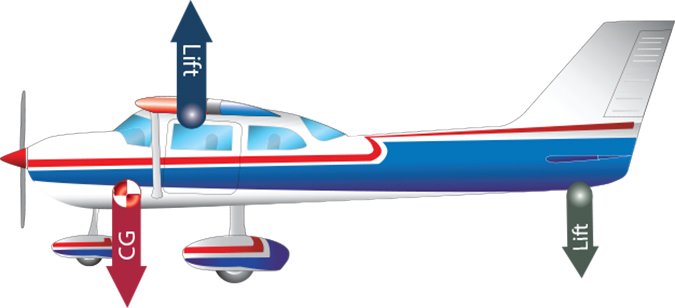
Figures 1 and 2 depict the same airplane with a forward center of gravity and one in which the CG is further aft, closer to the center of lift. The CG acts on the airplane via the red arrow while lift—shown here opposing CG, actually works at a right angle to the relative wind. In […]

Read More »

Weight Force & the Lift Equation

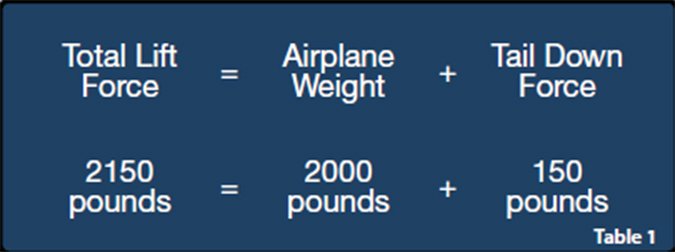
If the airplane’s weight force increases to 2150 lbs as described in the main text, then to maintain altitude and straight-and-level flight, the total lift force generated by the wings must increase proportionately using the equation in Table 1, at right. According to the lift equation, assuming wing area cannot be increased in flight (e.g., […]

Read More »

Continued VFR Into IMC

Continued VFR into IMC accidents have been part of the general aviation accident scene since before I started flying more than 50 years ago. Some headway in reducing these accidents was made when private pilot applicants were required to demonstrate basic instrument proficiency beginning in the early 1960s. Cockpit technology has also improved, with even basic training aircraft equipped for instrument flight and devices such as autopilots and weather data link becoming more prevalent. On the other hand, there is a much higher percentage of high performance aircraft in the general aviation fleet than 50 years ago, and more non-instrument-rated pilots are flying longer distances in higher performance aircraft. As a result, the prevalence of VFR-into-IMC accidents is still very high.

Read More »

Weather Accident Types and Trends

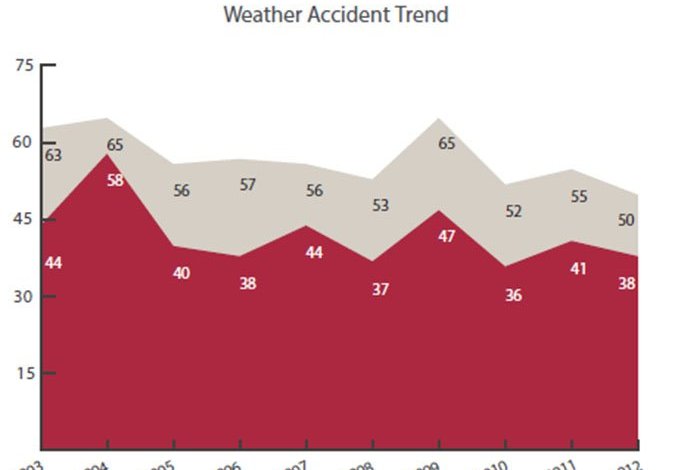
Weather-related accidents have always been a big issue for general aviation. Their number has not been declining appreciably, as demonstrated by the graph at right, adapted from the most-recent AOPA Air Safety Institute’s 24th Joseph T. Nall Report, which discusses general aviation accidents in 2012. During the eight-year period from 2005-2012, the number of fatal […]

Read More »

Air-Cooled Engines

The engines powering the vast majority of personal airplanes are air-cooled. This means they dont have a radiator and a liquid-based system like most automobiles we might drive to the airport. Yes, piston powerplants like those in the Rotax line, as well as many diesel engines designed for aircraft, are liquid cooled. But these more modern designs are in a distinct minority. In fact, besides the metallurgy, the basic configuration of aircraft piston engines has changed little since before World War II: Flat, horizontally opposed or radial designs from that era predominate.

Read More »

Which IFR Emergencies Should We Practice?

By the time someone is sent for the instrument check ride, he or she is expected to know the emergency procedures in the appropriate POH as well as how to deal with failures affecting the airplanes ability to fly in IMC. A cross-section of the bad news stuff is discussed during the oral portion of the practical test and demonstrated in flight. But whats a little frightening is that the IFR check ride often marks the high point of an instrument pilots ability to deal with an emergency.

Read More »

Common Emergencies

When deciding which IFR emergencies to practice, it can be instructive to look at the overall accident record. Not only can we get an idea of which failures to practice, but also of their lethality. The good news is its uncommon for mechanical failures to result in fatalities, and the trend is for fewer of them. And theres better news well get to in a moment. …

Read More »

Flaps or Gear First?

Depending on what youre flying, its manufacturer may have placed specific go-around recommendations in the POH/AFM. If so, its always a good idea to follow them and conform to the listed sequence of actions. Going around can be a busy time, and scrounging around for the balked-landing checklist is a no-no. You should have the appropriate sequence of actions memorized from your previous landing-practice sessions. …

Read More »

Snow on the Runway

Snow that has persisted on the ground for a long time will form crusted layers from wind packing, melting and refreezing. Often the base layer and areas between the crusted layers are hollow. This happens when lighter, fluffy snow consolidates into more dense grain structures. These larger grains, referred to as depth hoar, result from water vapor depositing or desublimating onto existing snow crystals. Granular depth hoar acts like a layer of ball bearings beneath the sheet of frozen crust. Backcountry skiers know this is the stuff avalanches are made of. For pilots, the crusts have a similar catastrophic effect of catching gear or skis resulting in airplanes getting stuck, or worse, getting flipped.

Read More »
Pilot in aircraft
Sign-up for newsletters & special offers!

Get the latest stories & special offers delivered directly to your inbox.

SUBSCRIBE