Features

Props

Propellers often are not well understood by general aviation pilots. Their purpose-transferring the engines horsepower into thrust by moving a large volume of air to the rear-usually is obvious. How this feat is accomplished may not be. Looking at a propeller blade cross-section will reveal it is actually an airfoil, one moving at a right angle to the airplanes desired motion.
Read More »

Gust Front

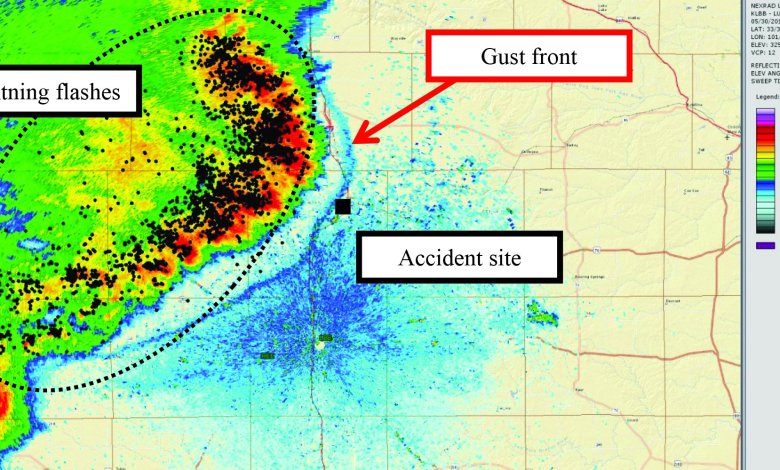
There are many old sayings sprinkled throughout aviation. One of them, Theres no such thing as an emergency takeoff, highlights the fact that deciding to initiate a flight is optional. As pilots, we get to decide many elements of our takeoffs, including whether to perform one in the first place. This is important since there are many unknowns in the first few minutes after a takeoff.

Read More »

Cessna 172 SDRs

Pilot found a brake anomaly. Checked aircraft and found that the anchor had detached from bulkhead assembly (p/n 0513488-11), causing the brake system failure.

Read More »

Tiedown Tales

As the oft-paraphrased aphorism goes, all is well when the ties that bind us are stronger than the stresses that can separate us. The same goes for parking an aircraft. When we properly secure it after a flight, its reasonable to expect itll be there when we return. Once we release the ties that bind it, our aircraft will again provide us with reliable transportation. Most of the time, that is how it works. Other times, just a little inattention and improper securing of the aircraft-or improperly reversing the process during the preflight inspection-can and does lead to accidents.

Read More »

Low-Viz Takeoffs

Last December 24th, a Cessna 340 crashed at Bartow, Fla., during an attempted predawn, IMC departure. All five aboard the airplane died. We dont know yet what factors, if any, beside the weather may have contributed to this Christmas Eve tragedy. Regardless, the circumstances should remind us of the extra planning and skill needed for a departure into low IMC, day or night-even if everything is going right.

Read More »

Black-Hole Approach

For the last few years, my home airport has been a private, paved and lighted strip in a rural area. The pilot-controlled lighting is non-standard, however. For one, the systems intensity is relatively weak. For another, there seem to be fewer runway lights than at most other airports Ive used. And the light fixtures themselves seem located farther from the pavement than Im accustomed. Often, there are few other ground lights in the area to help provide perspective at night. The runway does not have a rotating beacon, only a dimly lit windsock that may or may not tell the truth. There are few obstructions in the area above a couple of hundred feet, although theres a tall tower about five miles north.

Read More »

Ignition Switch Issues

The student pilot was doing an engine run prior to flight. Was unable on the first try to complete the magneto check as the key would not turn from the both position to the left/right/off position. After shutdown, the student was able to select off on the switch. The switch that was installed (p/n 103572101) included a push-to-start function. Found the switch sticking internally and replaced it with a new push-to-start switch.

Read More »

Minimizing The Risk Of Engine Failure

Almost from the beginning of our training, pilots are taught how to react to an engine failure. Before that, though, were also taught how to conduct a preflight inspection to ensure the engine (and the rest of the aircraft) is ready for what we are planning. Thats as it should be, since mechanical failures are a major component of overall accident causes, right after the pilot making a mistake. The good news is that the typical piston engine in a personal aircraft is much more reliable than it was a few years ago. The bad news is those reliability improvements often result in pilots giving little thought to piston engine aircraft reliability because failures have become so rare.

Read More »

Spinning Your Gyros

Over the last couple of years, Ive spent some time helping students transition to full-fledged private pilots. One of the first questions I do is ask them is to picture a standard six-pack of steam-gauge instruments and explain what they each do and where they get their energy. Most pilots can quickly rattle off the airspeed indicator, the altimeter and the vertical speed indicator. Those systems are relatively simple to understand and describe.

Read More »

Seeing The Invisible

Most pilots venture into windy conditions with enough skills and smarts to know how to either avoid or cope with them. But wind-related accidents are still commonplace, so clearly we dont always get it right. One reason for this may be fairly simple: With the exception of blowing snow, tornadoes, dust devils and some cloud formations, wind is usually invisible. To visualize what is going on, you have to visualize wind currents, which is where my experience whitewater rafting has served me well.

Read More »
Pilot in aircraft
Sign-up for newsletters & special offers!

Get the latest stories & special offers delivered directly to your inbox.

SUBSCRIBE