Features

Cruise Flight Dynamics

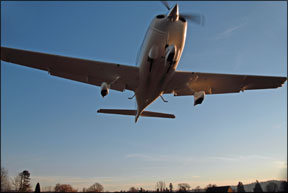
Unless youre someone like Sean Tucker or Patty Wagstaff, or one of the Blue Angels, you probably spend most of your time in the left seat of an airplane flying it straight and level. I know I do, since Im usually going somewhere, even if its only a quick flight to and from a nearby airport to warm the oil before changing it. Meanwhile, we spend a lot of time worrying about the aerodynamics associated with stalls, slips, spins and such, even though we rarely find ourselves performing those maneuvers.

Read More »

Its Not Just Aviation Talk

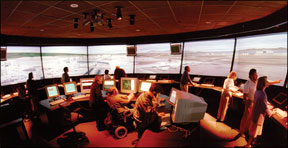
Communication is something we all take for granted; we talk, somebody else listens, somebody else talks, we listen, so whats so complicated about that? Actually, more than you might think. What, for example, if youre speaking French to someone who doesnt understand French? Or maybe someone who speaks your language misinterprets something you said, or doesnt understand something you were talking about. You were certainly speaking clearly enough.

Read More »

From Bad To Worse

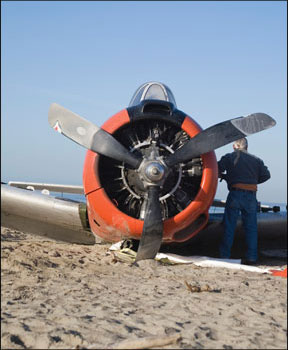
The old saying about gear-up landings-“There are those who have and those who will”-applies to all of us flying retractables. Perhaps a fatalistic outlook, its also an admonition to perform those pre-landing checklists at least once each flight. Beyond that, the saying also admits few, if any, have died or were even seriously injured in a gear-up landing. Depending on the circumstances of such misfortune, the airplane might be only minimally damaged. While few of us fly DC-3s, that airplane and others like it are quite capable of landing without the gear extended, likely damaging only the props. Check the engines, hang new props, jack the airplane and its good to go.

Read More »

Unusual Recoveries, II

We compared the Neutral Recovery Controls and the Hands-Off methods of spin recovery to the tried-and-true NASA Standard recommendations in Part I of this series (June 2007). Well now look at recovery strategies for airplane upsets specifically involving excessive angles of bank. Since leading supporters of Neutral Recovery Controls steadfastly maintain the method works in any attitude and in any airplane, well compare this strategy as well as the instinctive Split-S reaction (i.e., “Just pull, baby!”) to a more traditional roll recovery as embodied in the Power-Push-Roll procedure.

Read More »

Flight Planning’s New Age

Anyone who’s picked up the phone to obtain a weather briefing from an FAA Flight Service Station (FSS) in recent weeks has discovered the ongoing consolidation by federal contractor Lockheed Martin (LockMart) isn’t going so well.

Read More »

Patterns Of Risk

I was in the right seat of a late-model A36 Bonanza with a student, fine-tuning his landing technique with some full-stop trips around the pattern in gusty winds. During one trip up the parallel taxiway we heard a Learjet on Unicom call that he was taxiing out behind us.On our next downwind I noted the Lear taxiing toward the active runway, so my student made a point of radioing our turn onto base. The jet crew turned perpendicular to the end of the runway without another call, oblivious to my students report of turning onto a short final.

Read More »

High And Hot

Sugarloaf Mountain is a popular visual checkpoint for pilots here in central Maryland where Im based, but with its peak rising just 800 feet above mostly flat farmland it barely qualifies as a mountain. After a recent tour of the Southwest in my flying clubs Cessna 182RG, I have a new appreciation for really big mountains, density altitude and the tricks they can play with our little airplanes.Also from that trip comes a tale of how a group of flatland pilots from the East coast did the planning, the navigation, the weather-checking and the aviating over unfamiliar territory and lived to do it again. Its also a primer on how even low-time pilots flying basic, non-turbocharged airplanes can, with a little planning and lots of flexibility, tackle these and other challenges without becoming a statistic.

Read More »

Multi-Tasking

In a certain perverse way, its interesting to contemplate the fate of the worlds first multi-engine airplane pilot. The guy (or gal) who first took one of those early contraptions aloft likely had no real clue of what would happen if one of them failed. My dark side tends to smile, trying to conjure up the look on the pilots face when the inevitable happened. Nowadays, of course, flying a twin on a single engine is a well-understood challenge on which multi-engine pilots regularly spend hours training and practicing.

Read More »

Going Around

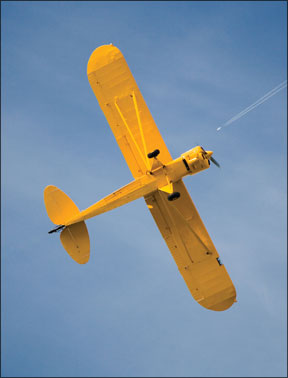
As a single-engine airplane flight instructor serving members of my home airports flying clubs, Ive learned there are many ways to safely bring an airplane back to earth, though some are more elegant than others. But the one maneuver that shows me for certain whether an individual is ready for his or her first solo or is worthy of a flight review endorsement is the go-around, or aborted landing.

Read More »
Pilot in aircraft
Sign-up for newsletters & special offers!

Get the latest stories & special offers delivered directly to your inbox.

SUBSCRIBE