Airmanship

Memorable Aircraft Accidents

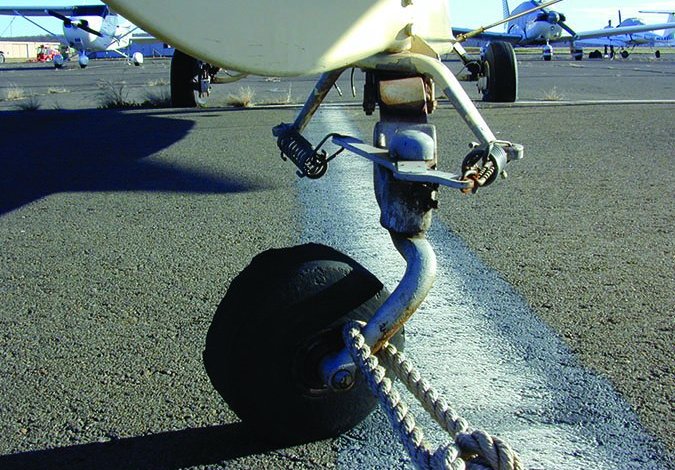
The typical flight in a personal airplane is uneventful. We take off, fly the mission and land. Every now and then, though, stuff happens. Its one of the reasons flying has been called hours and hours of boredom punctuated by moments of sheer terror, a description it shares with many other activities. In fact, most of us have our own tales to tell, stories of airborne drama weve experienced personally or heard directly from the people involved.Ive been doing a lot of flying recently, spending quality time at airports and remote landing strips with other pilots and their airplanes. Along the way, I picked up several there I was narratives from pilots who made serious errors in judgment, plus others who experienced what can only be described as bad luck. Sharing these narratives with other pilots helps add to our knowledge of what can happen, how we should prepare for it and what we can do in response. In reflecting on them, I soon realized they all have a common element. And since I was the pilot for one such event, I can assure you: When an event begins, it often happens very quickly, providing little warning.
Read More »

Airspeed & Turbulence: Easy Adjustments

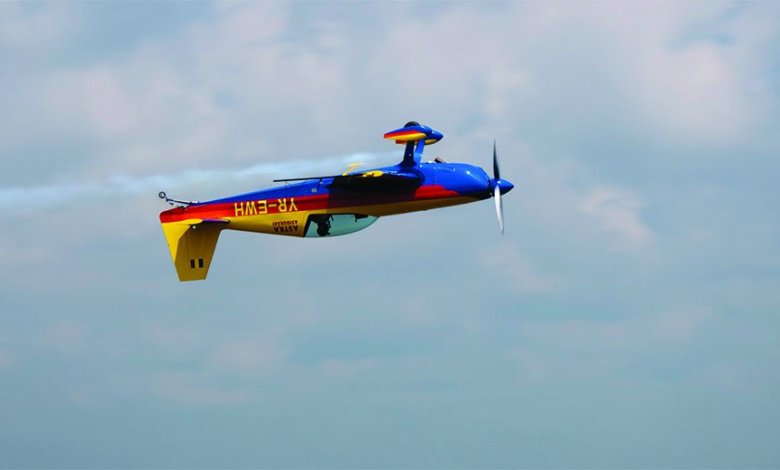
The airspeed indicator always has been one of a pilots most useful tools for measuring aircraft performance. Its colorful, with white and green, maybe a pair of red lines and a blue one, and maybe some yellow. And theres that big white needle we use for bragging rights. Early on, we were taught some of the most important speeds we need to know and use arent marked on it. One of them is the airplanes design maneuvering speed (VA), sometimes confused with the turbulent air penetration speed, which perhaps is better known as design speed for maximum gust intensity (VB).But is there a difference between VA and VB? What is it, and when do you use them? Why? Which should we be concerned more with as a pilot, and when? And airplanes are stressed to lower negative-G limits than their positive G-load limit-what about negative-G encounters in turbulence? Lets look at the operational reality of airspeed and G-load control in turbulent air.

Read More »

Get Some Air Under You

Since we usually cant see unlit objects at night, theres an increased risk of controlled flight into terrain, CFIT, and the plain, old-fashioned collision with an obstacle. One way to help minimize the risk of CFIT at night is simple: fly higher. And one way to do that is use IFR minimum altitudes even when VFR.

Read More »

Cockpit Lighting Choices

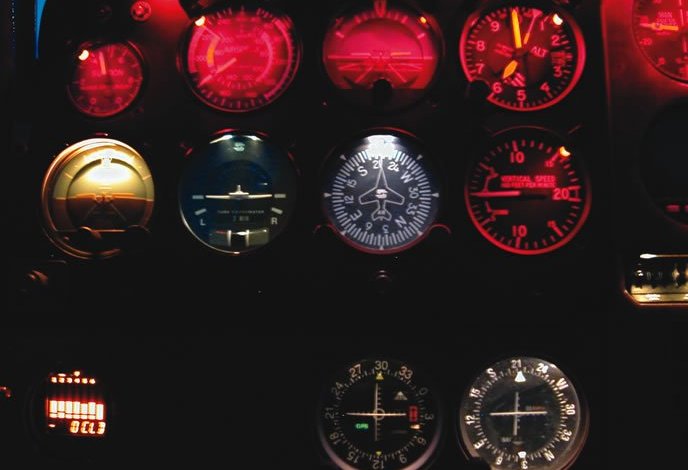
In recent years, theres been a move away from using red-colored lighting to illuminate cockpits, often in favor of low-intensity greenish-blue light. The reasons are numerous, but boil down to the fact rods in our retinas are most sensitive to that green/blue wavelength. But thats not the whole story.

Read More »

Up At Night

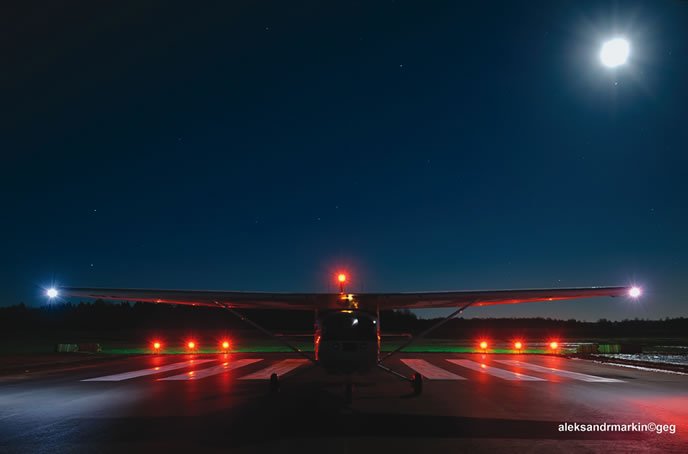
Night flying can be the most rewarding kind available to mere mortals. Twinkling stars above, perhaps a full moon in close formation, and well-lit ground features can be wondrous. Too, the air generally is smoother and theres less traffic. The frequency is quieter and ATC can give you more attention, while what traffic there is can be easier to spot. And an aircraft will perform better in cooler air. Humans will, too, but thats about the only benefit we realize at night.

Read More »

Smoke Gets In Your Sky

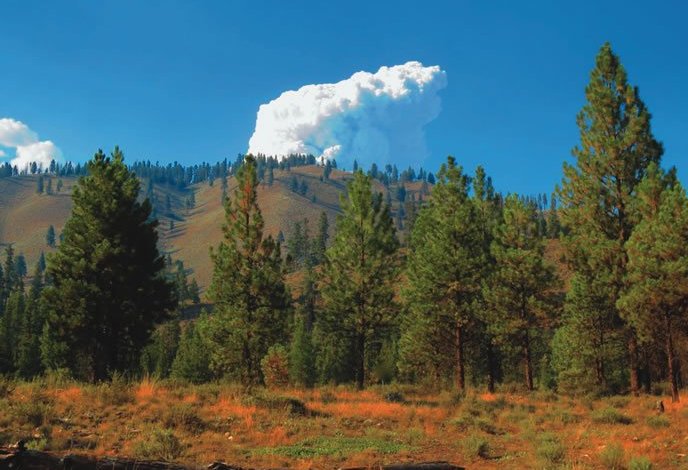
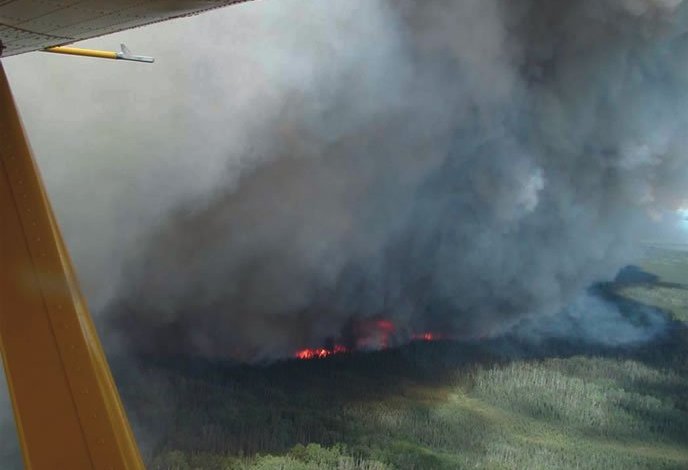
The blue of a dry western sky can be breathtaking. But just after winters overcast gives way to clear and deep blue, an insidious menace begins to turn the blue skies white: smoke from the summer fire season. If the national news is covering numerous large western fires, anybody planning a flight in the western U.S. between July and October needs to be prepared to factor smoke into their pre-flight briefings. Check the fire map, or at least glance at the distribution of forest-fire TFRs.

Read More »

Rotor Wash

Dealing with prop wash or jet blast is relatively straightforward: It is directed behind the aircraft. Wingtip vortices are a bit more complicated, but still they are easy enough to visualize. Helicopter rotorwash can almost be seen as a hybrid blend of the two. A recent accident at a Colorado airport implicated the rotor wash from a Blackhawk helicopter in the pattern with a Cirrus. It did not end well for the Cirrus, which dragged a wing tip and cartwheeled while in the landing flare. The drift of rotor wash from the recently departed Blackhawk is suspected as a contributing factor.

Read More »

Safety On The Ground

One of the greatest risks lightning poses to aviation involves ground-based operations: people working outdoors are particularly vulnerable. A 2013 report by the American Meteorological Society indicated that lightning safety rules for ground-based aviation are not standardized. Airports set their own standards for ceasing and resuming operations, as do FBOs. Here are some typical guidelines for airport management tied to lightning proximity:

Read More »

Lightning

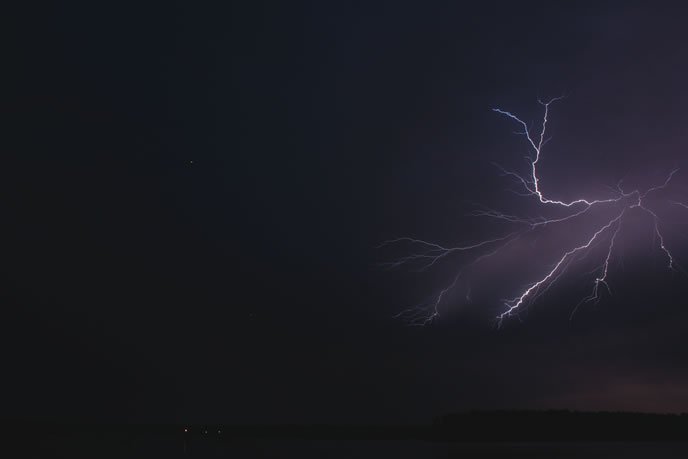
Most measurements put lightning in the range of 5000 to 20,000 amps, but 1971s strike to the Apollo 15 launch vehicle was measured at 100,000 amperes.

Read More »
Pilot in aircraft
Sign-up for newsletters & special offers!

Get the latest stories & special offers delivered directly to your inbox.

SUBSCRIBE