











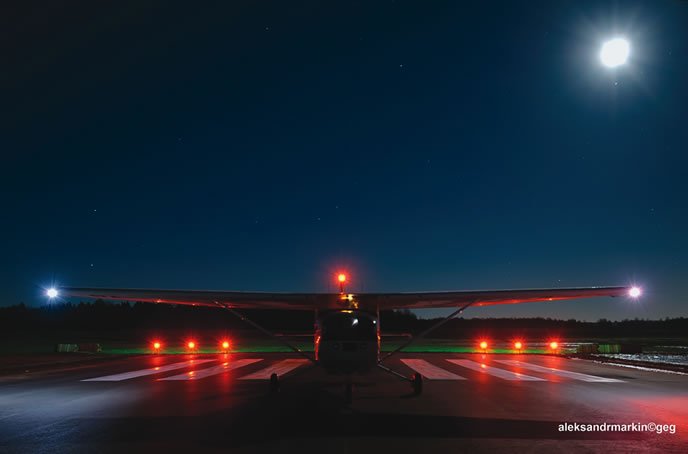


Night flying can be the most rewarding kind available to mere mortals. Twinkling stars above, perhaps a full moon in close formation, and well-lit ground features can be wondrous. Too, the air generally is smoother and there’s less traffic. The frequency is quieter and ATC can give you more attention, while what traffic there is can be easier to spot. And an aircraft will perform better in cooler air. Humans will, too, but that’s about the only benefit we realize at night.
In fact, our eyes play tricks on us at night. And there’s the simple fact that it’s dark out, and darkness tends to hide various objects from us, like poor weather, mountain ridges and other things we don’t want to fly into. Understanding how the human eye is affected when it’s dark and then compensating for the condition, plus adopting some common-sense practices for avoiding things that we can bump into at night, will help make our flying easier, safer and more enjoyable.

