













Register

Why We Lose Control

The aviation industry in recent years has highlighted loss of control in-flight (LOC-I) as the leading cause of general aviation fatal accidents. Many aviation organizations, including government agencies, have devoted considerable time and resources to target this problem and develop effective mitigations to reduce the number of LOC-I accidents. Much of that effort focuses on a pilot losing control, and how to train and equip to prevent it, because its the final event in the accident chain.

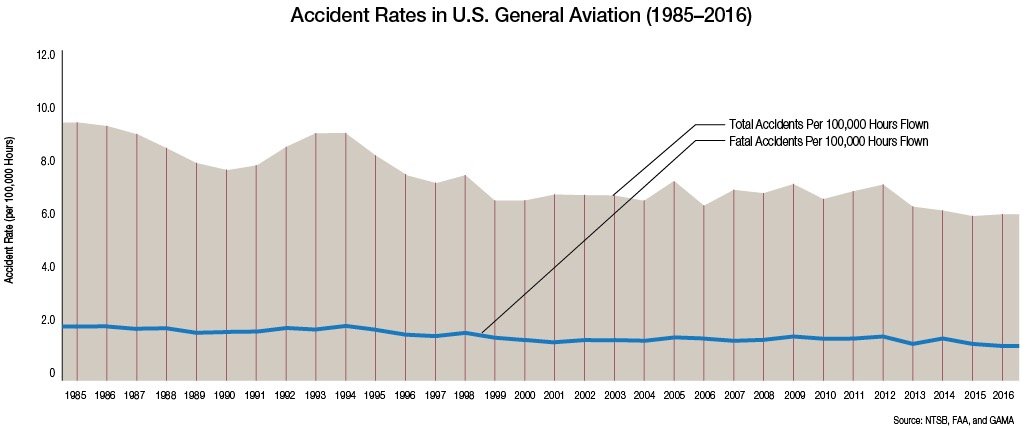
A bumpy ride: GA accident rates basically flatlined circa 2000 and haven’t fallen as much as many desired. Recent downticks may have legs, however. Chart courtesy of the General Aviation Manufacturers Association and its 2017 annual report.
Gemini Sparkle

Key Takeaways:

  • Loss of control in-flight (LOC-I) is identified as the leading cause of fatal general aviation accidents, prompting significant industry and government efforts to develop mitigations.
  • The article argues that poor risk management, rather than just a loss of control or lack of pilot skill, is the root cause for the majority (74-81%) of LOC-I accidents.
  • Current safety initiatives, while valuable, often focus on technological solutions or lack concrete implementation strategies for effectively delivering practical risk management and Single-Pilot Resource Management (SRM) training to pilots.
  • The author advocates for standardized risk management and SRM training for all pilots, including practical application through flight reviews and personal risk assessment tools, to genuinely reduce LOC-I incidents.
See a mistake? Contact us.

The aviation industry in recent years has highlighted loss of control in-flight (LOC-I) as the leading cause of general aviation fatal accidents. Many aviation organizations, including government agencies, have devoted considerable time and resources to target this problem and develop effective mitigations to reduce the number of LOC-I accidents. Much of that effort focuses on a pilot losing control, and how to train and equip to prevent it, because it’s the final event in the accident chain.

It’s a no-brainer when we point to loss of control as an accident cause when the stall/spin was preceded by steep turns at low altitude. And technology, training and certification are all appropriate avenues for the industry’s efforts to prevent this accident type. Risk management is an important part of that effort—what led the pilot to think steep turns at low altitude was a great idea?—and we may have overlooked poor risk management as a root cause of many—perhaps most—LOC-I accidents.


Ready to Sell Your Aircraft?

List your airplane on AircraftForSale.com and reach qualified buyers.

List Your Aircraft
AircraftForSale Logo | FLYING Logo
Pilot in aircraft
Sign-up for newsletters & special offers!

Get the latest stories & special offers delivered directly to your inbox.

SUBSCRIBE