














Airline Workers: Pass ROTOR Act and ‘Prevent Future Tragedies’

Coalition calls for House to approve legislation that would require ADS-B systems for all civilian and military aircraft.

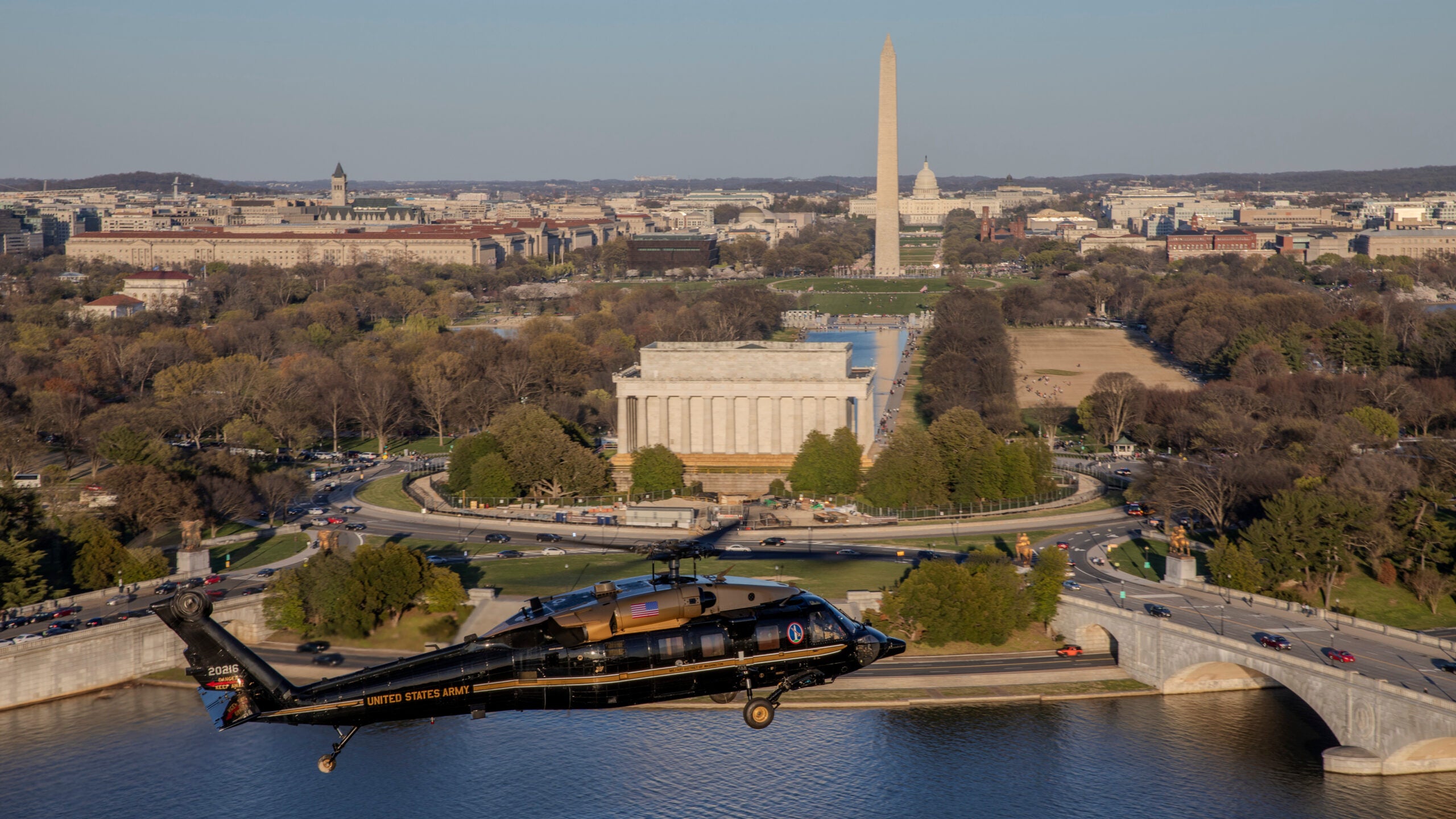
U.S. Army Black Hawk helicopter flies near Washington D.C.
A U.S. Army Black Hawk flies over Washington, D.C. [Credit: Nicholas Priest/U.S. Air Force]
Gemini Sparkle

Key Takeaways:

  • A coalition of airline labor groups is urging the U.S. House of Representatives to pass the Rotorcraft Operations Transparency and Oversight Reform (ROTOR) Act to prevent future midair collisions, referencing a fatal January 2025 incident.
  • The ROTOR Act mandates the universal use of integrated ADS-B In and ADS-B Out navigation systems for all civilian and military aircraft, aligning with National Transportation Safety Board (NTSB) recommendations.
  • Labor groups and the NTSB emphasize the necessity of integrated ADS-B In systems within the flight deck, rejecting non-integrated alternatives and opposing any provisions that would allow military exemptions from these safety mandates.
See a mistake? Contact us.

A coalition of labor groups collectively representing hundreds of thousands of airline workers is urging the U.S. House of Representatives to pass the Rotorcraft Operations Transparency and Oversight Reform (ROTOR) Act, which it argues could prevent a repeat of the fatal January 2025 midair collision over the Potomac River.

Six groups—including the Air Line Pilots Association (ALPA) and Association of Flight Attendants-CWA (AFA), which represented pilots and flight attendants who lost their lives in the January accident—wrote in letters to representatives that the incident was “preventable and predictable.” The ROTOR Act would require all civilian and military aircraft to use ADS-B In and ADS-B Out navigation systems, a provision the groups said aligns with recommendations issued by the National Transportation Safety Board (NTSB) this week.


The Senate unanimously approved its version of the ROTOR Act in December after Senator Ted Cruz (R-Texas), chair of the Senate Commerce Committee, introduced it in July. The legislation is scheduled to be considered in the House next week.

“Any legislation passed by the House must include core elements of the ROTOR Act, including the requirement that all commercial aircraft operators equip their fleets with integrated ADS-B In technology,” the groups wrote.

ADS-B In receivers show pilots the location of nearby aircraft that are broadcasting ADS-B Out, as well as weather and other important flight information. The NTSB since 2008 has called to require ADS-B In for all aircraft operating in controlled airspace. The U.S. Army installed ADS-B In on its aircraft following the January accident.

The UH-60 Black Hawk involved in the collision was equipped with ADS-B Out technology but was not broadcasting its location before or during impact, the NTSB found.

ALPA, AFA, and the other labor groups fear the House could pass legislation, based on its separate response to the NTSB’s recommendations, that would run contrary to the Senate’s intent. They worry it could permit ADS-B In “alternatives, including iPads, electronic flight bag, or so-called ‘plug-in play’ devices” installed outside the flight deck.

The coalition contends that integrating ADS-B In alerts with the audio controls and panel-mounted displays and maps on the flight deck would ensure pilots are not adding to their workload.

“The NTSB report found through simulations with tablet-based, non-integrated ADS-B In that such devices would require pilots to divert attention from cockpit instruments, and critical alerts would not be heard,” the groups wrote.

Jennifer Homendy, chair of the NTSB, is adamant that ADS-B In and Out technology should be universally equipped on all aircraft. Homendy was among air safety advocates who criticized Section 373 of the 2026 National Defense Authorization Act (NDAA). The provision contains the ROTOR Act’s ADS-B In and Out mandates but would permit military officials to waive them or exempt certain operations due to national security concerns.

Homendy in a letter described the language—which would be superseded by the ROTOR Act, should it pass—as an “unthinkable dismissal” of the NTSB’s recommendations.

“This section, to the lay reader, is drafted to seemingly enhance safety; it does not in any way enhance safety,” she wrote. “In fact, it significantly reduces the safety of the airspace around Ronald Reagan Washington National Airport by allowing the secretary of any military department to operate training missions in the DCA airspace in a manner that already existed prior to the midair collision on January 29th.”

Airline Workers Back ROTOR

The American Federation of Labor and Congress of Industrial Organizations (AFL-CIO), International Association of Machinists and Aerospace Workers (IAM), Transportation Trades Department, AFL-CIO (TTD), and Transport Workers Union of America (TWU) joined ALPA and AFA in contending that ADS-B is “specifically designed to increase pilots’ situational awareness and help prevent midair collisions.”

“The [NTSB’s] ensuing investigation has provided clarity regarding safety loopholes that Congress must close immediately to prevent future tragedies and further needless loss of life,” they wrote.

Mandated installation of ADS-B In and Out for all civilian and military aircraft topped the NTSB’s list of recommendations for the FAA, military, and air traffic controllers (ATC).

The board determined that ATC shortages and the FAA’s decision to place a helicopter route in close proximity to a runway approach path—while failing to adequately assess the risks of doing so—contributed to the accident. But it said the “overreliance on visual separation…without consideration for the limitations of the see-and-avoid concept” was another factor.

Per the NTSB’s final 400-page report, flight crews would have had more time to act had the Black Hawk been broadcasting ADS-B Out and the CRJ700 airliner operating PSA Airlines Flight 5342 been equipped with ADS-B In. The airline crew, it found, may have had closer to one minute to spot the helicopter rather than one second.

“Such a difference in visualization, alerting technology, and situational awareness could very well have prevented the crash,” ALPA, AFA, and others wrote.

The groups further support ROTOR’s requirement for regulators to comprehensively review other “mixed traffic” airspace where helicopters and commercial aircraft are operating in close proximity. They added that the bill “closes loopholes” that let the military exempt aircraft—such as the helicopter involved in January’s fatal collision—from broadcasting ADS-B Out.

The NTSB further recommended the installation of an airborne collision avoidance system on new production aircraft—and retrofits of the same system on aircraft already in service—among other things.

“The only way to avoid another recurrence and honor the lives of those lost is to implement the ROTOR Act and its clearly delineated performance standards for ADS-B In, as well as the remaining NTSB recommendations,” the coalition urged.

Jack Daleo

Jack is a staff writer covering advanced air mobility, including everything from drones to unmanned aircraft systems to space travel—and a whole lot more. He spent close to two years reporting on drone delivery for FreightWaves, covering the biggest news and developments in the space and connecting with industry executives and experts. Jack is also a basketball aficionado, a frequent traveler and a lover of all things logistics.

Ready to Sell Your Aircraft?

List your airplane on AircraftForSale.com and reach qualified buyers.

List Your Aircraft
AircraftForSale Logo | FLYING Logo
Pilot in aircraft
Sign-up for newsletters & special offers!

Get the latest stories & special offers delivered directly to your inbox.

SUBSCRIBE
