















NTSB Issues Recommendations After Fatal D.C. Collision

Investigators push for adoption and use of ADS-B Out and In.

KDCA Reagan D.C. airport air traffic control ATC
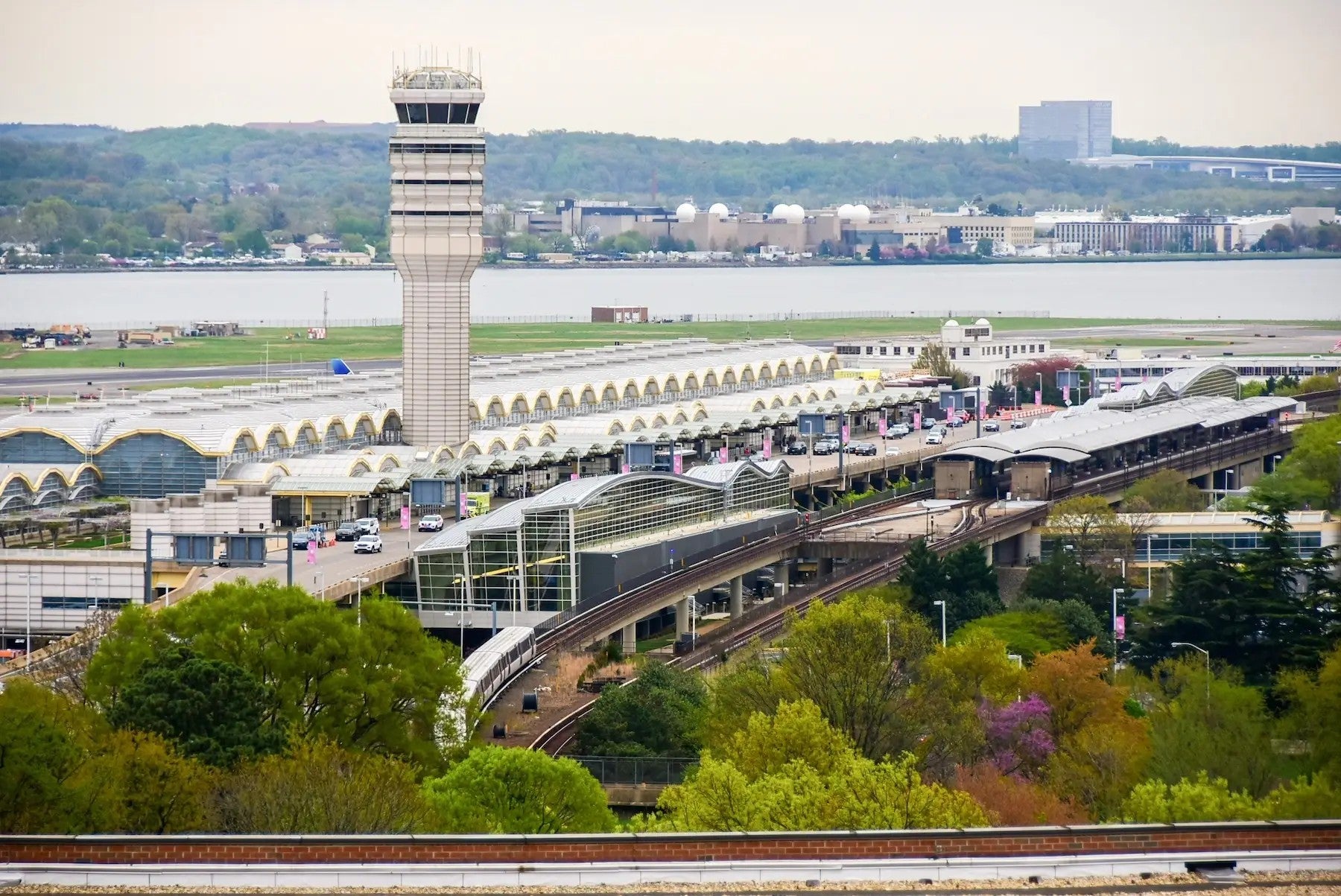
The air traffic control tower at Ronald Reagan Washington National Airport (KDCA). [Shutterstock/TJ Brown]
Gemini Sparkle

Key Takeaways:

  • The NTSB's final report on the January 2025 midair collision near Ronald Reagan Washington National Airport (KDCA), which killed 67 people, primarily recommends the installation and use of ADS-B In in addition to ADS-B Out for enhanced pilot situational awareness.
  • The probable cause was attributed to the FAA's unsafe placement and inadequate review of helicopter routes near runway approach paths, and the air traffic system's overreliance on visual separation.
  • The report includes extensive recommendations for the FAA, military, and air traffic control, focusing on improved controller training, airborne collision avoidance systems, better data sharing of helicopter routes, and stricter traffic management to prevent future accidents.
See a mistake? Contact us.

The installation and use of ADS-B In aboard aircraft in addition to the use of ADS-B Out tops the list of recommendations made by the National Transportation Safety Board (NTSB) in its final report on the midair collision near Ronald Reagan Washington National Airport (KDCA) in January 2025.

The use of ADS-B Out and ADS-B In can give pilots better situational awareness as they can “see” where other traffic is, provided that traffic is also using ADS-B Out and In.

The accident occurred the night of January 29, 2025, when a U.S. Army Black Hawk helicopter on a training mission collided with a PSA Airlines CRJ700 that was approaching to land on Runway 33. The impact happened over the Potomac River approximately a half mile from the approach end of the runway, killing all three people aboard the helicopter and 64 people aboard the jet.

More than 400 pages in length, the final report was compiled after a year-long investigation and several hours of testimony last month about the findings of the NTSB’s investigation. Part of the testimony included computerized recreations of the accident as seen from the cockpits of both aircraft. The video as seen from the CRJ is particularly chilling, as it appears the crew saw the Black Hawk coming from beneath them and to the right at the last second and attempted to avoid the impact.

The report suggests that had the Black Hawk’s ADS-B Out been functioning and the jet equipped with ADS-B In, the crews would have had more time to take evasive action. 

The NTSB determined that the probable cause of this accident was the “Federal Aviation Administration’s placement of a helicopter route in close proximity to a runway approach path; their failure to regularly review and evaluate helicopter routes and available data, and their failure to act on recommendations to mitigate the risk of a midair collision near Ronald Reagan Washington National Airport; as well as the air traffic system’s overreliance on visual separation in order to promote efficient traffic flow without consideration for the limitations of the see-and-avoid concept.”

Recommendations

The report contains a long list of recommendations for the FAA, military, and air traffic control (ATC) to help prevent future accidents.

U.S. Air Force Black Hawk helicopter Reagan Airport KDCA
A Black Hawk helicopter over Washington. [Credit: Nicholas Priest/U.S. Air Force]

Among them is a recommendation for the installation of an airborne collision avoidance system on new production aircraft and retrofits of the same system on aircraft already in service.

The report also recommends more scenario-based training for ATCs to promote better situational awareness and prioritization of duties and workload management. The report described “inadequate traffic advisories and a lack of safety alerts to both flight crews.”

Also causal was the Army’s failure to ensure pilots were aware of the effects of error tolerances on barometric altimeters in their helicopters, which resulted in the accident helicopter crew flying above the maximum published helicopter route altitude.

The final report noted that the mixed nature of the traffic (helicopters and airliners) and the volume of traffic at Washington National contributed to the accident, and recommended that ATC implement additional annual training for controllers with an emphasis on workload management for the tower workforce.

The report called out a lack of “effective data sharing and analysis among the FAA, aircraft operators, and other relevant organizations” as the helicopter training routes were not depicted on published materials used by civilian operators.

Additional NTSB recommendations include:

• The FAA developing and implementing time-on-position limitations for supervisory ATC personnel, including guidance for district- and facility-level management to adapt  limitations to account for their own staffing and local standard operating procedures.

• Annual training to develop instructor-led, scenario-based training on threat and error management that teaches controllers to continuously monitor their environment so that they can more quickly and accurately identify threats and promote team communication to ensure that communications are clear, timely, and assertive.

• A new emphasis on effective scanning habits and recognizing patterns in the development of adverse events; enhancing decision-making under stress; and developing and implementing a risk assessment tool for supervisors incorporating the principles of threat and error management to assist in risk identification, mitigation, and operational decision making.

• The FAA has been asked to initiate rulemaking in 14 Code of Federal Regulations Part 93 Subpart K, for High Density Traffic Airports, which prescribes air carrier operation limitations at Washington National in 30-minute periods, similar to those imposed at LaGuardia Airport (KLGA), to ensure that the airport does not exceed capacity and to mitigate inconsistent air carrier scheduling practices.

• Require each Class B or Class C ATC tower facility to evaluate its existing miles-in-trail procedures or agreements to ensure that the spacing provided is appropriate for operational safety.

Black Hawk Potomac River
Black Hawk wreckage in the Potomac River [Credit: U.S Coast Guard/Petty Officer 1st Class Brandon Giles]

Recommendations made to the Army include a review of helicopter route charts conducted throughout the National Airspace System (NAS) and a safety risk management process to evaluate whether modifications to the remaining helicopter route structure in the vicinity of Washington National are necessary to safely deconflict helicopter and fixed-wing traffic. The branch must provide the results to the  NTSB.

The NTSB recommends the location of helicopter routes and published altitudes of these routes be shown on all instrument and visual approach and departure procedures to provide necessary situation awareness to fixed-wing operators of the risk of helicopter traffic operating in their vicinity.

Meg Godlewski

Meg Godlewski has been an aviation journalist for more than 24 years and a CFI for more than 20 years. If she is not flying or teaching aviation, she is writing about it. Meg is a founding member of the Pilot Proficiency Center at EAA AirVenture and excels at the application of simulation technology to flatten the learning curve. Follow Meg on Twitter @2Lewski.

Ready to Sell Your Aircraft?

List your airplane on AircraftForSale.com and reach qualified buyers.

List Your Aircraft
AircraftForSale Logo | FLYING Logo
Pilot in aircraft
Sign-up for newsletters & special offers!

Get the latest stories & special offers delivered directly to your inbox.

SUBSCRIBE
