












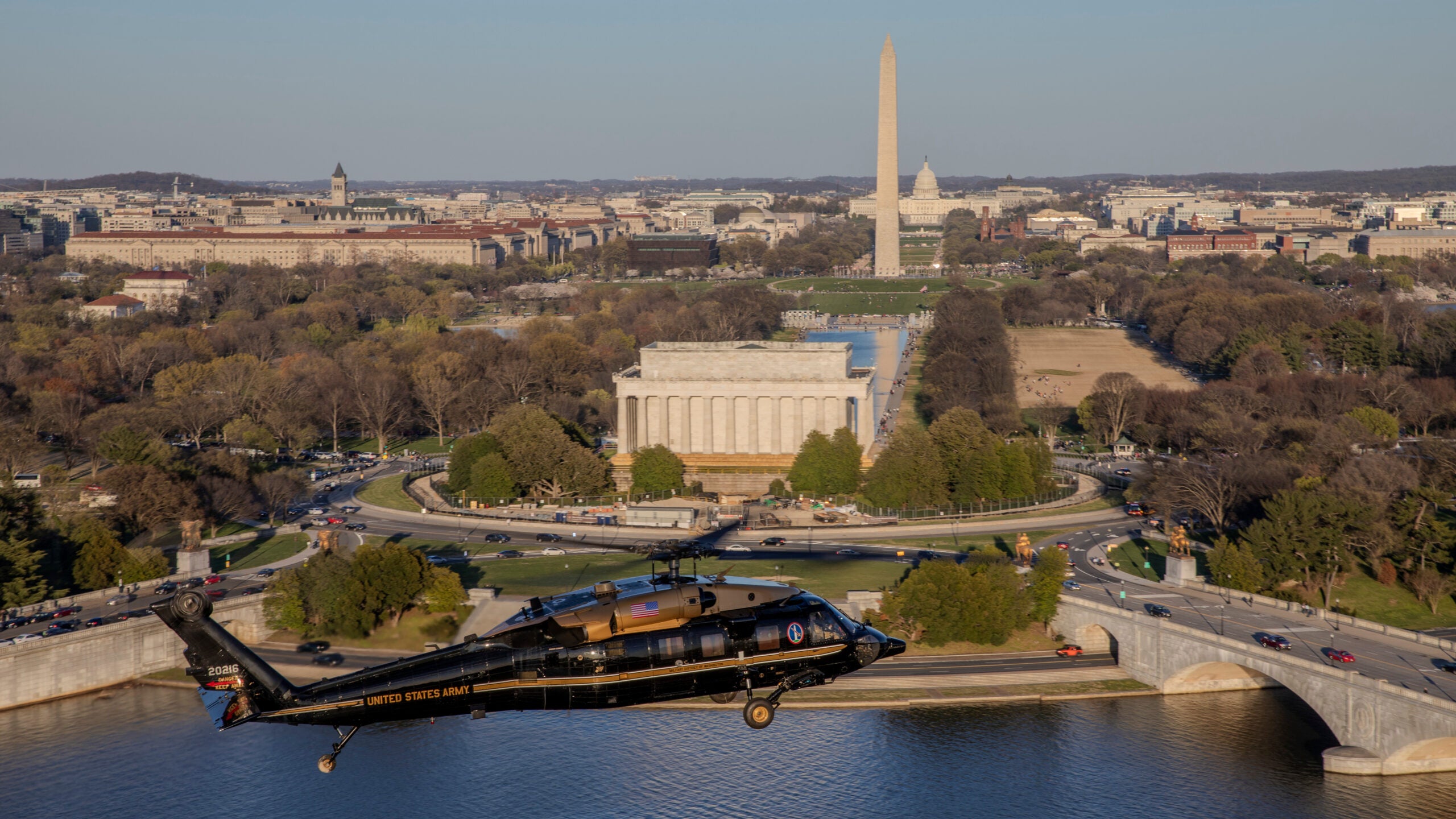


The U.S. Senate on Wednesday approved a set of rules designed to prevent collisions between aircraft, just days after language in the National Defense Authorization Act (NDAA) sparked concern that Washington was not doing enough to prevent a repeat of a January crash involving an American Airlines airplane and a U.S. Army Black Hawk helicopter.
Senator Ted Cruz of Texas sought and received unanimous consent for the Rotorcraft Operations Transparency and Oversight Reform (ROTOR) Act, which he has advocated for since the summer. The version of the bill passed Wednesday requires all civilian and military operators to equip their aircraft with ADS-B navigation technology by 2031. It also mandates military aircraft to turn on ADS-B while flying in the Washington, D.C., region.

Section 373 of the NDAA gave military officials the power to waive regulations and allow certain missions to operate without broadcasting their position. It generated strong pushback from some legislators, air safety advocates, and National Transportation Safety Board Chair Jennifer Homendy, who said the provision would undo most of the work done by the federal government over the last year to make Washington’s airspace safer.
Congressional procedures and a dwindling number of days in session allowed the NDAA to clear the Senate without alterations earlier Wednesday. The ROTOR Act, however, will supersede Section 373.
Cruz said he hopes the legislation will pass the House and be signed into law as early as next month, according to The Hill.
The FAA has imposed new restrictions on military aircraft operating over Washington, and the NTSB issued its own recommendations for keeping civilian and military aircraft separated while in the area. The NTSB is continuing to investigate the January collision, which killed 67 people on both aircraft.
Among its findings so far is that the Black Hawk involved in the accident was equipped with ADS-B but was not broadcasting at the time of the collision.
Earlier this week, FAA Administrator Bryan Bedford told lawmakers that the agency was not consulted about Section 373 and did not see it until last week. Regardless of the language in the bill, Bedford said the FAA will not roll back safety measures put in place in the months since the crash.
“We are not going to go back to the way capital region airspace was managed prior to January 29,” he said. “All the mitigation that has been put in place to separate mixed traffic—closing helicopter routes, eliminating virtual separations, and separating non-transponding traffic in the rare happenstance—that will continue.”

