















Senator Ted Cruz (R-Texas) on Tuesday announced the introduction of a bill intended to prevent collisions between commercial and military aircraft.
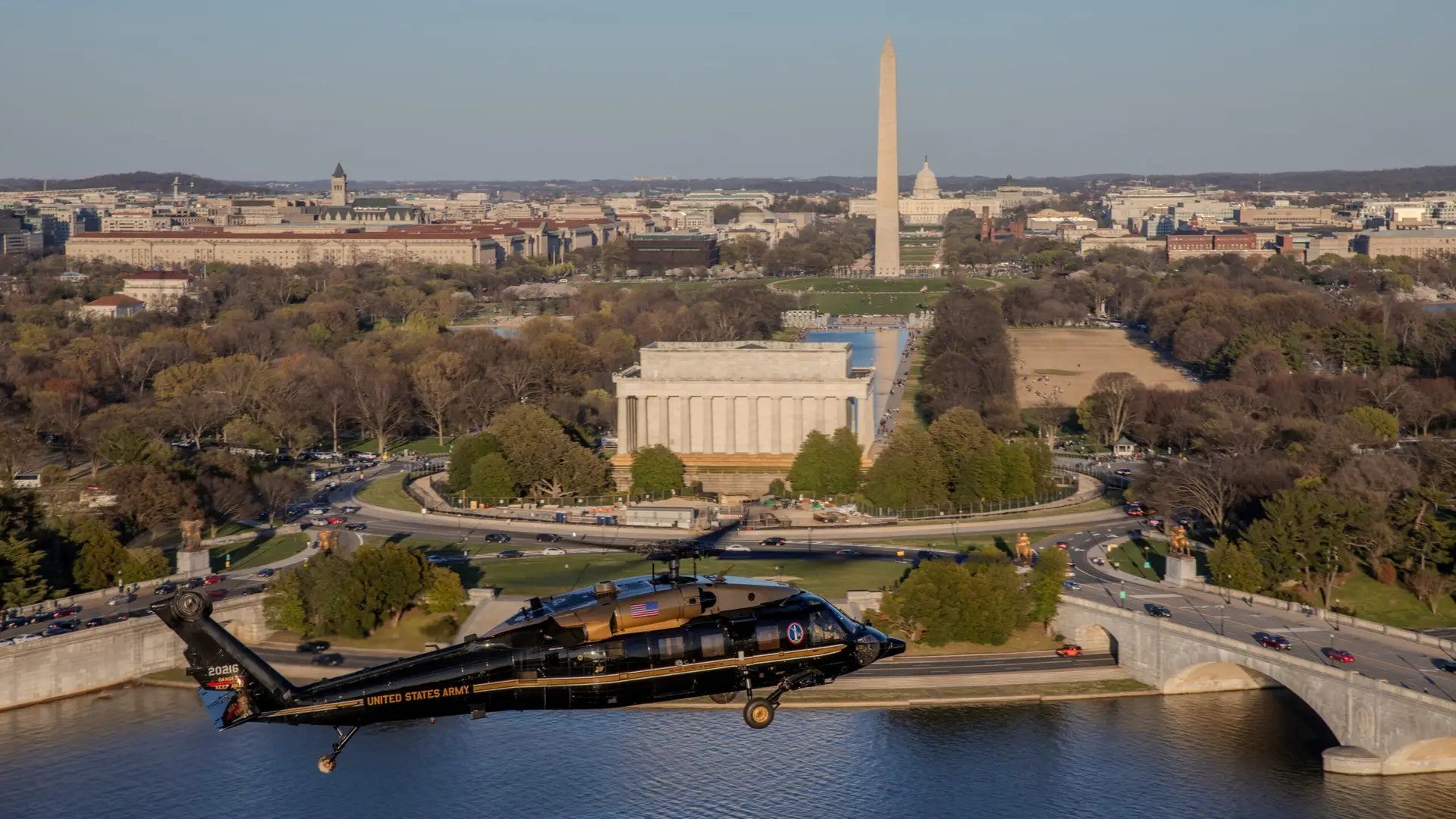
The Rotorcraft Operations Transparency and Oversight Reform bill, or ROTOR Act, would require all aircraft, civilian and military, to use ADS-B Out and ADS-B In aviation navigation technology. It was unveiled exactly six months after American Airlines Flight 5342 collided with a U.S. Army Black Hawk helicopter over Washington, D.C., killing all 67 people on board both aircraft.
The Black Hawk had ADS-B, but the system was not broadcasting at the time of the crash.
“The NTSB [National Transportation Safety Board] first recommended ADS-B In nearly 20 years ago,” Cruz said at a press conference. “We are going to make that happen this year. Make no mistake, there cannot be a double standard in aviation safety. We should not tolerate special exceptions for military training flights operating in congested airspace. No matter the circumstances, any aircraft flying near commercial traffic must fully adhere to safety standards.”
Cruz noted that the adoption of ADS-B is just one of many potential reforms to grow out of the January crash, including efforts to resolve the nation’s shortage of air traffic controllers and redesigned procedures for military aircraft operating near busy commercial airports, including Ronald Reagan Washington National Airport (KDCA), where the American Airlines flight was preparing to land.
“I know every time I land now at Reagan, including yesterday just getting here, I suspect I’m not the only one who looks out the window and thinks about what could happen,” he said. “And we’re acting today to protect the flying public going forward.”
A ‘Game-Changer’
Cruz was joined by Transportation Secretary Sean Duffy, NTSB Chairwoman Jennifer Homendy, Tim and Sheri Lilley, the parents of Flight 5342 First Officer Sam Lilley, and Doug Lane, representing the families of passengers on Flight 5342.
Duffy said that while his department may have a few suggestions for minor changes to Cruz’s legislation, “by and large this is the right approach.”
“Focus on safety should have always been the focus,” Duffy said. “I think in the past people became complacent. Leaders became complacent. And we had warnings of near misses in the DCA airspace. Unacceptable.”
Duffy also said ADS-B can be installed on civilian and military aircraft without imposing an undue financial burden on operators or the armed forces.
Homendy called ADS-B a “game-changer” for safety that “will save lives.”

“For over two decades we’ve recommended that FAA require ADS-B In following a myriad of midair collisions—Texas, Hawaii, Georgia, Alaska,” she said. “In 2008 we sent a letter to FAA stating, ‘The board believes that the equippage of aircraft with ADS-B In capability will provide’—and I want to stress this—‘an immediate and substantial contribution to safety, especially during operations in and around airports.’”
Homendy added that she’s thankful that there now appears to be momentum in Congress for a universal ADS-B standard.
The NTSB is gearing up for a three-day public hearing on the Washington, D.C., crash, set to start Wednesday. The hearing will be livestreamed on the agency’s website.
Homendy stressed that the NTSB’s investigation is currently in its fact-finding stage but “not at the point of analysis.”


