














Luminary Cloud Unveils Transonic Wing Design Tool

Shift-Wing model promises to reduce planning time and costs using advanced physics simulations.

Luminary Cloud Shift Wing AI aircraft design platform
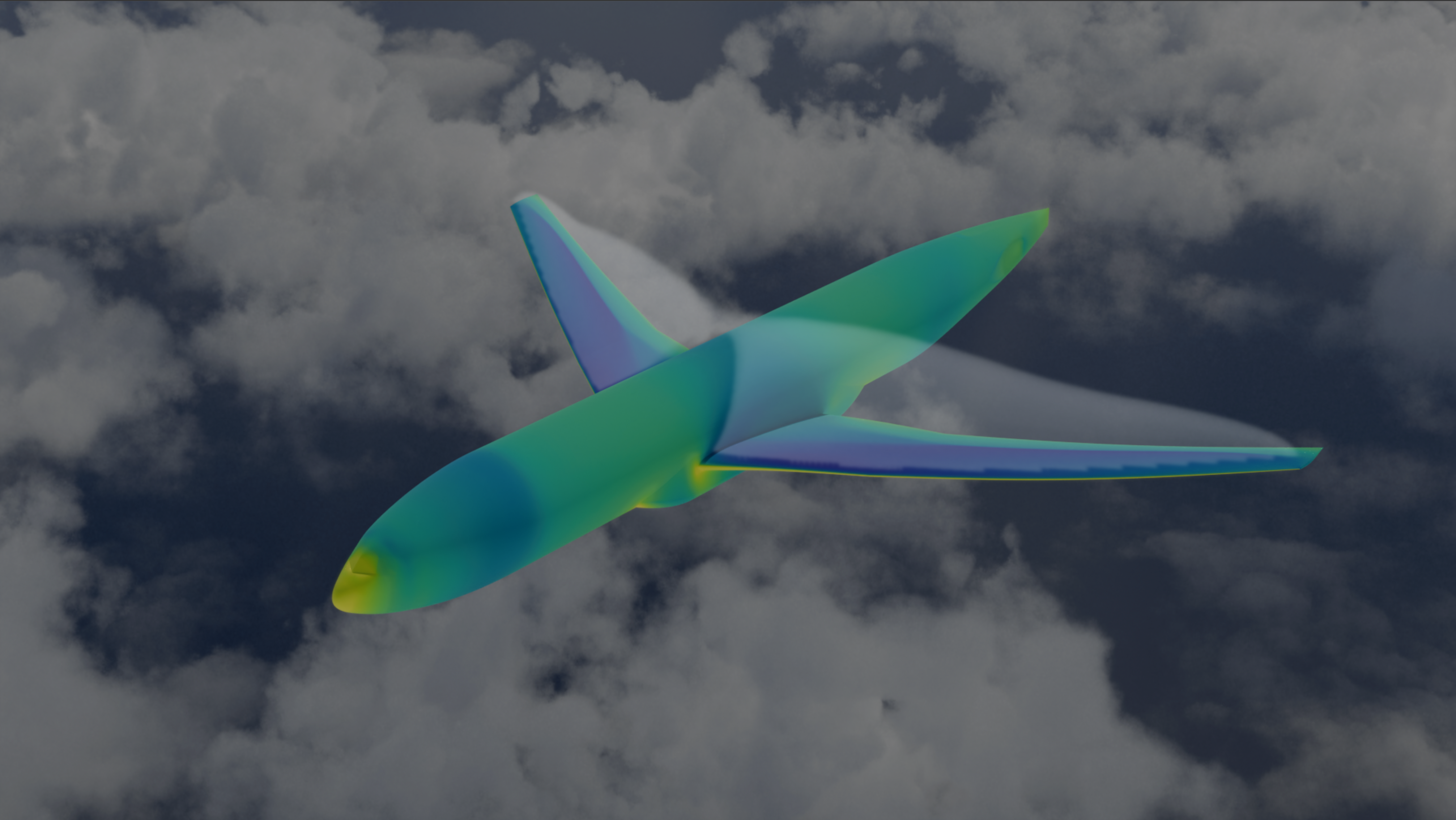
Luminary Cloud’s Shift-Wing tool uses advanced physics simulations to lower the cost and time of developing breakthrough aircraft technology. [Courtesy: Luminary Cloud]
Gemini Sparkle

Key Takeaways:

  • Luminary Cloud launched Shift-Wing, an AI-powered model and dataset designed to accelerate the conceptual design of cutting-edge aircraft wings, from subsonic to transonic speeds.
  • This tool uses advanced physics simulations to provide real-time, high-speed aerodynamic analysis, enabling engineers to explore and optimize designs earlier and reduce the cost and risk of late-stage redesigns.
  • Shift-Wing offers high accuracy, with drag predictions within 2 percent, and is already being used by various aerospace innovators, including Otto Aviation (who collaborated on its development) and Joby Aviation.
See a mistake? Contact us.

A new artificial intelligence tool could accelerate the design of cutting-edge aircraft wings.

Luminary Cloud, a platform that uses advanced physics simulations to help engineers experiment with aerospace and automotive designs in the conceptual phase, on Tuesday announced the launch of Shift-Wing—a model and dataset geared specifically toward advanced wing designs. The model, which is publicly available for noncommercial purposes and can be licensed for commercial use, simulates wings designed for subsonic all the way up to transonic speeds.


Often, innovative concepts—such as transonic wings—are bogged down by a lack of performance guarantees and uncertain cost and schedule estimates. If a problem is discovered during flight testing, for example, a redesign could be expensive.

“Due to limitations of existing engineering simulation tools and reliance on simplified physics models, potentially superior designs remain unexplored,” Luminary said.

The company emerged from stealth in April 2024 to tackle that problem, encouraging engineers to develop breakthroughs by shortening the runway to design. Its AI-powered platform has already found a variety of customers, including longtime manufacturer Piper Aircraft.

Many users, though, are building novel aircraft. Electric vertical takeoff and landing (eVTOL) air taxi developer Joby Aviation, blended wing aircraft developer Natilus, stratospheric airship developer Sceye, and autonomous cargo aircraft firm Rune Aero are all experimenting with it.

Another customer, transonic aircraft developer Otto Aviation, helped Luminary create Shift-Wing. Otto’s Phantom 3500 concept incorporates a laminar flow architecture intended to reduce drag and fuel burn, which is not included in the model.

But the company runs its proprietary laminar algorithms on the Luminary platform to better understand the requirements for designing, building, and supporting its aircraft.

“This partnership with Luminary Cloud will complement Otto’s ability to unlock scale in generation of Otto’s proprietary physics-based simulation data, making it possible for our engineers to explore, optimize, and validate aerodynamic concepts faster than ever before,” Obi Ndu, chief information and digital officer of Otto, said in a statement.

Luminary said Shift-Wing’s “real-time, high-speed aerodynamic analysis” of aircraft performance allows aerospace engineers to explore and simulate more designs than previously feasible. Drag coefficient predictions, for example, are accurate within 2 percent, reducing the number of simulations needed to validate a design, the company said. Those evaluations can also be conducted more rapidly.

The idea is for engineers to be able to work out the kinks in a design during the conceptual phase rather than wasting time and money on a late-stage redesign.

Shift-Wing’s dataset comprises more than 4,000 Reynolds-averaged Navier-Stokes (RANS) simulations, which are used to approximate turbulent airflows. The model was created by running data from NASA’s Common Research Model through Luminary’s systems and training it on varied angles of attack, configurations, and flow conditions using Nvidia’s software.

NASA uses a similar tool to help eVTOL air taxi developers such as Joby predict the noise output of their designs. But limitations uncovered in early research recently forced the space agency to pause work on its X-66 transonic truss-braced wing, which it is developing with Boeing.

Like this story? We think you’ll also like the Future of FLYING newsletter sent every Thursday afternoon. Sign up now.

Jack Daleo

Jack is a staff writer covering advanced air mobility, including everything from drones to unmanned aircraft systems to space travel—and a whole lot more. He spent close to two years reporting on drone delivery for FreightWaves, covering the biggest news and developments in the space and connecting with industry executives and experts. Jack is also a basketball aficionado, a frequent traveler and a lover of all things logistics.

Ready to Sell Your Aircraft?

List your airplane on AircraftForSale.com and reach qualified buyers.

List Your Aircraft
AircraftForSale Logo | FLYING Logo
Pilot in aircraft
Sign-up for newsletters & special offers!

Get the latest stories & special offers delivered directly to your inbox.

SUBSCRIBE
