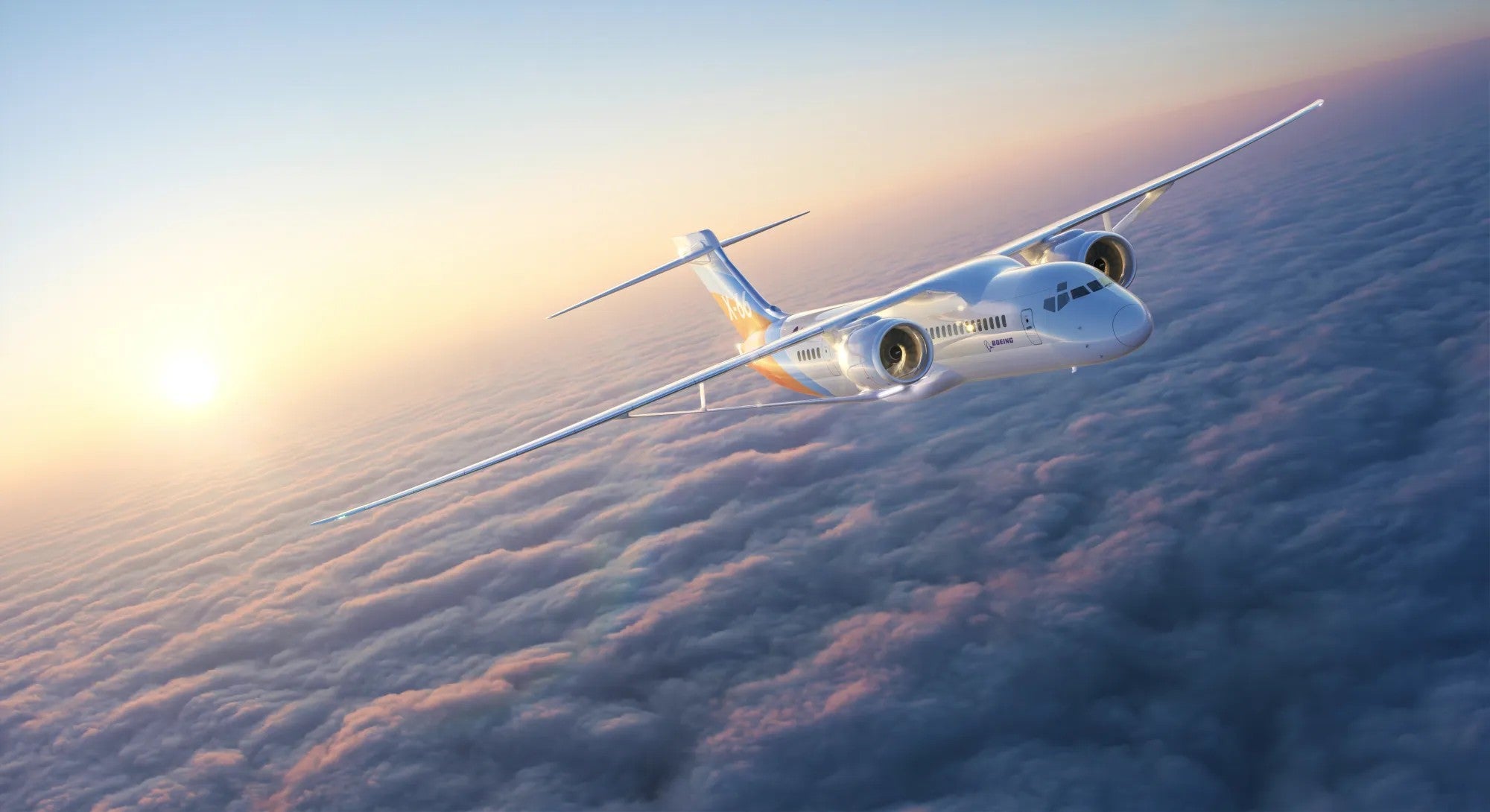
An artist’s concept of Boeing’s experimental X-66 transonic truss-braced wing concept. [Courtesy: Boeing]
Key Takeaways:
Boeing has halted development of its experimental X-66 flight demonstrator, an aircraft designed with a transonic truss-braced wing.
The company will instead focus on a ground-based testbed for simpler, thin-wing technology, believing it offers quicker value and broader applicability across aircraft.
The X-66 project was a $1.15 billion collaboration with NASA aimed at developing greener, more fuel-efficient single-aisle aircraft to achieve significant emission reductions.
This pause is a setback for NASA's Sustainable Flight Demonstrator project, which had targeted an initial X-66 flight as early as 2027.
Boeing is pumping the brakes on its experimental X-66 flight demonstrator.
The aircraft—being developed with a transonic truss-braced wing—is on “pause for later consideration” after Boeing proposed to focus on a ground-based testbed, which will instead demonstrate simpler, thin-wing technology, NASA said Thursday.
CREATE A FREE ACCOUNT
Sign up to keep reading
Create a free account to continue. Already a member? Sign in below.
Jack is a staff writer covering advanced air mobility, including everything from drones to unmanned aircraft systems to space travel—and a whole lot more. He spent close to two years reporting on drone delivery for FreightWaves, covering the biggest news and developments in the space and connecting with industry executives and experts. Jack is also a basketball aficionado, a frequent traveler and a lover of all things logistics.