











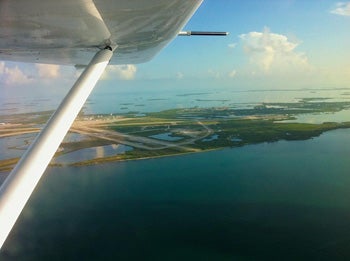


As we tracked west over the Straits of Florida’s calm teal- and azure-swirled waters, flying at an altitude of 1,500 feet and just south of the Overseas Highway that links the chain of islands leading to the southernmost tip of the United States, I couldn’t help but marvel at the 127.5 miles of roadway and bridges that passed below us off to our right. The highway — built atop the Overseas Railroad after the railroad became heavily damaged in the Labor Day hurricane of 1935 — serves as an excellent VFR navigational aid for those flying to Key West (and as a clear boundary to assure avoidance of R-2916 and the up-to-14,000-foot unmarked tethered aerostat balloon near Cudjoe Key). I’m always quick to tell visitors to my home state who want to make the journey to Key West that, though the drive is long, it’s a scenic and colorful one, giving travelers the true flavor of the Florida Keys. But, I must confess that on this visit to the Keys, my second, I was enjoying the view this way much, much more.
It was mid-August and I was part of a group of Florida pilots on another First Landings Aviation adventure flight weekend (see April’s column on our North Carolina trip). I had signed up as PIC in First Landing’s Remos GX, with CFI Chris Esposito taking the right seat so we could knock out the cross-country dual requirement for the private. The haze that glazed the morning sky en route didn’t diminish the beauty that unfolded below us as we crossed Florida Bay nor as we leisurely made our way (at a steady 100 knots) along the string of keys for the last leg of the trip.

