














Staff Report
Behold the preflight inspection – that superficial perusal of airplanes known by the pilot to be in good condition and maintained to safe standards by crack teams of mechanics.
For many pilots, the inspection is a legitimate tool for making a final decision as to the airworthiness of the airplane. For too many, however, the inspection is a resented intrusion in their desire to light the fire and get into the air. The results include accidents, yes, but they also include expensive mechanical failures that would have been much cheaper if caught earlier.
The problems do not lie primarily with that minority of pilots who conduct the notorious Part 321 preflight (three wheels, two wings, one propeller), but with those who scan the airplane without a good understanding of what it is theyre looking for. Most check the hinges on control surfaces and look at the oil dipstick, but its clear that huge numbers of mechanical problems either are missed by the pilots involved, or else the pilot decides to depart anyway.
We examined more than 26,000 service difficulty reports filed with the FAA as well as nearly 2,000 accident reports and came away convinced that there are a number of areas where pilots are either doing a lousy job inspecting the airplane or else they are choosing to fly with known mechanical deficiencies. Some of the failures represent mere inconveniences, but some are true safety items.
The five areas where we found the most problems were the in the wheels and brakes, retractable gear mechanisms, alternator/battery, fuel supply, and flight controls.
Wheels and Brakes
It seems like the wheels are the ugly side of airplanes. We want them to fly, after all, and airplanes only spend a small amount of time rolling. Small wonder, then, that they are taken for granted.
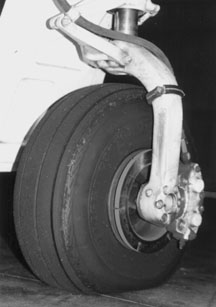
But look at life from the wheels point of view. They get soaked with cold at altitude, then slammed on the ground to spin up from rest to 80 mph in less than a second, sometimes while scraping sideways or skidding between water and pavement and back again.
The worst tire punishment stems from underinflation, which is fairly typical in an owner-flown airplane. Underinflation causes sidewall flexing and high temperatures that wreak havoc on the tire.
A preflight may include looking at the tires, but the tire can be substantially underinflated before it looks low. A glance around the ramp at a busy general aviation airport shows that few preflights include a tire pressure gauge. While checking the pressure every time might be overkill, once a week certainly is not. This might come as bad news to pilots of fixed-gear airplanes who are forced to remove wheel pants to check pressure.
Preflight should also include a look at the wheel rims to spot cracks. A hard landing or runway pothole can start a crack, which then can propagate until the wheel rim fails and causes the airplane to run off the runway on landing.
The same can be said for frayed brake lines. If the line starts to leak, two things happen. First, brake failure can be imminent. Second, the fluid can cause trouble of its own.
Hydraulic fluid is flammable, and it can cause wheel fires if it gets on the brake assembly and the brakes get too hot. If the fluid coats the brake disk stopping will be severely impaired. If its blown back onto the elevator by the slipstream, it can set up a nasty case of corrosion.
Finally, make sure you check the brakes as soon as you start to taxi from your parking spot every time. Any softness in the pedal is grounds for a more thorough examination, even if they firm up after a pump or two. Even if your intended destination has a 10,000-foot runway and you dont consider braking a concern, there are many events that can conspire against you.
The ground handling of an airplane isnt that great to begin with, so make sure you have all of its assets stacked in your favor before you depart.
Retractable Gear Mechanisms
Closely linked to the question of wheels is the matter of retractable landing gear. A look in the wheel well of your average Mooney, Bonanza or Seneca reveals a maze of links, switches, locks and braces. Some elements are painted steel, some are chrome, virtually all are greasy.
The complexity of the hardware and the need to crawl under the wing to see it leads many preflighters to skip that step. No way around it: Thats a big mistake.
Our studies of FAA incident reports find that half of all episodes that result in a sorry end to a flight involving retractable gear airplanes stem from landing gear failure. Most are not reflected in official accident statistics because the NTSB specifically excludes landing gear failures unless they result in structural damage.
But your wallet doesnt care what the NTSB thinks. A gear-up landing can cost tens of thousands of dollars regardless.
The first step in being able to preflight your landing gear starts when the airplane is in for its annual inspection. Be there when the inspector swings the gear. The airplane is put on jacks and the gear cycled. Watch the locks work and the mechanism in motion.
Ask the inspector to point out spots where welds might crack or where one element may interfere with the others. Ask how the gear door can interfere with the mechanism if its out of rig as well as what those indications might be.
Armed with that understanding of the mechanism involved, your preflight inspections will be more useful because youll have a better idea what to look for and where to look. Resist the urge to clean off all the grease to get a better look, however. Grease is required to keep the gear working smoothly, yes, but it also keeps dirt and corrosion out of the moving parts.
As long as your attention is on the landing gear, review the emergency extension system from the cockpit. Some airplanes, notably Barons, have panels that can be installed so as to interfere with the emergency extension crank. Others, such as some Mooney models, have problematic manual extension systems that are cantankerous and expensive to repair.
The retractable landing gear requires some care. If you fly more than once a month, the annual inspection isnt enough to catch problems while theyre little. You may not have to lie on your back under the airplane before every flight, but you do need to search occasionally for problems before they decide to make themselves known.
Alternator/Battery
A loss of electrical power in flight is sometimes just an inconvenience, but for any airplane used for serious traveling a dead panel can spell trouble, to say nothing about other systems that can be affected by a loss of electrical power, including landing gear, flaps and fuel pumps.
One of the keys to analyzing the electrical system is knowing what the gauges in your airplane actually measure. Some measure demand placed on the alternator, some the system voltage, some the charge/discharge of the battery.
If your battery is weak enough that starting is questionable, give a second thought about taking off after hand-propping the engine or even getting a jump start. With a weak battery, you have little or no reserve electrical power if your alternator fails or the belt breaks.
Checking the health of your battery is easy. When you first enter the cockpit before doing the external inspection, snap on the master switch and see what the voltage is. If the voltage is low, reconsider the trip even if there is enough power to crank the engine. Aging batteries get deposits between the lead plates that can short out individual cells and render them incapable of holding a charge.
But even if the battery and charging system are OK, intermittent problems can arise from something as simple as loose ground wires or corrosion on electrical contacts, such as those that connect a radio to its mounting tray.
Another electrical problem can result from the starter failing to disengage when you release the key or button. A hung starter can be trouble, as it draws a huge amount of current. When the engine catches, make a quick scan of your alternator gauge. If it shows a very high load, shut down immediately and check to make sure the starter is not still engaged to the starter ring gear.
Fuel Supply
There is no aspect of general aviation more frustrating to safety-minded pilots than the tendency of small airplanes to come to grief because they run out of fuel. Ascertaining that there is sufficient fuel aboard is a fundamental responsibility of the pilot, yet dozens of pilots fail the test every year.

