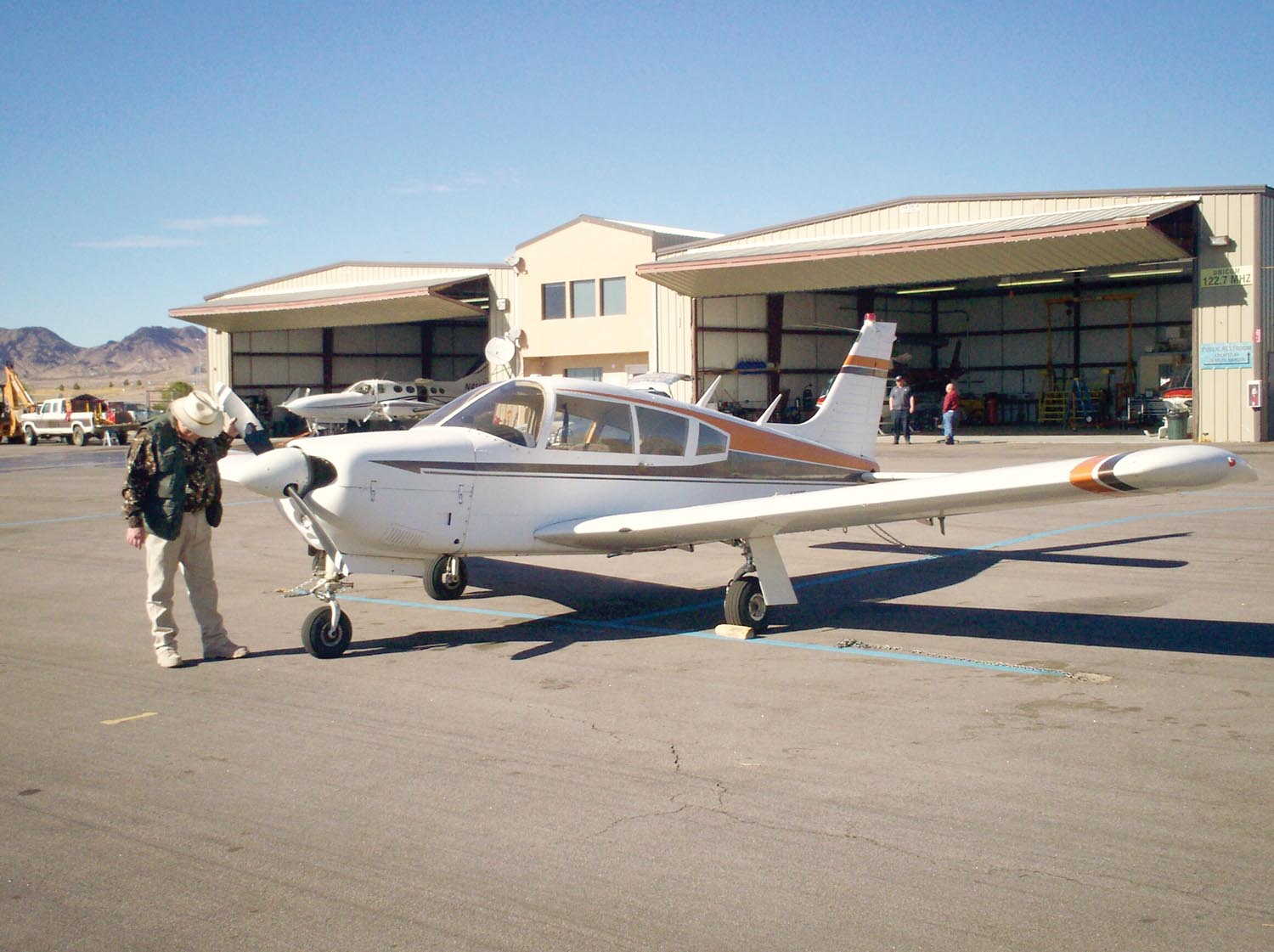
The First Flight After Maintenance Or Inspection

It demands a thorough preflight, and a pilot spring-loaded to abort the takeoff. And maybe stay in the pattern a while?

Gemini Sparkle

Key Takeaways:

  • The first flight after aircraft maintenance is inherently dangerous due to the high potential for human error and oversight by mechanics, often exacerbated by distractions.
  • Pilots must approach post-maintenance flights with extreme skepticism, conducting exceptionally thorough pre-flight inspections and flying cautiously (e.g., staying within gliding distance of the runway).
  • The article emphasizes that pilots cannot blindly trust maintenance, sharing multiple personal near-catastrophes caused by mechanic errors, underscoring the need for personal vigilance.
See a mistake? Contact us.

Let’s start this month with a fun little quiz about aircraft maintenance and “the first flight after.”

Why do you think Orville Wright flew their airplane first? Was it:

  • a. Because he won the coin toss with Wilbur, or
  • b. Because he lost the coin toss with Wilbur?

The correct answer: Wilbur knew what that meant, and suddenly came down with a cold.

Also, why did Orville crash after only 12 seconds of flight? Was it:

  • a. Maintenance error
  • b. Pilot error
  • c. Both a. and b., since they were the same person
  • d. Midair collision
  • e. None of the above

We pilots might also ask ourselves, “What was so dangerous about Orville Wright’s first flight?” I think the answer is obvious: The aircraft had just come out of maintenance, and this was its first flight afterward.

Since the guy who made the engine and many metal parts of the first Wright Flyer, Charles E. Taylor, didn’t make the trip to Kitty Hawk and couldn’t assist with assembling the airplane, it’s even more astounding what the brothers achieved. Or, if you’re a glass half-full type, perhaps the Wright Brother’s success was due at least in part to there not being an aircraft mechanic around.

But also notice how those guys didn’t have some dangerous things in 1903 that we have today in 2024 to cause accidents: runways, airports, weather (which wasn’t invented until 1924) or other aircraft (unless you count balloons, but come on).

Gimme A Brake!

Flying has its risks—it always has, they were just different dangers in the past. But some of the dangers of flying persist. Like the danger of flying an aircraft the first time after maintenance has been done to it. A bad mechanic can kill you dead with an error—and they’ll go have lunch (probably with an ATC “friend”) while you take a dirt nap.

So I should ask myself, like I do if, say, the engine quits, or sputters, or the prop goes into an overspeed condition or I notice the oil temp is spiking or a cylinder is running very hot—“What changed between this flight and last?” Did the mechanic remove—and hopefully replace—the oil? Or did they get distracted by a text or email or phone call or social media post and forget to put oil in? Or forget that little “crush washer” around the oil drain plug? Did they do anything with the hydraulic system? How about the electrical system, which, it turns out, is really, really complicated and has tons of wires like a pile of spaghetti and is all hidden from view, anyway, so even if I was Nikola Tesla, I couldn’t figure out if there was something wrong with it, much less in flight?

Did they add fuel, or drain any? How about the control surfaces—are they  attached and do they move in the right directions when I move the stick and rudders? 

Once, I had a shop put new tires on my aircraft. They didn’t pump up the brakes afterward, and I started taxiing without checking the non-existent brake pressure—my bad. I had to turn a 90-degree corner on the taxiway to go toward the runway, and I couldn’t turn with the usual differential braking. Which is right about when I noticed a large oak tree was approaching. Usually this particular huge oak tree is not a factor, since it doesn’t move much, and in fact is not Notam’d or on the airport’s ODP. That’s because no one would be dumb enough to fly into it, much less taxi into it. 

I turned off the key and killed the engine very, very close to the tree, almost close enough to use it to climb down from the cockpit, you know, kinda reach over and grab onto the bark like a squirrel and shinny down, being of course careful not to get my little foam microphone cover caught on the rough bark.

I walked back to the shop, my heart actually outside my body it was beating so hard. I was shook up. The shop’s owner? He got angry and defensive when I told him I had no brakes and almost hit the tree, telling me “Look in your logbook—what does it say we did to your aircraft? Nothing about brakes there!” Nice. 

True, it was partially—or a lot—my fault for not checking the brakes (they went to the floor) before taxiing. Meanwhile, as the shop owner huffed and puffed, a young mechanic ran out, jumped in my aircraft and pumped up the brakes. My heart eventually re-entered my body, but that one was a good lesson to check out everything after maintenance.

Déjà Vu All Over Again

You’d think one scary “look out after maintenance” incident would be enough in a lifetime. But it happened again to me. And again. A major error in maintenance—not caught by me in a not-good-enough walk-around—almost got me. A mechanic worked on my aircraft for six (SIX!) months, and gave it back to me with almost-empty fuel tanks. My poor preflight missed that, though I caught several other things. I guessed at the amount of fuel in the mains (I did sump them) because the gauges were bad, and I made the mistake of believing my buddy who looked in the front aux tank, and said it was full. He was right, if by “full” he meant “full of air.” We lived, but it was close.

Another time, a mechanic installed new brakes, and reinstalled the brake lines so that they rubbed on the brake discs, severing the lines. Again, the walkaround didn’t catch it, true. It really gets your attention when you try to stop, let me tell you. Instead of a tree, it was a hangar I missed before stopping this time.

Another mechanic forgot to fasten a bolt with a locking device on a brand-new cylinder and, well, let’s just say that if you do that, bad stuff happens. This error wasn’t visible on the preflight.

I hope by now you understand I’ve had enough scares to realize that I just cannot trust maintenance 100 percent of the time. 

The Errant Rag

I had two cylinders running hot in my Lancair IV-P, and had the local Fargo mechanic look under the cowling. He undid the last screw, lifted the cowling and there was a rag stuffed in between two cylinders. Stuffed in there by the very mechanic who had taken me aside and warned me, some time before that, in a very serious tone of voice to “Do a very good walkaround after maintenance.” 

I took a picture of it and sent it to the guy, saying, “I found your rag.” He hasn’t responded yet, but it’s only been four years.

All kinds of bad stuff can happen during maintenance. In his book Fate is the Hunter, Ernest K. Gann told about how someone added water to his engine oil—just enough so that the internal steam pressure would blow the oil cap off the engine after a while, but not immediately, so it would fail out over the middle of nowhere. 

There’s Something Wrong

Yes, that was sabotage, but it’s the same effect as if it was done accidentally. So after maintenance, maybe I should:

  • Look closely—very, very closely—at the aircraft and the logbook after maintenance. Do my best walkaround ever.
  • Stay in the pattern on the first flight, within gliding distance of the runway.
  • Say to myself, “Self, I bet there’s something wrong. Look for something wrong; look for something wrong. It just came out of maintenance, and they were turning nuts and bolts and screws. Look for something wrong.”

One other thing I should do: I shouldn’t assume the mechanics did it right.

Something In The Water?

These maintenance errors I described are all different mechanics, in different states—Missouri, Maryland, Virginia, West-by-God-Virginia and Minnesota, so it’s not “something in the water” that is affecting only a pocket of mechanics. I watch mechanics when I enter their maintenance shops. They’re all usually checking their cell phones, from time to time, like people do nowadays. People driving cars, people flying airplanes, people working at convenience stores and hospitals. 

That’s what the guy was maybe doing when he put my cowling back on with rag inside—he stuffed the rag there “just for now,” answered a text or took a call or something that broke his focus.

Can you imagine if you saw a surgeon through the glass to the operating room, operating on your child, checking their cell phone during the surgery from time to time? Or hearing the “PING!” of a text in the operating room? Then the doc, in his scrubs, mask, headgear and gloves, looks at his phone and laughs, and then types on the phone, with his bloody gloves? You’d want to intervene, somehow, stop the possible malpractice, wouldn’t you?

That’s what mechanics are doing, I’ve seen them, time and again. The only difference is instead of a body being opened up, it’s an aircraft. And it’s oil and grease on their hands, not blood.

So if mechanics are “human,” and can make a mistake (only we don’t call it malpractice, do we?) that’ll down my aircraft and maybe kill me, it makes sense to do a very thorough post-maintenance walkaround. And a careful post-maintenance flight.

Not all mechanics get distracted by cell phones, of course. Look at Charles E. Taylor and the Wright Brothers: they practiced good “cell phone discipline” and refused to even own one.

Ready to Sell Your Aircraft?

List your airplane on AircraftForSale.com and reach qualified buyers.

List Your Aircraft
AircraftForSale Logo | FLYING Logo
Pilot in aircraft
Sign-up for newsletters & special offers!

Get the latest stories & special offers delivered directly to your inbox.

SUBSCRIBE