Register

Search Results for: maintaining your airplane

Accident Probes

Crossed Up

Traffic patterns arent that hard: Fly a rectangle. One side is the downwind; one side has the final approach and departure paths. Simple, right? Not really. One of the problems is all those turns we have to make align the airplane with the runway or the downwind. And some of those turns are close to the ground, at relatively low speeds and are poorly executed. Sadly, the results of steep turns to final-especially when overshooting the runways extended centerline-can be fatal.

Read More »
Features

Whats It Doing Now?

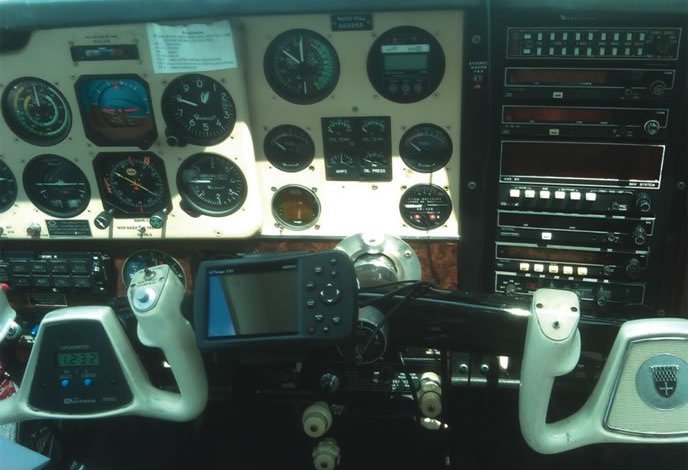
In this photo of my former Bonanzas panel, top, you can see it includes analog instruments along with VOR- and ADF-based nav systems, and a lone portable GPS on the yoke. Most of it operated intuitively and without the need to navigate various sub-menus. Even the airplanes sophisticated-for-its-day Century IV autopilot with yaw damper is relatively simple to operate.

Read More »
Features

Proficiency Levels

Am I ready for this flight? Thats the question I found myself asking when I decided to resume flying in a rental aircraft after a six-month lapse. This was after selling the V35B Bonanza Id owned for eight years. Since I was due for a flight review anyway, I engaged an instructor and got checked out to fly a Cessna 172 from a local flight school. I was comfortable flying the Skyhawk after only an hour and three landings, despite not having flown in six months. That certainly wouldnt be the case for all the aircraft Im rated in: The last time I flew a jet was more than seven years ago.

Read More »
Unicom

Using The Rudder

I thoroughly enjoy reading Aviation Safety and its professional articles. Having said that, I was surprised to read the questionable advice by Michael Banner in his article, Proper Rudder Use (October 2014).

Read More »
Training & Sims

Proficiency in Pieces 2.5

Previously, Ive described a practice of regular recurrent training in two articles: Proficiency in Pieces, in the July 2007 issue of IFR, and its follow-up, Proficiency in Pieces 2.0 in April, 2012. This program is a simulator-based recurrent training program in which you specify the minimums to which you want to train, and then design a specific training program tailored to your exact requirements, while assuring that your target performance meets or exceeds that prescribed in the regulations for your flying-Part 91 or even Part 135.

Im now writing about Proficiency in Pieces for a third time, partly to re-emphasize the idea. It has worked very well for me and others I know. More importantly, I want to fully stress what I have found to be, for me, a cornerstone of it that is missing in articles by others about their approach to personal sim training-the use of a qualified instructor to conduct the training.

Read More »
System

Good-Bye PTS; Hello ACS

If the FARs and the AIM comprise the bible of flying, the practical test standards (PTS) would be favored hymn books. But, just as the worlds religions occasionally modernize themselves, the FAA is getting ready to burn PTSes on the pyre in exchange for a completely new system.The new system, known as the Airman Certification Standards (ACS), is a major overhaul of the certification process effecting every license and rating. Whether youre thinking about adding to your ticket, are an instructor or you simply plan to get an IPC, it would behoove you to know a little about these changes before they arrive. The last thing you want is that deer-in-the-headlight look if the instructor asks you to review the pertinent ACS.

Read More »
Avionics and Gear

Tools You Can Use?

So, youve decided the risk is worth it and youre going to execute a zero-zero or low-visibility takeoff. Youve thoroughly prepped the airplane, the cockpit and yourself for the operation, youve practiced it, you have a solid-gold takeoff alternate only a few miles away, with an ILS above minimums, and youre ready. One problem: The weather is so bad, you cant see more than one or two of the runway stripes at a time. Is that enough to help ensure directional control on the takeoff roll? Probably not.

Read More »
Features

GA Safety In Europe

General aviation flight operations in Europe often are radically different from those in the United States, yet GA pilots across the pond face some of the same safety issues confronting pilots in the U.S. Meanwhile, European GA pilots and operators also must battle safety issues unique to Europe, including uneven infrastructure and high operating costs, which can limit training and proficiency flying. As a result, comparing GA in Europe to its counterpart in the U.S. offers some risk management lessons for pilots who are increasingly facing similar challenges, no matter their geographic location.

Read More »
Features

Differences

In many ways, talking about flying consistent traffic patterns as a way to help perfect our landings is a fools errand. Thats because each pattern, approach and landing is different. Tower can bring us in directly to the runway on a long final or a short right base, or ask for an extended downwind. What was a mild left crosswind when you landed this morning can be a honker from the right this afternoon.

Read More »
Pilot in aircraft
Sign-up for newsletters & special offers!

Get the latest stories & special offers delivered directly to your inbox.

SUBSCRIBE