Register

Search Results for: maintaining your airplane

Accident Probes

Revising Slow Flight

By now, U.S.-based flight instructors and training organizations should be fully up to speed on last years formal implementation of the airman certification standards (ACS), which is designed to eventually replace all practical test standards (PTS). For now, only the private pilot and airplane instrument rating checkrides employ the ACS, but more are coming. The new standards went into effect June 15, 2016-if youre in the primary training environment and dont know about the ACS, you havent been paying attention.
Read More »
Accident Probes

Light Business Aircraft

since both the FAA and the NTSB define this category precisely in terms of the crew consisting of a single non-professional pilot who operates the aircraft as an incidental duty to the pilot’s business. Source: FAAüThis chart is from a presentation by NTSB Member Earl F. Weener delivered at the NBAA’s Single Pilot Safety Standdown in November 2015. It highlights how the business aviation segment fatal accident rate

Read More »
Remarks

Currency Reflections

Some of you might recall that almost two years ago I retired as an airline captain. Then, due to various circumstances both in and out of my control, I took a year hiatus from all self-piloted flight. The result was some serious catching up to do to get ready to fly my own personal flivver. Being an opportunistic magazine editor, I used that need to also create a number of articles for the magazine about the process.

Read More »
Gear

Flying Holiday Gift Guide 2016

’Tis the season to splurge on your aviator friends and family members. This year’s guide features gear and gadgets from Garmin, Bose, Breitling and much more. Scroll through for some fun gift ideas that can be found at your favorite aviation shops, such as Sporty’s, Aircraft Spruce and Pilot Mall. Hover over to see product […]

Read More »
Features

Mismanaging Flight Energy

Loss of control in-flight (LOC-I) has become the safety issue du jour, and justifiably so. According to the NTSB, between 2001 and 2011, over 40 percent of fatal fixed-wing GA accidents occurred because pilots lost control of their airplanes. Takeoff and climb, landing and maneuvering are regarded to be the flight phases in which pilots are most susceptible to LOC-I,

Read More »
Technique

Circling On The Climb

Everyone trains for that circle-to-land maneuver from an instrument approach, but theres also an occasional need to fly circling departures. These can put you in the most marginal visual conditions waiting for the official IFR clearance. The usual suspects-weather, obstacles and flying the airplane-all come into play when youre in that murky transition between VFR and IFR.

Read More »
Accident Probes

Manufacturer Mandates

Readers likely are familiar with the role product liability plays in general aviations history. It shares responsibility for the industrys collapse in the 1980s and it wasnt until federal legislation was enacted-the General Aviation Revitalization Act of 1994, which limited manufacturer liability-that some piston-engine airplane production was restarted. Separately, patterns were identified involving accidents of specific aircraft types, and addressing them became another way to minimize the risk of successful liability claims.

Read More »
Pilot Proficiency

Why Learning to Fly by TLAR Is Important

“We’re going to be in the Hudson.” It was Capt. Chesley “Sully” Sullenberger announcing they were going to dead stick US Airways Flight 1549 into the Hudson River. It is a story most of us are familiar with. After the loss of both engines in their A320, Capt. Sullenberger and First Officer Jeff Skiles first […]

Read More »
Pilot Proficiency

Technicalities: How to Calculate the ‘Strength’ of an Updraft

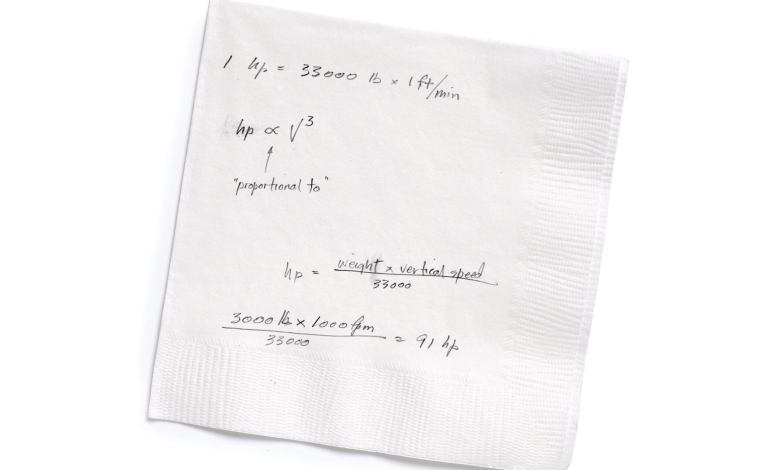
“Is there a way to compute the strength of up- and downdrafts based on the amount of increase or decrease in airspeed? If I’m cruising along at an indicated 135 knots with a constant power setting, maintaining altitude and see my airspeed decrease to 110 knots as I pitch up to overcome downdrafts while maintaining […]

Read More »
Accident Probes

Aircraft Stalling: 3 Basic Kinds

Veteran pilots know better, because theyve learned that stalls are a normal part of flying, neither an aberration nor abnormal. They realize and understand stalls are simply what happens at the lowest end of an aircrafts normal flight envelope. Stalls when not wanted, not needed, at the wrong time, wrong place bend airplanes and break people. Which brings us to the first and most-important rule to remember about stalls: A stall can occur at any airspeed, in any attitude and at any power setting, from dead engine through full power.

Read More »
Pilot in aircraft
Sign-up for newsletters & special offers!

Get the latest stories & special offers delivered directly to your inbox.

SUBSCRIBE