Register

Search Results for: Lear 45

Aircraft

Jumpseat: US Airways Flight 1549

One of the best resources that I can access in the cockpit is available without a three-ring binder. This resource does not involve a red warning light, an electronic siren or a SATCOM radio. The best resource that I have is by far the guy or gal who’s seated to my right. At no other […]

Read More »
Aircraft

Gear Up: Oshkosh Through the Eyes of a 4-Year-Old

Out of the mouths of babes, seen through the eyes of a child; you’ve heard the clichés that describe the cut-to-the-heart-of-the-matter thought process of children. What, I wondered, would Oshkosh be like this year with a youngster in tow? Would a child’s needs slow me down or would a child’s view take me somewhere I’d […]

Read More »
News

‘Back to the Future’ for Light Jet Aficionados

Long before Eclipse, Cirrus or even Lear Jet, the Morane-Saulnier MS-760 brought jet performance to personal aircraft. In production from 1959 to 1966, the four-place twinjet was powered by a pair of Marbore straight-pipe turbojets and sold reasonably well for its time. Now, a new company plans to revive the design, known as the Paris […]

Read More »
News

Cessna Weighs the Good and the Bad

With typical Midwest pragmatism, Cessna addressed the clear problems it faces while also outlining its reasons for optimism. At his press conference during the NBAA convention, Cessna Chairman, President and CEO Jack Pelton acknowledged the grim reality of layoffs. The work force at Cessna has contracted to 10,000 employees from 18,000 at this time last […]

Read More »
Unicom

By George

I read with interest your article on VFR into IFR conditions (“Inadvertent IFR,” October 2009). It seems to me you missed one of the most obvious aids to maintaining control of the aircraft: Engage the autopilot and fly the plane with the heading bug on the heading indicator. Nothing could be simpler. Using the autopilot keeps turns at appropriate angles and gives you time to communicate and sort things out. The only additional factor to keep in mind is to maintain proper trim.

Read More »
Features

The Spin On Spins

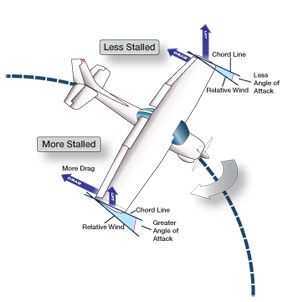
The FAA doesnt talk much about spins. Mostly, they want us to learn to avoid them. Clearly, avoiding an inadvertent spin is good, but it might help to know a bit more about them. Plus, the whole specter of Air France 447 crashing into the Atlantic at what French authorities indicate was a very high vertical speed and a nearly level attitude suggests that it might be nice to know a bit about flat spins in particular. Most of us have heard it before: Spin training used to be mandatory, but sometime after WWII it was decided most inadvertent stall/spin accidents occurred at an altitude low enough to make recovery unlikely and neednt be taught. So, the FAA dropped spin training from all but the CFI curriculum and instead began to emphasize spin avoidance. Now, the FAA is taking that one step further by de-emphasizing stall practice and recovery, and instead concentrating on teaching pilots to avoid stalls. With this progression, soon spins and even stalls may be solely the realm of the aerobat and the accident victim. Our goal, of course, is to minimize the latter, so a little education is in order. Well start with a brief discussion of the stall and then focus on the aerodynamics of spins and their recovery. Finally, well take a look at what makes a flat spin.

Read More »
Features

Cant See Nuthin

The proverbial zero-zero takeoff can be a perennial topic of debate whenever instrument pilots get together. Although you may have practiced them during your instrument training, chances are youve never attempted one since. Perhaps youve been presented with the need, but didnt want to tackle it in real conditions. Perhaps youve been lucky and the need never arose. If you had to execute a zero-zero takeoff, what is a good technique? How would you go about it? And what about the flights necessity makes a zero-zero takeoff a good idea, regardless of how many youve flown? Of course, what exactly is a zero-zero takeoff, anyway? Why might we want to execute one? In real-world conditions, a ceiling of zero feet rarely exists; for practical purposes, theres usually a little “air” between the surface and overlying clouds. Thats one of the reasons the “ceiling obscured” terminology describing a low, indefinite ceiling on the old sequence reports was replaced with vertical visibility in the newer Metar format. Nil visibility is just as unlikely to occur. After all, when was the last time you really couldnt see the hand in front of your face? In fact, and even though it might be legal, we cant support attempting a takeoff in less than at least a few hundred feet of visibility. So, what were really talking about here are low-visibility takeoffs.

Read More »
Aircraft Analysis

EFIS Evaluated

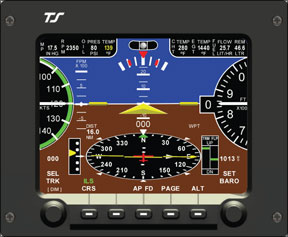
Electronic flight displays-glass cockpits in the modern vernacular-were a novelty just six years ago. Then all at once, it seems, they were everywhere. Every new airplane is delivered equipped with some kind of glass and older airframes are seeing retrofits. Steam gauges are still in the majority, but theres enough glass out there to pose this question: Is it really better? More important, is glass actually more reliable and safer? Lacking a detailed blind study, a take-it-to-the-bank answer isnt possible and would, in any case, be subject to debate. So we did the next best thing. We joined with our sister publication, Aviation Consumer, and surveyed more than 300 owners and operators of various types of EFIS displays. Via an online survey published by our news service, www.avweb.com, we asked owners to evaluate the very idea of electronic displays compared to conventional iron gyros and analog pitot-static instruments. Is the glass easier to use? Do owners like the displays? Whats the maintenance like? And above all, do these sophisticated but relatively untried systems inspire the confidence necessary to charge off into the gray innards of hard IMC? Both of our magazines have received e-mails complaining about system failures, and more than one of these has claimed reliability is worse than the industry claims. If this were true, we reasoned, our survey would turn up a substantial number of complaints. It didnt. While owners did report glass failures and several pilots reported more than one failure, there was no widespread pattern related to poor reliability.


Read More »
Preliminary Reports

August 5, 2009, Napa, Calif., Cessna 182S

At 0431 Pacific time, the airplane impacted a hill shortly after departure. The solo commercial pilot was killed and the airplane was substantially damaged. Instrument conditions prevailed; an IFR flight plan had been filed and a clearance had been issued. Recorded radar data was consistent with the airplane making a shallow left bank and gradually increasing in altitude towards the east. The target was first identified at a Mode C reported altitude of 100 feet msl. During the next minute, radar returns disclosed a gradual ascent to 1000 feet msl; the last two returns show an altitude of 900 feet and a slight change of direction to the south.

Read More »
Pilot in aircraft
Sign-up for newsletters & special offers!

Get the latest stories & special offers delivered directly to your inbox.

SUBSCRIBE