










Flying Lessons: Turbulence in Congo
Fly with pilot Lane Wallace as she tours with Goma Air in the Congo.


Fly with pilot Lane Wallace as she tours with Goma Air in the Congo.
At 1515 Eastern time, the airplane collided with the ground and was destroyed. Instrument conditions prevailed. The private instrument-rated pilot and passenger received fatal injuries. According to ATC, the pilot had read back his clearance to descend from 8000 feet to 6000 feet when radar and radio contact with the flight was lost. Witnesses in the local area reported hearing an airplane and then a crash. The witnesses stated that the airplanes engine sounded very loud until the impact. The wreckage path was 3000 feet long by 500 feet wide, on a 145-degree heading from the first fragment (a fiberglass segment of the right wing tip) to the main wreckage.
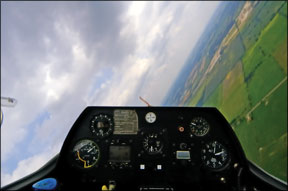
According to the AOPA Air Safety Foundations 2007 Nall Report, you have a 57.4 percent chance of dying if you lose control while maneuvering an airplane, up from 50.5 percent in the reports 2005 edition. Maneuvering describes a host of flight operations including aggressive turns from base to final, confined-area course reversals and retreats to the runway following an engine failure. In other words, turns. Why cant Johnny turn safely? One reason might be losing understanding of and appreciation for the dynamics of a turn, regardless of bank angle, airspeed or pitch. Lets take a look
I recently read an online comment from a wizened aviator to the effect that weather, by itself, has rarely if ever been responsible for an aviation accident. On the other hand, failure of the airplanes crew to correctly fly the airplane in that weather will mean a bad day for everyone aboard just about every time. Since the airplane is an inanimate object capable only of responding within its limitations to what its crew commands, the comment is exactly on-target. One of our challenges as pilots is to bring the required judgment, skill and experience along in the airplane. Of course, the average general aviation airplane is a marvel of reliability and capability. Even when considering an older design, the advances in technology since its introduction make trivial the task of equipping it with the latest in automated systems, allowing its crew to benefit from detailed information and situational awareness only dreamed of a generation ago.

“Three things in life are overrated,” I was told in medical school. “Home cooking, out of town sex and the Johns Hopkins Hospital.” Envy was surely at work. When I became an intern in the great Midwest, the saying was similar, but regionalized. “Three things in life are overrated: (HC, OOTS) and the Mayo Clinic.” […]
At 1406 Central time, the private pilot reported engine failure and ditched one mile off Panama City Beach, Fla. Visual conditions prevailed. The airplane was substantially damaged; the pilot was fatally injured and his passenger received minor injuries. According to the pilots mechanic, the pilot contacted him at approximately 1219, and requested that he prepare his airplane for a short flight. Over the next 1.5 hours, the pilot, his mechanic and line personnel experienced difficulties involving a dead battery, underinflated tires and substantial amounts of water in its fuel tanks. The pilot arrived at the airport and, after another jump start of the airplane, boarded along with his passenger. The head lineman jumped the airplane again and the engine started.
Its relatively commonplace to earn the instrument rating without ever having flown in a cloud. Thankfully, our double-I welcomed our wish for training in as much IMC as we could find. We were fortunate: Other instrument instructors with whom we were familiar at the time refused to provide any training in IMC. The point is a new instrument pilot has no idea what he might be getting himself into in those first few unsupervised hours after earning the rating unless hes seen some IMC and can reliably translate a weather report of 400 overcast and a couple miles visibility into what hell see on the approach.
Probably the most feared situation in aviation, besides perhaps an inflight fire, is a midair collision. One moment a pilot is enjoying the flight. He may be checking his chart or tuning a radio. Or maybe he is talking with a passenger or taking a drink of water. Suddenly there is a loud crash. The […]

The sun is not up yet in Afton, Wyoming, and the last I checked, the temperature was reading 10 degrees. Fahrenheit. I pull on two layers of long underwear, ski pants, turtleneck, a wool sweater, two pairs of socks and the Sorel boots and huge down parka-remnants from my old Minnesota days-that I dragged out […]
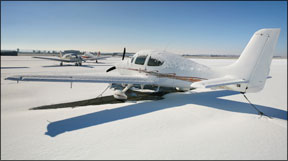
After watching me horse around with a Piper Cub one day years ago, an old timer gave me a stern look and the comment, “Son, that aint a car.” Even in my youth I realized it was a good point that applies to most aspects of aviation, but recently I recognized its wisdom concerning cold-weather starts. Everybody knows that preheating aircraft engines is recommended, but so is exercise and a good diet. You dont preheat your car to drive to the airport, so whats the big deal? One engine is much the same as another, isnt it? Not really. The main difference between automobile engines and airplane engines is the materials they are made of. And the oil they use. And the fuel they use. And the machines they power. And the way they are operated. Okay; just about everything involving airplane engines makes cold-weather preheating important.

Get the latest stories & special offers delivered directly to your inbox.
SUBSCRIBE