Register

Search Results for: Lear 45

Accident Probes

Too Much Automation?

Theres no question in my mind that a good autopilot system tends to dull a pilot to what the airplane is doing and what it may be telling him or her. Im fortunate to have a really good one in my traveling airplane and use it most of the time when Im in cruising flight. It will fly a heading, follow a magenta line, climb/descend to a preset altitude at a rate of my choosing and shoot coupled ILS or GPS approaches.
Read More »
Accident Probes

NTSB Reports: November 2016

The pilot later related he was in cruise climb at about 8500 feet msl when he noticed something in his peripheral vision, then felt a thud as something struck the airplane. There was no loss of control or abnormal control feel, so he continued the flight and landed uneventfully. Upon landing, about 12 inches of the airplanes vertical stabilizer was missing; there also was substantial damage to the rudder. Initial examination showed no evidence of organic material. A detailed examination by the NTSB is pending.

Read More »
Accident Probes

Fuel Burned

In the spring of 1984, I was 23 and a new pilot, with barely 120 hours. While planning a trip that would include my wife and another couple, I called the FBO to ask about the amount of fuel burn on the Piper Warrior I had rented for the flight. I was advised the Warrior burns eight gph in cruise at 9500 feet msl and, with that information, I completed my flight planning and we all met at the airport.

Read More »
Technique

Seeing Double

Instrument flight is a game of single degrees, so it should get your attention when numbers dont match. Were used to this when flying VOR radials with GPS. The magnetic declination of the VOR is infrequently updated, while GPS calculates it exactly from the latest data and the current location. This can be disconcerting on a VOR approach where the GPS youre using for situational awareness (or, the actual approach, now that you can) shows a course several degrees off from the chart.

Read More »
System

Lower Won’t Work

While we usually train by flying right to minimums and then frequently flying the missed, how often in our actual flying do we miss and do it again, or divert to an alternate? How often do we get caught by surprise when the ceiling were expecting to break out of is lower than we thought (or lower than we need)? For those of us operating under 14 CFR Part 91, how often do we consider or actually find ourselves pushing the looser legal limits of landing under IFR?

Read More »
Avionics and Gear

Manny the Mooney Gets a Panel Upgrade

A few years back, my parents bought a beautiful tiled wood stove for their home. The first year, they bought a light truckload of wood. But Dad found buying wood to be a pricey way to feed the stove. Being retired with spare time on his hands and the desire for physical work, he decided […]

Read More »
Accident Probes

Aircraft Stalling: 3 Basic Kinds

Veteran pilots know better, because theyve learned that stalls are a normal part of flying, neither an aberration nor abnormal. They realize and understand stalls are simply what happens at the lowest end of an aircrafts normal flight envelope. Stalls when not wanted, not needed, at the wrong time, wrong place bend airplanes and break people. Which brings us to the first and most-important rule to remember about stalls: A stall can occur at any airspeed, in any attitude and at any power setting, from dead engine through full power.

Read More »
Avionics and Gear

Aircraft Mufflers

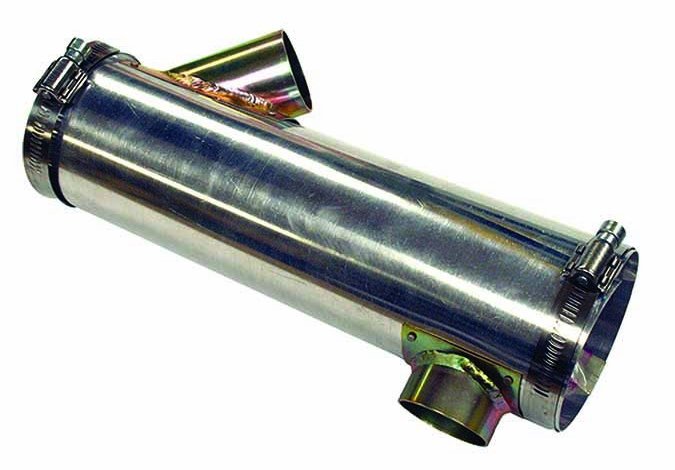
Pilot observed smoke in the cockpit, declared emergency and landed normally. Inspection of the right engine compartment revealed the mufflers aft wall was missing and exhaust was directed onto the battery box. Hot exhaust melted the battery and battery contactor, clock fuse holder, both battery cables and boots. The gascolator push/pull control knob was melted.

Read More »
Accident Probes

When The Juice Drys Up

On the first occasion, I was on an IFR flight plan departing into an 800-foot ceiling on my way to a destination reporting clear skies. At some point, I would clear the fog layer covering the inversion and find those clear skies, I just didnt know exactly where the layer would burn off. On departure I passed through the 500-foot-thick layer and was soon in VMC on top. Tops were at roughly 6500 feet and I was cruising along at 8500 with nothing but blue skies above me and a flat layer of white tops 2000 feet below.

Read More »
System

Approach Charts: Read the Fine Print

After selecting a specific approach, reviewing the other approaches might provide useful information. For example, until recently one Runway 16R approach at Reno/Tahoe (KRNO) had the note: Caution: intensive glider activity between PYRAM and WARMM up to 12,000. Seven other approaches transit the same area but offer no such warning.

Read More »
Pilot in aircraft
Sign-up for newsletters & special offers!

Get the latest stories & special offers delivered directly to your inbox.

SUBSCRIBE