

ColumnArt_Web
The crash of the American Airlines Airbus in New York in November of 2001, has revealed that what nearly every pilot of all experience levels believed about maneuvering speed, Va, is incorrect. It turns out that a pilot can break the airframe by moving the flight controls even when flying at an airspeed below Va. The significance of Va has usually been taught to pilots as a negative. "Do not make full or abrupt control inputs when flying faster than Va," is the standard description of the meaning of maneuvering airspeed. The implication of this teaching is that full or abrupt control inputs at airspeeds below Va can't break the airframe.
The truth of this belief is hammered home with explanations of how the wing will reach the stalling angle of attack just as the G loading on the airplane reaches the design limit. Thus the wing stalls and unloads itself before exceeding the structural limit. This is true if the sudden change in angle of attack is caused by a wind gust-turbulence-that doesn't exceed the certification standard.
We have all been taught that an airplane won't break when flying at airspeed below Va because it will stall first even if the sudden change in angle of attack was caused by the pilot moving the flight controls.
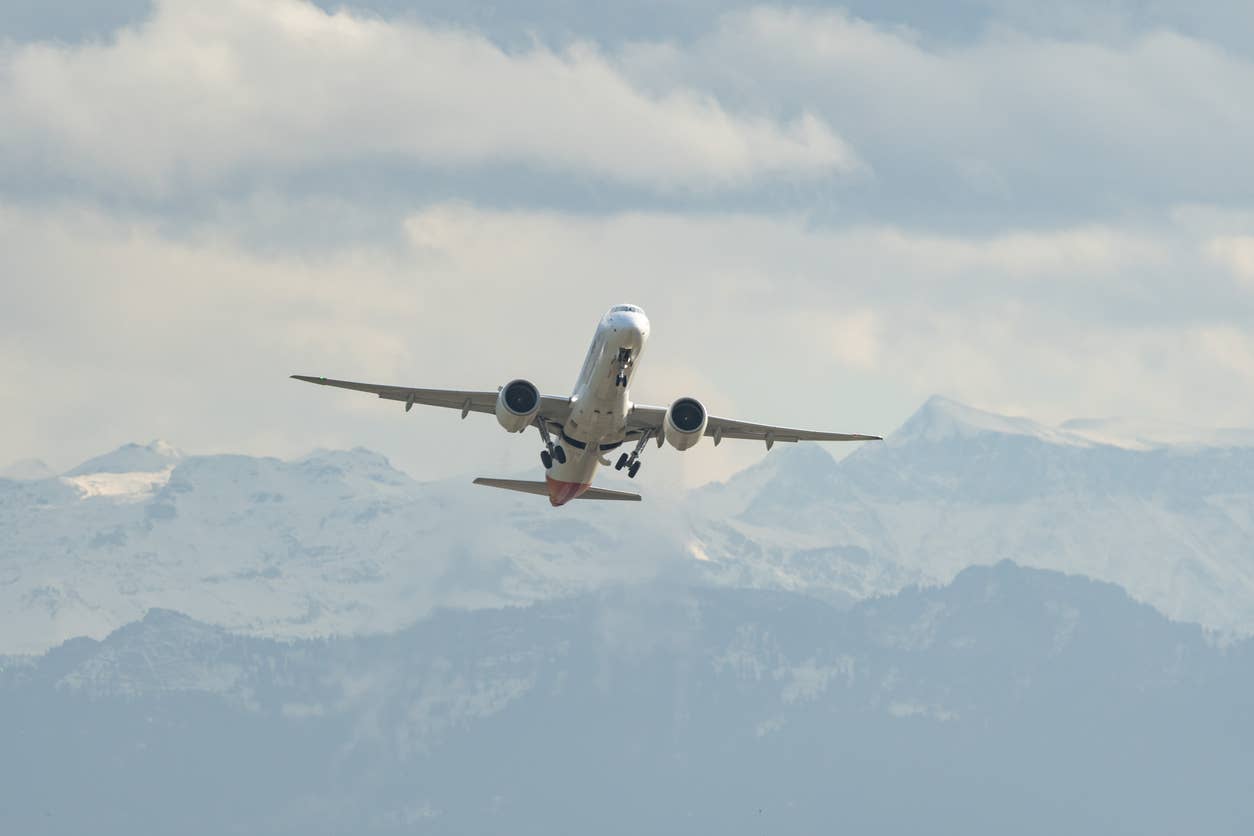
But the NTSB has determined that the pilot flying the Airbus caused the vertical fin to break off by rapidly moving the rudder from side to side. The Airbus was flying at a speed below Va and so, according to pilot dogma, should have been immune from a structural failure. But we pilots were wrong.
I'll save the full details of the NTSB's report on the crash of American Flight 587 for the Aftermath column by Peter Garrison, but the important fact for all pilots is that the vertical fin failed after its design load limit had been exceeded. According to the NTSB the pilot broke the airplane by using the flight controls in a full and abrupt manner while flying below Va. That's shocking news to all pilots.
It turns out that what pilots knew, or believed that they knew, about the significance of Va in airframe structural certification is incomplete. Va criteria apply to the structure of the wing, and to a lesser extent to the horizontal tail, but do not apply in the same way to the vertical fin of a normal or utility category airplane.
Va is a calculated airspeed based on the actual gross weight of the airplane and the wing's response to a 50-foot per second wind gust, or movement of the elevator. There are certification limits for the loadings caused by the gusts of turbulence, for maneuvering with the flight controls, and the combination of gusts and maneuvering. Va is at the corner of the combined gust and maneuvering limit. What we were taught, and believed, about not being able to break the airplane with the controls when flying at or below Va is mostly true when it comes to the elevator, but the elevator may break.
The loads on an airplane are complicated because gusts are not symmetrical, and because the flight controls exert their own bending and twisting loads when they are deflected. That's why each element of the airframe and its flight controls have their own design limit loads. When controls are moved in combination, and there is turbulence, the calculation of the loads on the airframe become very complex and Va doesn't offer structural immunity in every situation.
The certification loads on the vertical fin are probably the most surprising to pilots. Every pilot I know thought it was perfectly okay to move the rudder from side to side within the limits of pilot effort-the strength of your leg-or the limits required to be placed mechanically on a powered or boosted rudder when flying slower than Va. But moving the rudder from stop to stop is not a required certification load limit in normal category airplanes.
What the fin must be able to survive is a fully displaced rudder that generates the maximum side slip, and the rudder is then quickly returned to center and held there. The big yawing motion back from the maximum sideslip generates a high load on the vertical fin, but not nearly as great as if the rudder is moved rapidly from side to side. Only aerobatic airplanes, or those approved for "flick" maneuvers-snap rolls, etc.-must have a fin and rudder, and other control surfaces strong enough to withstand abrupt application to the limits in both directions.
The elevator in all airplanes does have a strength requirement for a reversal of input, or a "checked" maneuver, as the FAA calls it. But even in the case of the elevator the strength requirements may not cover rapid reversals over the full range of travel when flying at Va. Again, aerobatic airplanes must demonstrate the strength to withstand the stress of any maneuvers the airplane is approved to fly.
Despite our misunderstanding of the degree of airframe structural protection offered by Va, pilot induced structural failures, when flying at or below that speed, are very rare. The typical scenario of airframe failure in general aviation involves the loss of control, which quickly leads to a spiral dive with airspeed increasing very rapidly. When the pilot recognizes the dive-usually when he flies out of the base of the clouds-he levels the wings and pulls back, which easily exceeds the design limits of the wing, horizontal tail, or both.
So, even though my confidence, and no doubt yours, too, is shaken in the sanctity of Va as protection from airframe failure, the certification standards have worked pretty well. The message for me is when the air gets very rough, or abrupt maneuvering is anticipated, get down to Va, avoid abrupt asymmetric maneuvers that involve rolling and pulling on the controls, and move the rudder as little as necessary.



Subscribe to Our Newsletter
Get the latest FLYING stories delivered directly to your inbox