














How Airport Cameras Save Pilots From Bad Weather Data

Visual confirmation in flight planning plays a critical role when automated systems are ‘creatively optimistic.’

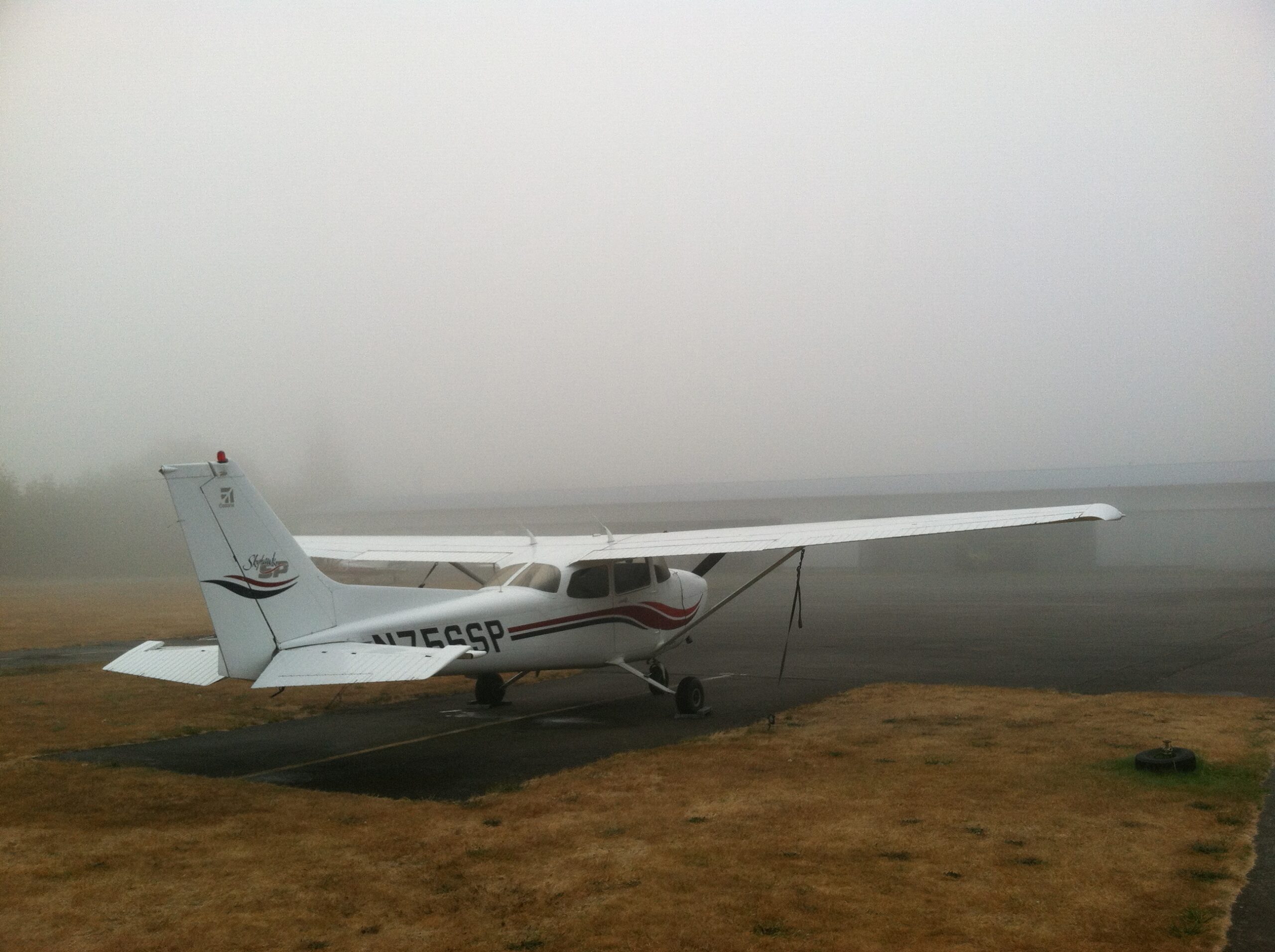
Fog on a ramp
Heavy fog on a ramp [Credit: Meg Godlewski]
Gemini Sparkle

Key Takeaways:

  • Automated weather stations (ASOS/AWOS) can be unreliable or "creatively optimistic," potentially misreporting actual weather conditions and leading to unsafe flight decisions.
  • Airport cameras are a vital tool for pilots to visually verify automated weather reports, providing real-time conditions and helping satisfy pre-flight information requirements (cFAR 91.103).
  • Beyond weather verification, these cameras offer security benefits, provide peace of mind during adverse events, and ultimately aid pilots in making informed, safer flight planning and go/no-go decisions.
See a mistake? Contact us.

The old pilot adage about “it’s better to be on the ground wishing you were in the air than in the air wishing you were on the ground” is never more true than when the automated weather station at your home airport malfunctions.

I received a text message from a fellow CFI asking what current conditions were at the airport. I had been in the windowless classroom all morning. I walked out onto the ramp, took a look, and texted back, “Can’t see the ends of the runway due to fog.”


The reply was something to the effect of “%#@!” because he was up with a client, and they’d gone missed on the RNAV approach because they couldn’t see the runway. The ASOS was reporting a ceiling of 7,000 feet and visibility of 10 miles, which the current conditions were definitely not. Fortunately they had the fuel to divert to another airport.

I thought about this on January 1, when a client called asking me to join him for a flight. We simultaneously pulled up weather briefings and over the phone discussed what we saw. The METAR for the airport showed VFR conditions. However, a look at the AIRMETs showed every color available, from icing and mountain obscuration to turbulence.

The client reported he had checked the TAF and METARs from the nearby airports, and they reported VFR conditions but had a $ at the end of the information, which made it suspect.

“Have you checked the airport cameras?” I asked. The airport, like so many these days, has cameras strategically atop buildings that allow a view to the north, south, east, and west.

These can be extremely useful to satisfy cFAR 91.103: “Each pilot in command shall, before beginning a flight, become familiar with all available information concerning that flight” by providing information on current conditions and—this is the really important part—acting as a means to verify the information gathered from the airport automated weather station (if available), as sometimes the machines can be “creatively optimistic” about the present conditions. While the cameras do have a time lag—the images may refresh every 15 minutes or so—they are useful for comparing the veracity of the ASOS or AWOS.

The Camera Controversy

These days being on camera when out in public is to be expected. There are cameras at traffic lights, in businesses, on public transportation, installed in private vehicles, on homes facing the street, sometimes in parks and playgrounds, etc.

When cameras first started appearing at general aviation airports, they were often controversial. There were some people who worried “they” were going to spy on pilots. But when and if the camera, especially time-stamped video, helped solve a crime at the airport, like fuel theft, stolen aircraft, and vandalism, those opposed to cameras often saw their value.

As technology improved, cameras used to gather weather information became especially useful as the access to the data, including real-time or slightly dated imagery, was made possible with a smartphone. If you are in the United States, you can look up cameras in your part of the world at weathercams.faa.gov. These can be useful for flight planning, especially when you have to divert because of weather.

Cameras for Peace of Mind

For the weeks that flooding and levee failures dominated the news cycle in Washington state, I was clicking on links to check airport cameras at multiple airports like a nervous mother who left her firstborn with a third-string babysitter. I was not the only one.

Those cameras, combined with the information provided by 1800WXbrief.com and Aviationweather.gov, kept me—and the other aviators and aircraft owners worried about their aircraft—well informed and kept a few people from doing something foolish, like attempting to drive around barricades and over flooded roads to get to the airport to check on their airplane.

As one person in a particular aviation club Snapchat put it: “No airplane is worth losing a pilot.” Amen to that.

On January 1, the cameras showed low clouds, but there was an airplane taxiing in the image, so perhaps the weather would permit the pattern. The METAR certainly supported it. We agreed to meet at the airport, saying we’d have lunch if the weather was a no-go.

Driving to the airport, I was pretty sure unless there was a miracle on the level of loaves and fishes, there would be no pattern flying. It was foggy. I mean foggy like I should have filed IFR for the drive. But there have been times when I drove through fog only to break out into severe clear a few miles from the airport. That did not happen this time.

“This doesn’t look like VFR,” the client said as we watched the hills south of the airport disappear behind the familiar gray layer.

“Because it’s not,” I replied, and we both laughed as a cold rain began to fall. We stayed on the ground. Lunch was had, and learning took place.

Meg Godlewski

Meg Godlewski has been an aviation journalist for more than 24 years and a CFI for more than 20 years. If she is not flying or teaching aviation, she is writing about it. Meg is a founding member of the Pilot Proficiency Center at EAA AirVenture and excels at the application of simulation technology to flatten the learning curve. Follow Meg on Twitter @2Lewski.

Ready to Sell Your Aircraft?

List your airplane on AircraftForSale.com and reach qualified buyers.

List Your Aircraft
AircraftForSale Logo | FLYING Logo
Pilot in aircraft
Sign-up for newsletters & special offers!

Get the latest stories & special offers delivered directly to your inbox.

SUBSCRIBE
