













Night Flight

Gemini Sparkle

Key Takeaways:

  • Night VFR flight training proved vastly different and significantly more challenging than day VFR, emphasizing that practical experience surpasses theoretical preparation.
  • Key difficulties encountered included judging wind direction without visual cues, maintaining a visible centerline, accurately gauging ground distance on final approach, and navigating without familiar visual ground references.
  • The experience highlighted a critical need for heavier reliance on instruments and revealed an underlying over-reliance on visual judgment during day VFR.
See a mistake? Contact us.

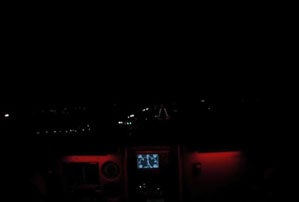
Wow, what an eye opener! Last night I completed 1.4 hours of my 3-hour night flight-training requirement for the private certificate, single-engine rating, with First Landings Aviation CFI Chris Esposito. I shot 8 full-stop landings in the Remos GX, leaving the last two of the 10 required for my dual cross-country night flight. All I can say is: What a different world than day VFR flight. That should seem obvious to anyone, but until I actually experienced it, I didn’t realize how different it would be and that reading about it in the prep books doesn’t do it justice.

The conditions offered 10 miles viz and a 30- to 40-degree 7- to 10-knot crosswind. Here are just few of my observations:


* Not being able to see the windsock on downwind for final confirmation against the AWOS info was a bit disconcerting. Adjusted by listening to AWOS more frequently.

* Not having a visible centerline on approach made it difficult for me to nail it.

* It was challenging to judge the ground distance on short final. I tended to flare for the landing a little too high, instead of closer to the ground. Strict attention to the precision approach pat indicator lights can keep this from happening. Confession: This made me realize I was defaulting to my day VFR tactics, where I tend to subconsciously rely more on my visual judgment more than the PAPI lights, so this was a great awareness exercise.

* Heavier reliance on the instruments/heading. By the time we finished seven of the landings at another airport and it was time to head back to home base, I was pretty fatigued. As a result, when leaving the pattern I initially became disoriented. Where’s that big lake that serves as my main reference point that I use to locate my airport?! What would have been a no-brainer case of pilotage in day VFR, became a challenge requiring vigilant attention to the heading indicator and GPS.

* Spotting air traffic was easy! And we did have some, both in the pattern and the vicinity.

I would love to hear how other student pilots or sport pilots training for the private would describe their first night flight experience … in the meantime, check out the video of my last landing for the night.

Ready to Sell Your Aircraft?

List your airplane on AircraftForSale.com and reach qualified buyers.

List Your Aircraft
AircraftForSale Logo | FLYING Logo
Pilot in aircraft
Sign-up for newsletters & special offers!

Get the latest stories & special offers delivered directly to your inbox.

SUBSCRIBE