














Michigan, Ohio, North Carolina Could Host Electric Aircraft Trials

Beta Technologies says early operations will focus on cargo and medical logistics.

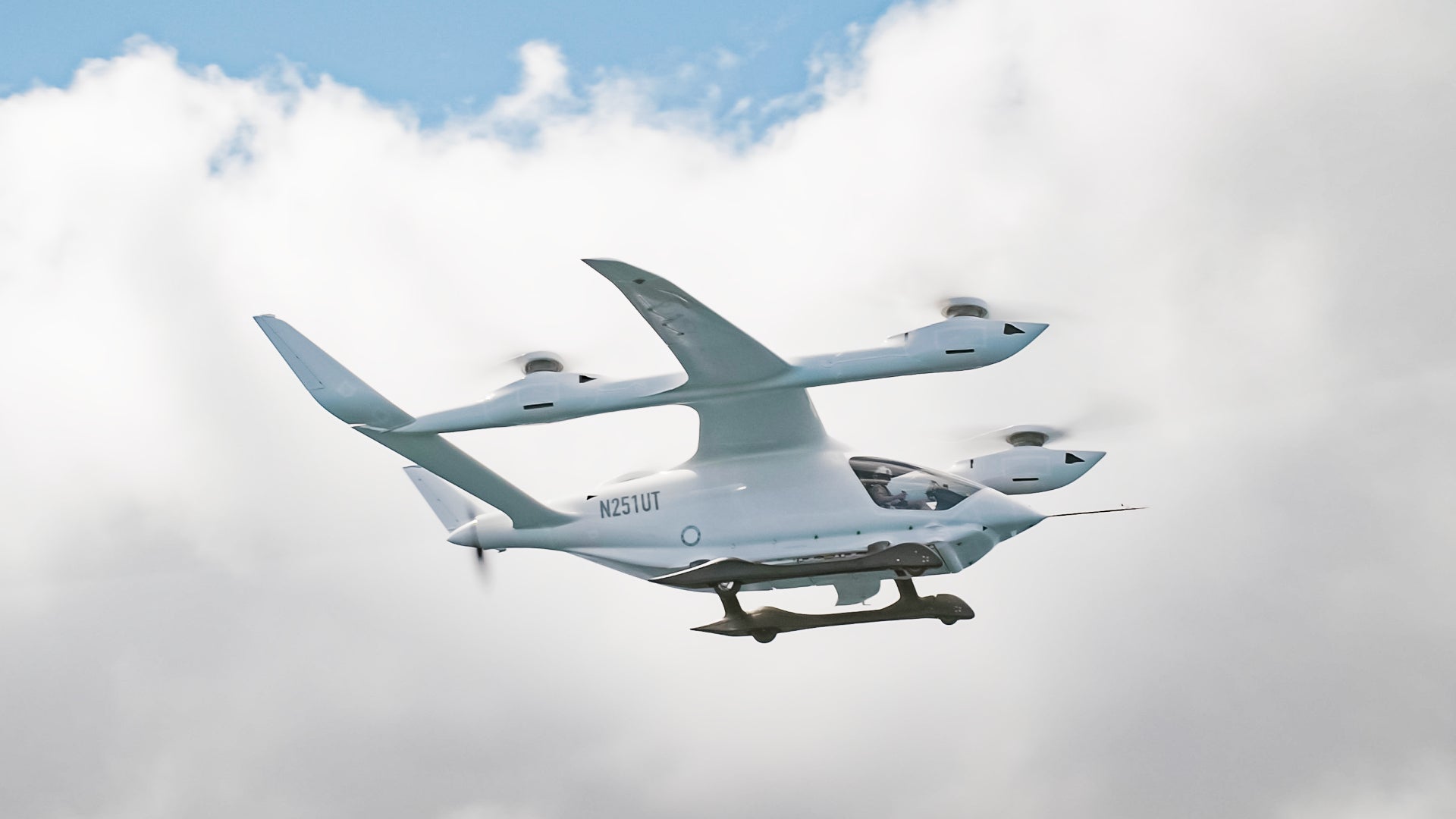
Beta Technologies electric vertical takeoff landing eVTOL aircraft in flight
This electric vertical takeoff and landing (eVTOL) Alia is one of several variants being developed by Beta Technologies. [Credit: Beta Technologies]
Gemini Sparkle

Key Takeaways:

  • Beta Technologies is partnering with states such as Michigan, Ohio, and North Carolina to host early operations of its electric Alia aircraft as part of the FAA's new eVTOL Integration Pilot Program (eIPP).
  • Beta's initial eIPP operations will focus on cargo and medical delivery, particularly for rural communities, utilizing a "stepwise approach" before expanding into passenger transport.
  • The eIPP is considered crucial for accelerating the integration of advanced air mobility technologies into the national airspace, generating essential data, and ensuring the U.S. remains competitive in electric aviation.
See a mistake? Contact us.

Michigan, Ohio, and North Carolina are among the candidates to host early U.S. operations of Beta Technologies’ electric conventional takeoff and landing (eCTOL) and vertical takeoff and landing (eVTOL) Alia aircraft.

In a question to Beta founder and CEO Kyle Clark during a House Transportation and Infrastructure Committee hearing on Wednesday, Representative Hillary Scholten (D-Mich.) mentioned that both Michigan and Ohio are working with the company to participate in the FAA’s eVTOL Integration Pilot Program (eIPP).


The three-year initiative—created by a June executive order—will comprise at least five projects and study a range of applications, from passenger transport to medical delivery. State, local, tribal, and territorial governments have until December 11 to submit eIPP applications with a private partner. The program is a follow-on to the FAA’s BEYOND, which helped shape the regulations around commercial drone operations.

Later in Wednesday’s hearing, Representative Addison McDowell (R-N.C.) said that Beta is also seeking an eIPP partnership with the North Carolina Department of Transportation (NCDOT).

A Beta spokesperson confirmed the NCDOT partnership and said the company’s eIPP operations will focus on cargo and medical delivery. Those commercial operations will begin before it flies passengers—a strategy Clark called a “stepwise approach.”

“When most people think about urban air mobility, they think about jumping over traffic initially,” Clark said. “This is not Beta’s initial mission.”

Proving Ground

Beta is developing both eVTOL and eCTOL variants of its flagship Alia and has hinted at a larger, 19-passenger version in the future. It is also exploring autonomy, as well as hybrid-electric powertrains in partnership with GE Aerospace. The eIPP, Clark said, “will be the unlock” for these technologies and their integration into the national airspace.

“It will advance our industry by a year,” he said. “When I’m talking about our industry, I’m talking about all of these technologies that allow us to have safer and more reliable aerospace.”

Clark estimated that in the U.S. alone, there are about 4,300 “applicable airports” that could accommodate Beta’s planned cargo, medical, and passenger services. He described a hub-and-spoke model—in which Alia aircraft move blood, patients, and other equipment to satellite hospitals to spread out resources—as “one of the many missions that we’re pursuing.” 

Other use cases could include critical deliveries of organs and low-shelf life medications.

“We’re delivering cargo, medical, and logistics to rural communities,” Clark said. “So you have a meaningful impact, you expose the technology, you generate the data, and we get ahead of the rest of the world.”

Clark emphasized the need to keep the eIPP on track, anticipating initial operations as soon as the summer. He lamented China’s dominance of the commercial drone industry and said the FAA must remain focused to avoid a similar outcome for electric aircraft.

“We’re asking for the goalpost to stay steady, for people to show up and be accountable, and for the FAA to meet their compulsory timelines that we believe should be in place for responses to things when we produce statistically relevant datasets,” Clark said.

Welcome, Electric Aircraft

Michigan, Ohio, and North Carolina have each demonstrated interest in leading the way in electric and other advanced air mobility (AAM) aircraft. All three have representatives in the National Association of State Aviation Officials’ AAM Multistate Collaborative, a recently launched effort to harmonize regulations across state lines.

Michigan, in particular, has been a trailblazer. The state’s AAM Activation Fund has poured more than $10 million into a variety of projects, including the installation of Beta’s electric aircraft chargers at airports statewide.

North Carolina has a history of leading the way in commercial drone operations, serving as one of the FAA’s initial proving grounds during BEYOND. Earlier this year, Walmart, DoorDash, and drone delivery partner Wing launched in Charlotte, cementing it as an early hub.

Ohio too has shown a penchant for new aviation technology, hosting the revived Pulitzer Trophy air races—the first to feature electric aircraft—in October. Beta conducted Alia flight demonstrations at Ohio State University’s airport in August.

However, the eIPP will likely involve other states.

Archer Aviation is working with United Airlines to pursue a partnership. Founder and CEO Adam Goldstein said in November that he is “hopeful” the company’s recently acquired property—Hawthorne Municipal Airport (KHHR) in California—will be picked as an eIPP site. Virginia-based Future Flight Global, which has an order for up to 116 Archer Midnight air taxis, told FLYING in June it is discussing participation with multiple states.

Also in discussion with multiple states is Joby Aviation, which said in September it is working with partners in Texas, Florida, Ohio, New York, and California to demonstrate passenger and cargo transport.

Several other AAM developers—including air taxi operator Wisk Aero, cargo drone firm Elroy Air, and flying car company Alef Aeronautics—have told FLYING they too hope to participate.

Jack Daleo

Jack is a staff writer covering advanced air mobility, including everything from drones to unmanned aircraft systems to space travel—and a whole lot more. He spent close to two years reporting on drone delivery for FreightWaves, covering the biggest news and developments in the space and connecting with industry executives and experts. Jack is also a basketball aficionado, a frequent traveler and a lover of all things logistics.

Ready to Sell Your Aircraft?

List your airplane on AircraftForSale.com and reach qualified buyers.

List Your Aircraft
AircraftForSale Logo | FLYING Logo
Pilot in aircraft
Sign-up for newsletters & special offers!

Get the latest stories & special offers delivered directly to your inbox.

SUBSCRIBE
