














How This State Could Become Electric Aviation Hub

Future Flight Global and Universal Solutions International will lead an effort in Virginia to integrate drones, electric air taxis, and more.

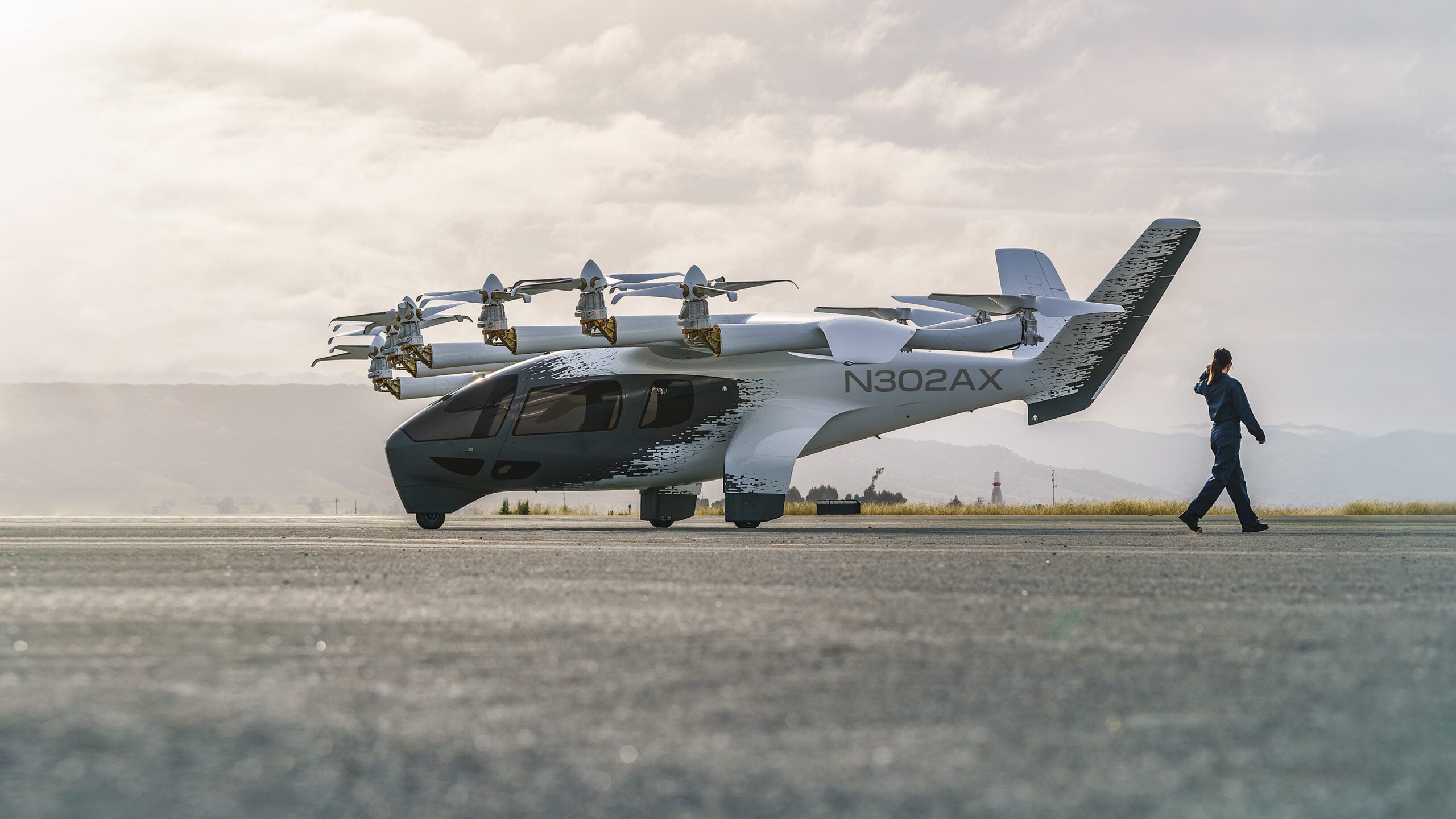
Archer Midnight eVTOL electric air taxi
Future Flight Global, which is building a fleet around Archer Aviation’s Midnight air taxi, will lead the effort alongside Universal Solutions International. [Courtesy: Archer Aviation]
Gemini Sparkle

Key Takeaways:

  • Virginia is collaborating with state organizations and educational institutions to establish itself as a prominent hub for electric aircraft, encompassing VTOL air taxis and autonomous drones.
  • The initiative involves real-world demonstrations led by Future Flight Global (FFG) and Universal Solutions International (USI), testing aircraft for missions such as medical/cargo delivery, public safety, and infrastructure inspections.
  • The data gathered from these demonstrations will be used to shape future regulations, develop dedicated advanced air mobility (AAM) corridors, and build the necessary infrastructure and workforce for commercial adoption.
  • Supported by various state, regional, and federal entities, the project aims to provide crucial operational evidence that can inform AAM integration efforts both in Virginia and potentially nationwide.
See a mistake? Contact us.

The Virginia Department of Aviation (DOAV) and other state organizations and educational institutions are partnering to cement the state as a hub for electric aircraft, from vertical takeoff and landing (VTOL) air taxis to autonomous drones.

Announced Thursday, the collaboration will set the table for electric and hybrid-electric models through a series of real-world demonstrations with “mission-ready” aircraft, Toni Drummond, president and cofounder of Future Flight Global (FFG), told FLYING. FFG, for example, will begin with beyond visual line of sight (BVLOS) drone trials before ramping up to more robust operations.


“Specific demonstration activities may be focused around medical and cargo delivery, public safety, precision agriculture, long-range infrastructure inspections with partners like Dominion Energy and Virginia Natural Gas, and regional cargo logistics,” Drummond said.

FFG—which is assembling a fleet of eVTOL air taxis from Archer Aviation and Embraer subsidiary Eve Air Mobility—will lead the effort alongside Universal Solutions International (USI), a Virginia-based firm that tests and fields uncrewed systems for civil and defense customers.

The companies said data generated by the demonstrations could shape “roadmaps” for dedicated advanced air mobility (AAM) corridors, fleet integration, and future regulations for operators. They will also work with a coalition of partners to gauge AAM mission profiles, infrastructure, and workforce pipelines that could scale drones, air taxis, and other technologies like hybrid-electric and STOL-capable aircraft statewide.

Beyond Virginia, the partners will study “communities, infrastructure, and routes where advanced mobility can deliver measurable public benefit and mission value.”

“Ultimately, FFG wants to ensure this partnership delivers operational evidence regulators and communities can trust, setting the stage for commercial adoption,” Drummond said.

Virginia Bets on Electric

FFG has a vested interest in bringing AAM to Virginia. In 2024, the fledgling operator signed a memorandum of understanding (MOU) for as many as 116 Archer Midnight air taxis in a deal worth up to $580 million. In June, it signed a letter of intent with Eve for up to 54 aircraft, which it plans to operate in the U.S. and Brazil. Drummond said the company’s demonstrations will feature “FFG-owned or partnered aircraft.”

But state and local partners also see value in the technology.

Drummond said FFG and USI have already completed a “first phase” of the partnership that involved discussions with DOAV, Hampton Roads Alliance, Peninsula Airport Commission, and local universities.

In addition, NASA’s Langley Research Center, the U.S. Army at Fort Eustis, and, potentially, the Defense and Homeland Security Departments will help develop an AAM corridor and counter uncrewed aircraft systems (C-UAS) to support testing. Trials will gauge not only aircraft performance but also procedures and supporting systems such as detect and avoid. They will also have federal support.

“The FAA is directly tied into the airspace approvals, safety documentation, and corridor development strategies we’re pursuing,” Drummond said. “Regulators can and will absolutely use this work to inform AAM and BVLOS integration in other states.”

The partnership is also backed by GO Virginia—a coalition of business leaders that works with state organizations and educational institutions to attract more private sector jobs to the state. Specifically, support comes from GO Virginia’s Region 5, which covers Norfolk, Williamsburg, Chesapeake, and Newport News—a city Drummond envisions as a future AAM hub.

Project funding, Drummond added, comes from a “mix of state economic development programs, regional stakeholders, and grant-supported activities.” USI will coordinate additional support.

Virginia is not the first state to set its sights on AAM. In fact, more than 30 state aviation agencies have in recent years created a multistate AAM collaborative within the National Association of State Aviation Officials (NASAO). In August, the coalition released several papers intended to help states chart a path to new technologies. Some, like Utah, have already published blueprints for integration.

Early state-level projects include planned AAM corridors between North Carolina and Georgia and New Jersey and Delaware. The state of Michigan, meanwhile, has awarded more than $10 million in grants for AAM projects. For example, the Advanced Aerial Innovation Region (AAIR), a 3-mile radius drone testbed, has hosted more than 800 flights.

Similar projects could be on the horizon. The White House in June directed the FAA and Department of Transportation to create the eVTOL Integration Pilot Program (eIPP)—a three-year effort that will gather data from at least five public-private partnerships. Drummond said FFG views the eIPP as a “natural extension” of the USI partnership and is in discussions with multiple states.

“While I can’t announce specifics yet, our strategy is to complement our OEM partners and the aircraft development with operational test cases, bringing the aircraft operational, management, regulatory, safety, compliance goals into focus,” Drummond said. “We will work on [a concept of operations] and things like researching corridor readiness needed to support our aircraft once certified.”

Several developers of electric air taxis—including FFG customer Archer—and eVTOL cargo drones, such as Elroy Air, have announced or told FLYING about their plans to participate.

Like this story? We think you’ll also like the Future of FLYING newsletter sent every Thursday afternoon. Sign up now.

Jack Daleo

Jack is a staff writer covering advanced air mobility, including everything from drones to unmanned aircraft systems to space travel—and a whole lot more. He spent close to two years reporting on drone delivery for FreightWaves, covering the biggest news and developments in the space and connecting with industry executives and experts. Jack is also a basketball aficionado, a frequent traveler and a lover of all things logistics.

Ready to Sell Your Aircraft?

List your airplane on AircraftForSale.com and reach qualified buyers.

List Your Aircraft
AircraftForSale Logo | FLYING Logo
Pilot in aircraft
Sign-up for newsletters & special offers!

Get the latest stories & special offers delivered directly to your inbox.

SUBSCRIBE
