Unicom

Preheat And Run-Ups

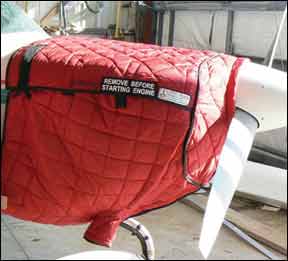
I’ve always enjoyed Tom Turner’s articles through the years. Aviation Safely is a slick magazine with very interesting articles, but I was particularly interested in your winter flying article in the January 2012 edition. My husband and I have a Tanis heater installed in our 1981 Cessna 182. It works great, especially since the plane is hangared, but the utility blankets are very awkward to secure and tie with rope. Where can we purchase such a nifty cowl cover as shown on page 17 of your article?
Read More »

Slip Survey

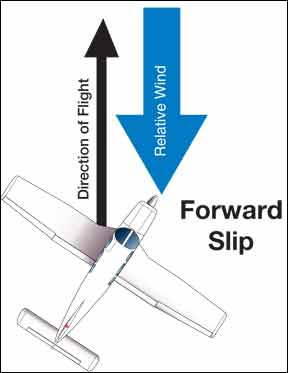
Though perhaps unintended, the results of Tom Turner’s survey of 100 CFIs concerning slips in the December 2011 issue (“Slips…Who Needs ‘Em?”) further reinforce my experience that instructors—and by extension, the pilots they train—generally lack a solid understanding of slip dynamics. For example, the listed advantages of slipping focused mostly on stock answers: losing altitude, canceling crosswind drift. One respondent commented about fire. But what about the utility of slips and slipping turns for split flaps, jammed ailerons or a jammed rudder? Or asymmetric thrust events in twins?

Read More »

Turning The Prop

I frequently glance at sidebars to gauge the depth/value of an article before reading the piece itself. As a round-engine pilot, I got a chuckle out of the first item in the “Don’ts” list (“Preflight Inspections,” November 2011). “Don’t rotate a propeller. Ever.” Really? If you are talking about a round engine and you want to destroy it, that advice works. If not, you might want to check for hydraulic lock by rotating the propeller enough to make sure all cylinders go through at least one compression stroke before you attempt a start.

Read More »

Revisionism

In April’s article, “Using Ground Effect,” you gave a reasonable explanation of it. In May, reader Dave Simpson wanted to correct your “error” and wrote, “Ground effect is almost exclusively caused by reduction of induced drag” and that reducing induced drag allows “us to fly with reduced angle of attack to maintain lift when flying close to the ground.” That’s nice, but what causes reduced induced drag when in ground effect? I think that Mr. Simpson has it backward and your article was correct.

Read More »

Open-Door Policy

I had almost the same experience (“Open-Door Policy,” Learning Experiences, August 2011) with my father. It was just after WWII, and I was 10 or 11. He had a Piper Cub. It was a nice, late summer evening and we had just taken off from the Whitman County Airport in Eastern Washington. The window was open and-why, I dont know-I reached up and pulled its quick release. It promptly fell off, but my dad had seen me do it and, as luck would have it, caught the door! He calmly reached around with it, handed it to me and said “Hang on to it; Ill land and well put it back on.” Which we did, on a hilltop in wheat stubble out in the middle of nowhere.

Read More »

Training Reform

While training certainly has to keep pace with modern avionics, driven by the use of GA airplanes as an alternative to airline travel but with the same expectations of mission completion (“Will Training Reform Help Reduce Fatals?” July 2011), the training industry must also keep in mind that these are still mechanical devices and not magic carpets driven from takeoff to landing by a fail-safe computer. Pilots must still master basic stick and rudder skills. In its July issue, your sister publication, Aviation Consumer, report 25 percent of Twin Comanche accidents involved runway loss of control during takeoff or landing. This is typical of those reports.

Read More »

Fictitious Forces

Februarys article, “Horizontal Lift,” is correct in stating the horizontal component of the lift vector turns the airplane. But as a long-time flight instructor and physics teacher I would prefer to explain the airplane turns because there is a net inward force acting on it. This is an unbalanced force, acting toward the center of the circle about which the plane is turning. And yes, the plane is accelerating even though the pilot may be maintaining a constant airspeed, his direction is changing and therefore the plane is accelerating.

Read More »

Mea Culpa

I was very pleased to read the “mea culpa” and clarification in your May issue to the effect that pilots of certified aircraft do not have to make their own independent calculation of the appropriate indicated VNE speed for each altitude within its operating altitude range. As you noted, FAR 23.1545(c) requires the manufacturer to make that information available to the pilot in the language you put in bold in the sidebar. You have a great magazine which is studied carefully by pilots interested in safety. So it is very important that misleading articles be corrected or clarified as you did in this instance. Congratulations to your readers who caught the error and to Aviation Safety for the correction.

Read More »

Physics 101

In Aprils “Using Ground Effect,” I think the author made an inaccurate and misleading statement concerning the aerodynamics of ground effect. The article wrongly asserts Newtons equal and opposite force has different effects when operating close to the ground as opposed to at altitude. He states, “At altitude, of course, theres no reaction between this downward forced air and the wing because theres nothing against which it can react.” If this were true, an airplane wing would not be able to fly when at altitude and only achieve lift when close to the ground.

Read More »

International Airspace

Reader David R. Wilkerson is incorrect when he says (Unicom, February 2011), “[A]irspace can have more that one designation, even under ICAO.” Firstly he mentions TRSA, which is not part of ICAO airspace designations. Instead, its a carryover from old U.S. airspace designations. Some TRSAs still exist today usually because traffic volumes are not sufficient to make them Class C airspace. Participation remains voluntary within them. Other airspace designations used in the U.S. are not ICAO designations. These include MOA, MTR and restricted areas.

Read More »
Pilot in aircraft
Sign-up for newsletters & special offers!

Get the latest stories & special offers delivered directly to your inbox.

SUBSCRIBE