Unicom

Last Word On Humidity?

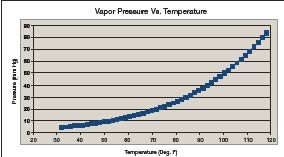
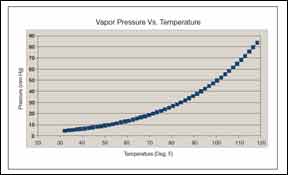
My previous remarks about density versus humidity were not about quantitative calculations of density. I merely presented a simple way of understanding why it is that on a humid day, other factors being equal, we need to anticipate a modest decrease in aircraft performance.

Read More »

Nosewheels

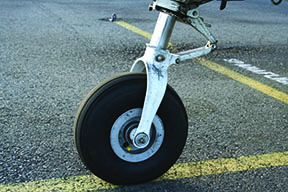
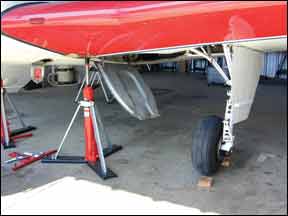
I have been flying since 1971 and I enjoy reading the material from your magazine. I usually do not chime in with a response to an article, but this time I have to make an exception.

Read More »

Pitch? Or Power?

I thoroughly enjoyed Dave Higdon’s article “Pitch? Or Power?” in the October issue. For years I argued vehemently against separating pitch and power.

Read More »

Paper? Or Plastic?

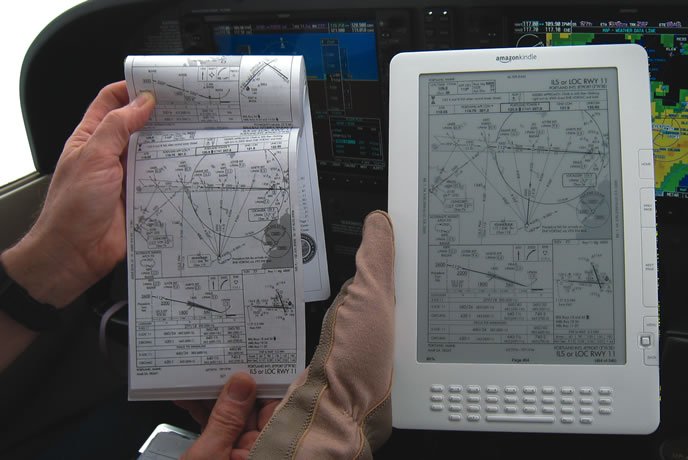
I cannot tell you how disturbing the attitude of the sidebar “Paper? Or Plastic?” accompanying September 2012’s article, “Seven IFR Prep Tips,” was to me. I have been flying for over 40 years, most of them professionally. Having earned my instrument rating in 1976, a paper chart was the only choice and it has served me well all of these years. It does not need toxic batteries and it always works. Yes, the new gadgets are shiny and slick and do all sorts of wonderful things. However, aviation is an expensive activity, and those electronic devices are not cheap. Subscription costs have a habit of accumulating and escalating. I have recently changed to the atlas style of paper low-level en route charts. That means no charts spread across the cockpit. You are correct in saying that IFR flying takes planning. This is true of any cross-country flying. Weather is the biggest variable in flight planning and takes up most of the planning stage and all of the actual flying. No, I do not have in-cockpit weather other than what I can see out the window. Under those conditions, all weather avoidance is strategic, with no tactical avoidance available.


Read More »

More On Ditching

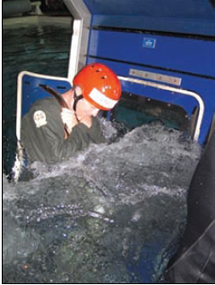
I’d like to add a couple of points to Jeff Schweitzer’s great article on ditching (“One If By Land, Two If By Water?” June 2012). It’s not just a single-engine issue, and water can actually be a preferable place for an emergency, since there’s little likelihood of fire or hard objects.

Read More »

The Briefers Are Busy

While Dave Higdon’s comment in his article “Blue-Sky Briefings” (March 2012) on “how and why any pilot would fly without a weather briefing defies logic” is self-evident, I would take issue with what I find to be a very counterproductive attitude on the part of numerous briefers over the years. I fly VFR frequently in the western U.S., and, unless it is severe clear, most briefings are prefaced by a standard admonition that “VFR is not recommended” (usually due to mountain obscuration) before the actual briefing has begun. When the briefing is completed and it seems clear to me that VFR is certainly reasonable and safe, I’m made to feel like an idiot when I proceed to file VFR after I’ve just been given a host of reasons not to do so

Read More »

Overwater

I am glad to see attention given to single-engine overwater flights (“One If By Land, Two If By Sea?” June 2012). As a frequent traveler to the Bahamas in my 1981 Beech Sierra, this is of particular interest to me.

Read More »

Old-Fashioned

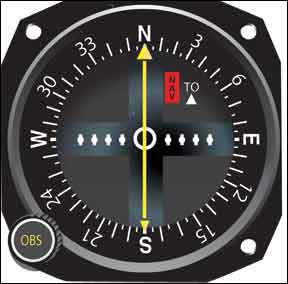
Your retrospective on the VOR (“The Day The Waypoints Died,” April 2012) was of interest in a reverse sort of way. I’m one of a few horse-and-buggy types who navigate by map-reading and compass alone, using VORs occasionally as a backup to map reading as opposed to a backup for GPS. I just returned from a VFR trip in a Cessna 182 from British Columbia to San Francisco, then to Palm Springs, Lake Havasu, Las Vegas and back through eastern Nevada and Idaho, using lines drawn on two WAC charts (CF 16 and CF 18) and a protractor for heading. Does anyone still fly to see the country as displayed on a sectional—lakes, rivers, mountains and valleys? I’ve always thought that the journey, not just the destination, was half the fun.

Read More »

Maintenance Matters

I read with interest your article “Trust, But Verify” (Accident Probe, March 2012) and the tragic story about the owner of the Cirrus to whom the airplane was released by the maintenance shop before its annual inspection had been completed. I took my Cessna 210 to the largest GA maintenance facility at one of the busiest airports in Southern California for an annual inspection. Three weeks later, the airplane was released to me, together with the logbooks showing that the annual inspection had been completed and the airplane had been returned to service. On the first flight after the annual inspection, I took off, flew for a few minutes and then lost all oil pressure. Fortunately, I was able to make a dead-stick landing with no serious injuries or damage to the airplane, except for an engine that had seized as the result of the loss of all of its oil.

Read More »

Engine Management

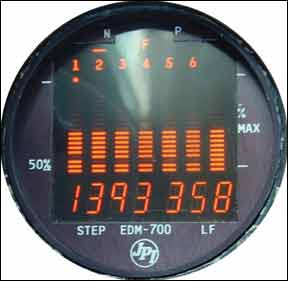
I am a huge fan of this publication and read it cover to cover every month. Thank you for this valuable contribution to aviation safety. The recent article by Amy Laboda (“Engine-Related,” February 2012) was excellent. I have a Cessna 182 with an engine monitor, but feel I need an education in using it properly. I do not find it in the manual provided. I recently lost a cylinder to a stuck exhaust valve but didn’t recognize the warning signs, if there were any. I know there are multiple models with different features, but a generic article on what to look for would be useful. Any help in this regard would be appreciated.

Read More »
Pilot in aircraft
Sign-up for newsletters & special offers!

Get the latest stories & special offers delivered directly to your inbox.

SUBSCRIBE