










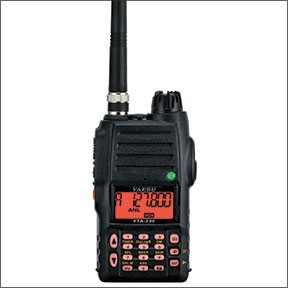
Nordo Revisited
I’m a 1500-hour, instrument-rated commercial pilot and have subscribed to your excellent publication since 1991. I recommend it as required reading. I write to comment on the October 2013 issue’s article, “Real-World Nordo.”

I’m a 1500-hour, instrument-rated commercial pilot and have subscribed to your excellent publication since 1991. I recommend it as required reading. I write to comment on the October 2013 issue’s article, “Real-World Nordo.”
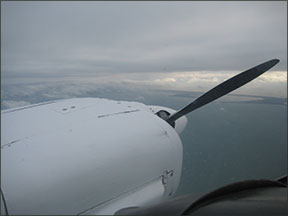
I think it should be every light twin pilot’s responsibility to be current and proficient enough to safely handle an engine failure no matter where they occur. On takeoff, this can only be done safely with enough runway for an accelerate-stop distance computed for load and density altitude. Furthermore, compute single-engine climb performance for the conditions at hand.
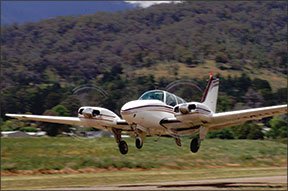
I usually find the material in your publication valuable. The articles are mostly concise and as far as I can tell accurate. I have read Jeb Burnside a number of times without feeling the need to comment. His most recent article, however, is an exception. “High, Hot Downwind,” August 2013’s Accident Probe, left me disturbed. In the last paragraph, he says there is evidence of a cavalier attitude on the part of the dead pilot exemplified by the pilot’s almost immediate gear retraction and a quick initiation of a turn before gaining altitude.
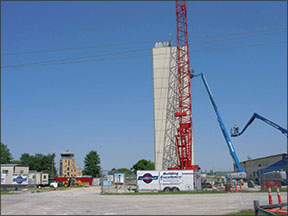
hile I don’t like to pay more for flying than I currently do, nor do I want see the U.S. kill general aviation through predatory user fees like in Europe and elsewhere, we need to be more open-minded about user fees. And I would like to provide a differing perspective to user fees, specifically regarding the FAA’s incremental ATC costs to support the Experimental Aircraft Association’s (EAA) AirVenture.A few years ago, the FAA paid millions of dollars for a great-looking control tower at OSH—was it really needed? Let’s agree it was a good investment of public funds to support the one week of AirVenture. Most of the year, the traffic count at OSH is very low and the old tower did just fine. And let’s consider that cost as part of ATC infrastructure costs. That is why I’m focusing on incremental costs, not total costs.
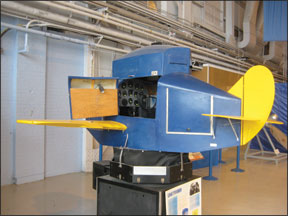
Opening the June 2013 issue, I was met with a lovely bit of nostalgia. The photo of the Link Trainer on page 5 could have been of the unit in which I took my first flight training, the summer of 1967. At the University of Illinois’ Institute of Aviation, I spent two hours in one of these before getting into an aircraft (a Champ 7FC). Over the summer of instruction, we went back to the Link again and again to hone skills. I had 11.2 hours total in the Link, and 30 hours total in the aircraft, when I got my license. I’m not sure how many hours of Link and aircraft time I had before I was allowed to fly visually. Of the 7 hours in the aircraft prior to solo, nearly half were behind polarized glasses and windscreen plastic.
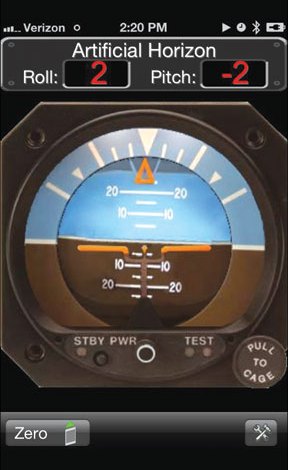
The June 2013 edition of Aviation Safety arrived today. In Unicom, there is a question about gadget legality. You correctly quote FAR 91.21 (technically, 14 CFR 91.21) as saying that PEDs are legal on all non-commercial VFR flights and that the pilot in command makes the determination in non-commercial IFR operations. But more than one federal agency makes rules about electronics. The Federal Communication Commission makes a very clear statement prohibiting cellular telephone use aboard airborne aircraft. 47 CFR 22.925 states: “Cellular telephones installed in or carried aboard airplanes, balloons or any other type of aircraft must not be operated while such aircraft are airborne (not touching the ground).
Great article on cockpit gadgets (“Gadget Flight Rules,” February 2013) and I especially like “GFR”— I think that might stick. Could you please share the details of the mounting device you’re using for the iPad in the photo on page 19?Thanks!
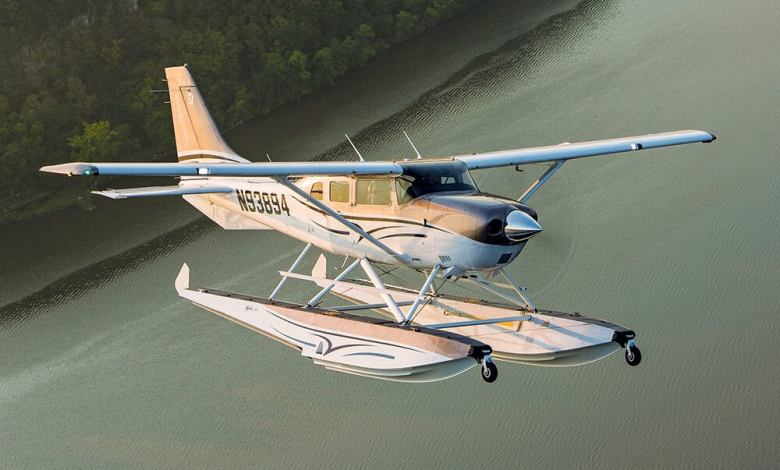
On February, 23, 2013, we had an airport open house at the Venice, Fla., Municipal Airport. It was a beautiful day, with a great turnout of people and airplanes, and a mix of aircraft ranging from LSAs to jets. Some attendees got more than they bargained for, however. That occurred when a pilotless Piper Malibu roared out of its parking spot, across a taxiway and into a ditch. The aircraft and its owner were not taking part in the open house, though many people including pilots and visitors got to watch. It was fortunate the airplane hit the ditch since the opportunities to cause not only breathtaking damage to other aircraft but also loss of life were huge.
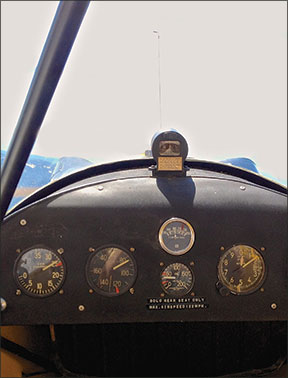
Having learned to fly in a J3 Cub, I enjoyed March’s article on no-radio flying, “No Electrics? No Problem!” I did not know then how blessed I was. I also had an excellent pre-solo learning experience.
I enjoyed reading Dr. Michael Banner’s article, “Riding The Storm Out,” in January’s issue. It was highly enlightening and well-written. I will now adopt the VB speed after reading the article. However, I would like to ask what pilots should do in those cases when turbulence is unanticipated. For example, what is a pilot to do when all of a sudden he/she enters an area of clear air turbulence or sudden severe disturbances in the surrounding air mass? I understand that convention has it that clear air turbulence occurs most commonly at higher altitudes. Nevertheless, are there some pearls of wisdom for us if we are travelling at cruise speeds and suddenly encounter increased G forces? Also, after flying through turbulence, how do we know if we have possibly endangered the plane’s physical structure (for future flights), but not quite to the point of “breaking it”?

Get the latest stories & special offers delivered directly to your inbox.
SUBSCRIBE