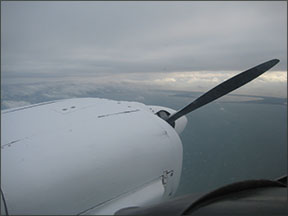
I think it should be every light twin pilot’s responsibility to be current and proficient enough to safely handle an engine failure no matter where they occur. On takeoff, this can only be done safely with enough runway for an accelerate-stop distance computed for load and density altitude. Furthermore, compute single-engine climb performance for the conditions at hand.
Light twin pilots must be proficient in handling engine failures, including pre-flight calculations for accelerate-stop distance and single-engine climb performance under current conditions.
Proper single-engine flight technique (e.g., feathered propeller, clean configuration, slight bank toward operating engine) is crucial for improving climb rate and reducing VMC after an engine failure.
Effective risk management requires evaluating specific aircraft performance for prevailing conditions before flight, as generic decision rules may not account for varying factors like density altitude or temperature.
Additional pilot tips include carefully handling self-serve fuel nozzles to prevent tank damage and understanding that FCC cell phone restrictions in aircraft specifically apply to the 800 MHz cellular band.
I think it should be every light twin pilot’s responsibility to be current and proficient enough to safely handle an engine failure no matter where they occur. On takeoff, this can only be done safely with enough runway for an accelerate-stop distance computed for load and density altitude. Furthermore, compute single-engine climb performance for the conditions at hand.
288
CREATE A FREE ACCOUNT
Sign up to keep reading
Create a free account to continue. Already a member? Sign in below.