Unicom

Living With Nexrad

I finally got around to catching up on back issues, and came across “Soft Spot” (Editors Log, January 2009), having spent June through September flying from Alaska to and around the lower 48. I relied heavily on my Garmin 496. On August 24, 2008, I had a short leg from Springfield, Mo., to Marion County, Ark. Nexrad showed a line of cells marching across the middle of my flight path. Between the weather briefing and the animated radar, I knew these were moving to the southwest, and I knew the speed of their movement. Space between the cells looked pretty good, so I anticipated I could find a decent path through. Given the technologys delays in displaying radar data on the 496, I chose a path just on the back (upwind) side of one of the displayed cells. I figured it would have moved on from my path and I could get through the gap before the next one arrived. This worked exactly as expected, putting me essentially in the clear area between the two. This meant my flight path headed southeast, instead of almost directly south, from Springfield. The diversion added very little to the flight time, but made the VFR flight very comfortable.

Read More »

Ditching Depth

We never fly over water in our single engine Saratoga. However, on a flight from Key West to Fort Lauderdale several years ago, Flight Service advised me that everyone flies over the Florida Gulf because it is never more than three to five feet deep. So we did fly direct. Is he correct? If so, why did Amy Labodas plane sink (“A Different Ditching,” March 2009)?

Read More »

Cold Weather, Hot Mags

I enjoyed Decembers article, “Cold-Weather Ops.” I wanted to pass on a suggestion for virtually all pilots flying piston engine airplanes. The article states, “When you first get to the airplane, put the ignition key on the panel so people can see it….” The article goes on: “Checking to see if the engine is warm often involves rocking the propeller.” The reason given is that “with the key out of the ignition and readily visible, you are reasonably assured that the mags are not hot.” Wrong and possibly dead wrong! I was fortunate to be trained by a high-time 18,000-plus-hour flight instructor. He ingrained in me the importance of doing a mag check during shutdown, prior to pulling the mixture: Turn off one mag and then the other to see if the RPM dropped as it should. Although a mag check should be done during the pre-takeoff run-up, there is no guarantee that a wire might not come loose during flight. If that were to happen, the mags would still be hot and rocking the propeller could be catastrophic!

Read More »

Not Ded Yet

Must saw your reply to my e-mail about dead reckoning on the back page of the November issue. Avoiding controversy is one thing, but getting it right is another. What I got out of the etymological research regarding dead reckoning was that before WWII there was no controversy over this term. With only a few abbreviations in ships logs to the contrary, “dead” was widely used in marine navigation (since the 17th century) and in the early days of aviation. The researcher claims to have examined hundreds of old books to come to this conclusion. It was only after the attack of the amateur folk etymologists starting in the 1940s that it even became an issue, and the battle has raged since. (And Barry Schiff has fallen prey to this, too.) The crux of the matter is, of course, the meaning of the word “dead.” The meaning that I had always heard was that “dead” in this case meant “precise,” “exact,” “accurate,” etc., and had nothing to do with death or stillness. (Dead as in “dead right,” or the “dead of winter” (middle or center of), or “dead on,” or “dead ahead,” or the original character of “Deadeye Dick” (the accurate marksman, not Dick Cheney). It is interesting to note that the rest of the English speaking world has not yet come to the height of this controversy. It seems only to be in America that we have fallen for the folk etymology. Consequently, when we navigate without reference to landmarks (or logs in the water) we are navigating by “Precise Calculation” for which many of us use the ancient term, “Dead Reckoning.” Thanks for listening! Shall we tackle the downwind turn canard next?

Read More »

Going It Alone

I enjoyed Decembers article on tips to manage the workload of single pilot IFR flight (“Six SPIFR Tips”). One thing I think is often overlooked on this topic is the distinction between single-pilot and solo-pilot IFR operations. I use my plane for business and Angel Flight operations in the northeast, which presents the opportunity and need for a considerable number of LIFR flights into Class B airports. On most occasions (obviously excepting Angel Flights), I fly not only SPIFR, but solo operations. My observation is, from a safety standpoint, I would rather fly solo in demanding conditions than with non-IFR rated passengers. Why? Simply because inexperienced passengers can be distracting and unpredictable. When flying a SPIFR approach, one needs to find time for a passenger briefing amidst all the other approach chores. And even then, Ive come to expect the unexpected: passengers waving a hand in my face after breaking out to point out an airliner on parallel final as Im establishing my crosswind crab angle, reading back my landing clearance and keeping my speed below VLE.

Read More »

For Keeps

Its impossible to develop suggested techniques covering all airplanes and all pilots at all times. By stating “hold the airplane neutral,” we meant in a level attitude, whether on or slightly above the runway. The key here is accelerating to the desired airspeed as quickly as possible in the least distance. Some airplanes do this best on the runway. Your 182 isnt one of them, so accelerating in ground effect is probably the best solution. As always, of course, practice various techniques with an experienced instructor to determine which works best for you and your airplane.

Read More »

Potpourri

A few comments regarding reader feedback (“Unicom”) in your September issue: Jim Pipers explanation of O2 partial pressure changing “only slightly” with density altitude is a little misleading. The partial pressure of oxygen is exactly 21 percent of the density altitude air pressure. For example, the absolute air pressure at 10,000-feet density altitude is 21.145 in. Hg; the partial pressure of oxygen is 4.44 in., or 74 percent of PPO2 at sea level. A 26 percent decrease in available oxygen has my attention. Morris Holmes comments are more troubling. In another life, when I regularly flew in a MOA, we were not looking for LBFs (little bitty, etc.). We were working hard learning new combat maneuvers or practicing old ones, at high Gs and often at high Mach numbers. If you were to fly a PC-12 through a hot MOA like that every day at 12,000 to 18,000 feet, you would be dead within a year. You would have had the right to be there, but you would still be dead.

Read More »

Aviation Questions And Comments

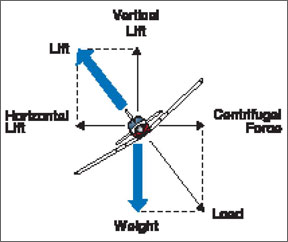
Referring to your September 2008 article, “Batteries Not Required”-a nice review of cross-country basics-I have a question and two comments. The question refers to the flight log: Why is “1.2” in the logs Time box when the block time was 1+35 or 1.6? One comment involves missing a possible teaching opportunity by not discussing MOAs, the planned route and altitude, and the floor of the Lemoore C MOA. The other comment involves the sidebar, “Lifts Horizontal Component,” which discusses steep turns and includes a quote from an FAA publication on the need to create additional lift in a turn. You then add your conclusion that “Increasing angle of attack, of course, increases the stall speed.” This is not the message I would want my students to gain from your article. Your statement is not true in the commonly practiced stall entries from 1G straight and level flight. There the increasing angle of attack doesnt “increase” stall speed. In truth, even in the situation under discussion-stalls while turning-it is the increased load factor that increases the stall speed. It can be argued that increasing angle of attack does often increase load factor (pull ups, turns, etc.) but wouldnt it be preferable to instead conclude that stall speed increases as a result of increasing load factor? That is a true statement always.

Read More »

Handling Heat

Excellent article by Tom Turner in Julys issue (“Hot And High How-To”) but a couple of things come to mind. First, in the sidebar Cruise Considerations, you infer that a high density altitude decreases the available amount of oxygen for breathing. This is technically true, but the difference is so small it is hardly worth considering. Obviously, if one feels the need for it oxygen should be taken regardless of altitude, density or otherwise. A pulse oximeter is a huge help here, and the basic guideline is to maintain a saturation level that is within 10 percent of sea level saturation to avoid judgment impairment. Dr. Jack Hastings, former author of the American Bonanza Societys Aeromedical column, and a past president of the group, was kind enough to research and answer my question concerning density altitude and human saturation. Briefly stated, he said that oxygen saturation in the human body is dependant upon the “partial pressure” of oxygen in the atmosphere to create the osmotic exchange in the lungs. That partial pressure is only slightly affected by density altitude, and therefore insignificant.

Read More »

Witching Days

I had just finished reading the latest edition and was mentally commenting on how professional a journal you put to publication. I have been particularly impressed with how hard you try to get the message of keeping sharp on ones skills-especially during the changing seasons when one may have laid off flying and have become “rusty” in both his skills and knowledge. Shortly thereafter, I began browsing the Internet for news updates and, to my amazement, began seeing headlines of GA accidents amounting to 13 souls lost over the June 28-29 weekend: Five were lost in Santa Rosa, N.M., aboard a Cessna 206), four north of Birmingham, Ala., in a Beech Travel Air, and four more near Las Vegas, Nev., in a Cherokee Six. I couldnt help but wonder “why?” Why so many in so short a time? Were these pilots not on top of their game? Did some need a refresher session with a seasoned CFI?

Read More »
Pilot in aircraft
Sign-up for newsletters & special offers!

Get the latest stories & special offers delivered directly to your inbox.

SUBSCRIBE