













Register

Handling Heat

Excellent article by Tom Turner in Julys issue ("Hot And High How-To") but a couple of things come to mind. First, in the sidebar Cruise Considerations, you infer that a high density altitude decreases the available amount of oxygen for breathing. This is technically true, but the difference is so small it is hardly worth considering. Obviously, if one feels the need for it oxygen should be taken regardless of altitude, density or otherwise. A pulse oximeter is a huge help here, and the basic guideline is to maintain a saturation level that is within 10 percent of sea level saturation to avoid judgment impairment. Dr. Jack Hastings, former author of the American Bonanza Societys Aeromedical column, and a past president of the group, was kind enough to research and answer my question concerning density altitude and human saturation. Briefly stated, he said that oxygen saturation in the human body is dependant upon the "partial pressure" of oxygen in the atmosphere to create the osmotic exchange in the lungs. That partial pressure is only slightly affected by density altitude, and therefore insignificant.

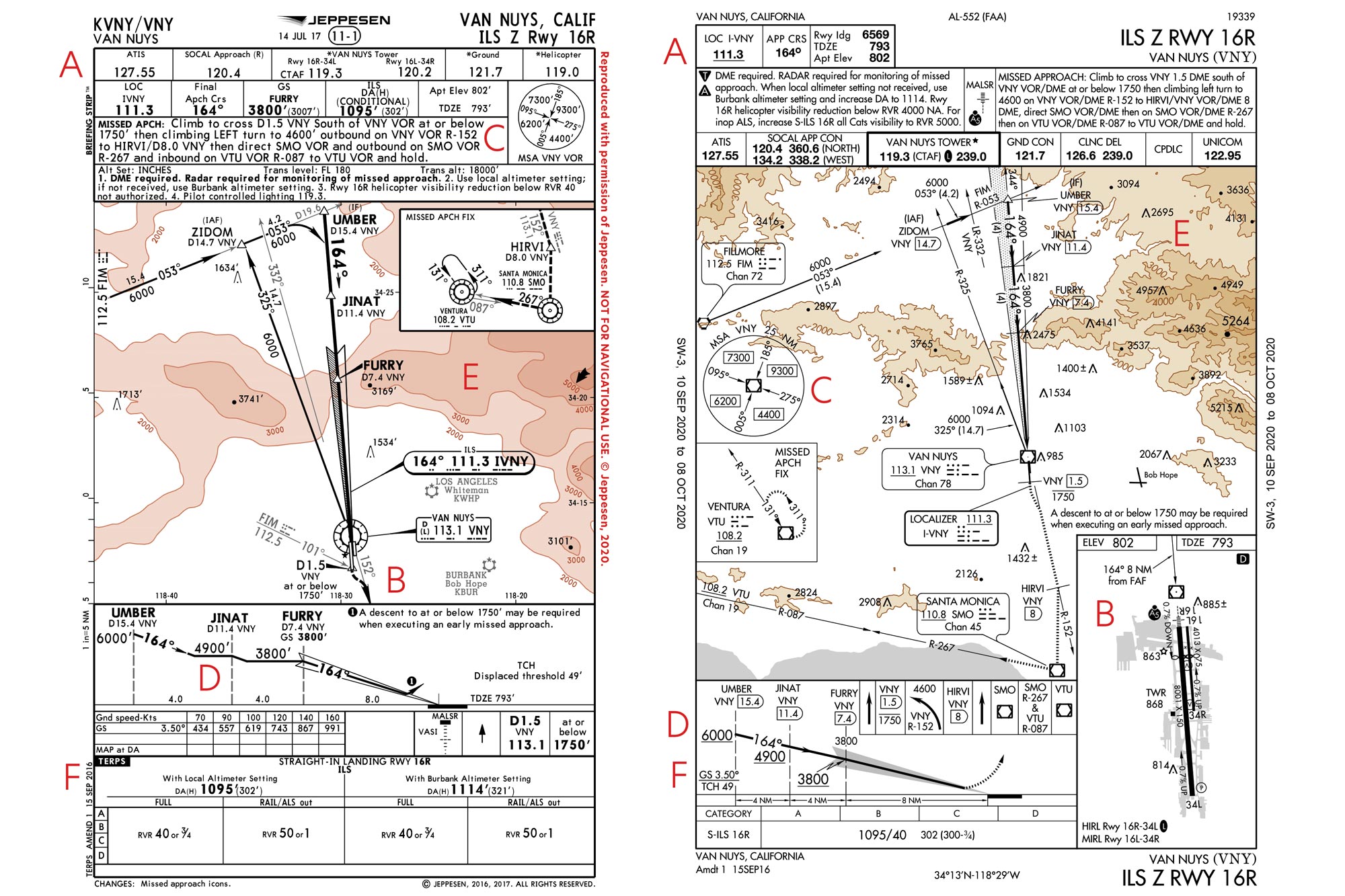
A Jeppesen approach plate on the left and the US government's plate on the right. Courtesy Jeppesen
Gemini Sparkle

Key Takeaways:

  • The article clarifies that density altitude has an insignificant effect on oxygen saturation for breathing, which is primarily dependent on oxygen's partial pressure, and suggests richer EGT settings (1200-1300 F) for optimal engine cooling during takeoff in hot and high conditions.
  • "Plan continuation bias" is highlighted as a significant cognitive issue affecting critical decision-making in aviation and other professional fields like engineering project management, where individuals may press on with plans despite contrary evidence.
  • A previous article's stance on Military Operations Areas (MOAs) is challenged, asserting civilian aircraft's legal right to operate there, with the update confirming a military F-16 pilot was reprimanded for an improper intercept of civilian aircraft.
See a mistake? Contact us.

Excellent article by Tom Turner in Julys issue (“Hot And High How-To”) but a couple of things come to mind. First, in the sidebar Cruise Considerations, you infer that a high density altitude decreases the available amount of oxygen for breathing. This is technically true, but the difference is so small it is hardly worth considering.

Obviously, if one feels the need for it oxygen should be taken regardless of altitude, density or otherwise. A pulse oximeter is a huge help here, and the basic

Aviation News

288

Ready to Sell Your Aircraft?

List your airplane on AircraftForSale.com and reach qualified buyers.

List Your Aircraft
AircraftForSale Logo | FLYING Logo
Pilot in aircraft
Sign-up for newsletters & special offers!

Get the latest stories & special offers delivered directly to your inbox.

SUBSCRIBE

