Unicom

The Spin Im In

I just read your article on different LSA engines (“LSA Engine Safety,” May 2008). An aircraft mechanic friend of mine has experimented with different lubricants for the two-strokes such as the Rotax and similar. He finds the life expectancy of these engines is almost directly related to the oil type. He notes those using the [IMGCAP(1)]cheaper oils find lower life expectancy and he rebuilds a lot of these engines. Thus an article on tribology, the science and technology of interacting surfaces in relative motion, might be worthwhile. Another friend has had several deadstick landings in the last two or three years in aircraft with these two-strokes. The engines failed mainly because of seizing from loss of lubrication. These failures are not part of the stats because most of these failures occurred over a field and successful landings were accomplished. Another friend tore down an O-200 after running it on 100LL for about 600 hours and found the valve guides were all split. Thus, how one deals with fuels and lubricants has a direct impact on aircraft safety.
Read More »

Thunderbumbers

As a committed subscriber I believe you have the best “bible” of information anywhere. Anyone who doesnt take advantage of Aviation Safety is cheating themselves. I have saved every issue for years. Regarding Aprils article on convective weather (On A Mission: Thunderstorms) I acknowledge the 20-mile principle in avoiding thunderstorms. However, after 35 years of Florida summers, flying in both VFR and IFR conditions, it is seldom that thunderstorms allow 20-mile avoidance, especially in the afternoon and evening. In non-turbo light twins and singles that cant climb high enough to “see” whats ahead, getting under the bases and using cockpit Nexrad provides a better choice of airports to run to when things look grim and a better visual picture to dodge mature cell activity.

Read More »

Correcting Readbacks

In response to Marchs Unicom “Correcting Readbacks,” in which you ask readers whether and how they would correct a readback error heard on the frequency, I believe I would give it a few seconds to see if the error was picked up and then say something like “Cessna 12345, readback incorrect” and then drop it. That would alert the pilot and controller something was amiss without confusing the issue. As you say, each situation is different and may require different response. If the frequency was really busy, you could use the ubiquitous cellphone and call the appropriate agency. Just a thought. Keep up the good work! If I had to receive only one aviation magazine, Aviation Safety would be the one.

Read More »

More Hypoxic Stupidity

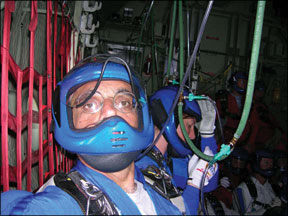
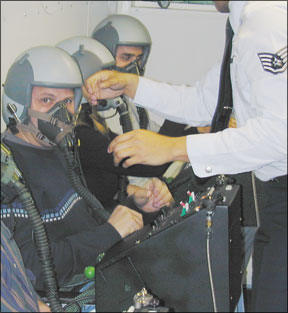
A few years ago, as a relatively low-time private pilot with a brand-new instrument rating, flying a normally aspirated piston single in northern New Mexico, I decided that before I venture into the mountains on my own, I should take a mountain flying course offered by a local CFII. The three-day program was extraordinarily valuable, particularly to a low-time lowlander like myself. One thing we did made a huge impression on me; Id like to pass it along under the general heading of hypoxic stupidity. After taking off from Telluride, we headed back to Taos “over the ridge,” taking us to approximately 14,000 feet. About the time we actually got that high, the instructor told me to shed the oxygen, start the panel timer and give him reciprocals to headings hed give me. Normally, I can do that in my sleep, and for the first 1 minutes, I complied.

Read More »

Little Voices

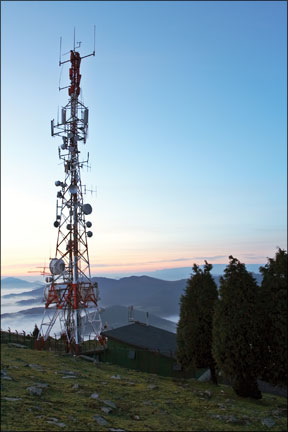
I wanted to write in response to the recent Learning Experience entry Ground Reference (September 2007) and the idea of ducking under a cloud deck on a flight between Buffalo, N.Y., and New York City. I dont doubt the author knows the route like the back of his hand, so flying it under a low overcast may be safe. Ive flown the route from Buffalo to Utica, N.Y.; the moisture pumped in from the lakes was something else. I didnt want to be high and on top, but I cant recall why. Despite my best efforts, the flight ended well thanks to Buffalo approach. They took me up and over the tops all the way to UCA where I made a simple, safe approach. The ceiling there was at minimums but it was the smoothest air Ive ever flown in, and some of the safest. The writer mentioned hills, but no reference to antennas as he flew. Hills in general are favored by radio stations and cell phone companies, and most often harbor a danger I learned to call “Porcupine Ridge.” Every radio station wants to be there.

Read More »

Hypoxic Stupidity

I applaud Paul Bertorelli for promoting hypoxia awareness (“My Payne Stuart Moment,” December). Mr. Bertorelli clearly prefers the “reduced breathing method” of hypoxia awareness training over the traditional altitude chamber ride, apparently because the hypoxic symptoms come on slower. My observation is that recognition of the symptoms is the critical thing, not how long they take to become recognizable. Also, using the term “denial” for failing to take appropriate action after the onset of hypoxia is to my mind non-productive. Mr. Bertorelli uses a better term himself when he describes a “state of hypoxic stupidity.”

Read More »

1:60

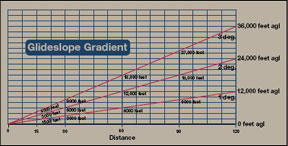
Mr. Meragers “Letting Down Easy” (September 2007) helped remind me again of that quickly needed and often used relationship in aviation: If you travel one degree on a circle and you travel one mile, the circle has a radius of 60 miles. In other words, your distance traveled and the distance from the center of the circle has the ratio of 1:60. Remember how we used this to determine the distance we are from the NDB? Flying abeam the station, we travel one degree and note the time. The time required to fly to the NDB will be 60 times the time required to fly the single degree. Knowing our airspeed, we can compute distance from the station or, knowing the distance, our airspeed. This same “magic” ratio applies in descents, too. If you are 6000 feet (one nautical mile) from the airport, and you are 100 feet agl, you will be on a one-degree glide path (1:60). A three-degree flight path would be 300 feet agl at one nautical mile.

Read More »

Its Not A VASI, Dummy

The sidebar discussion “Safer Descents” (September 2007) called the four horizontal lights in the pictures a “VASI” (Visual Approach Slope Indictor). In fact, what was photographed was a “PAPI” (Precision Approach Path Indicator). A VASI consists of two or three pairs of lights arranged in a vertical fashion. As its name suggests, a PAPI provides a more precise indication to the pilot of his aircrafts position relative to the set glidepath.

Read More »

Stepping Out

Okay, okay, I know theres no such thing as “the step” (“Cruise Dynamics,” August). Or is there? Our Glasair One + One Half (half Glasair I, half Glasair II) has a strange cruise characteristic. Other Glasair FT pilots have observed this on their planes too, so were not alone. At cruise, at altitude, you can fly in level flight at one of two airspeeds, separated by only five knots and obtained by an almost imperceptible pitch change. My partner always flies at the slower of the two speeds because the airplane stops accelerating there as she levels from climb. Whereas I will set the nose to the known level flight attitude and fly at the higher speed. The only way she can get herself to fly five knots faster is to overshoot her final altitude by 100 ft and “dive” to get past the first level flight cruise speed, just like the proverbial step technique.

Read More »

In Recovery

Rich Stowells articles on unusual attitude recoveries (Unusual Recoveries, June 2007; Unusual Recoveries II, July 2007) should be required reading for all CFIs. His analysis of the different spin recovery techniques was very well done. I have been instructing in aviation for 30+ years, both civilian and military, and it always amazes me how very experienced aviators know little about the dynamics of spins. One of my USAF students in T-37s had over 4000 hours and held both an ATP and CFII. He did very well until we got to spins. He didnt understand them and was terrified of them. It wasnt until the end of his T-37 training that he was finally able to master a spin recovery. The key was stopping what caused the spin in the first place: the yaw and stall. Thats what the NASA standard recovery does.

Read More »
Pilot in aircraft
Sign-up for newsletters & special offers!

Get the latest stories & special offers delivered directly to your inbox.

SUBSCRIBE