Unicom

Calibrating Myths

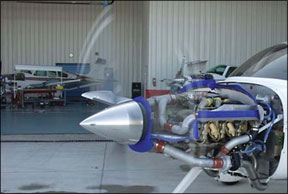
I notice the article “Top Five Engine Myths” (March 2007) has not generated any controversy. Please let me provide a remedy. I am a retired performance engineer for Pratt & Whitney, having worked on experimental jet engines. After a second career as an A&P/IA with a flight school and Part 135 charter operation, Im now retired again. Im also an Instrument-rated Commercial pilot.

Read More »

Fuelish Flying

Its strange (or not so strange) that I usually hear or read about some sort of related accident happening after I read an article in your magazine. The apparent cause of those accidents are almost exactly “the gotchas” discussed in the article. With that in mind, “Fuel Gotchas” (April 2007) hit very close to home. Our local flying club just lost a Cessna 172, apparently because the pilot ran out of fuel. A 40-knot headwind resulted in a four-plus hour flight from El Monte, Calif., to Stockton, Calif. This route usually takes less then 2.5 hours. Of course, the Skyhawk only had 38 usable gallons. Do the math.

Read More »

The Engine-Out IAP

Overall, I think “Engine-Out IFR Approach” (April) provides some good advice on the topic. Additionally, its a good mental exercise to go through on the ground prior to a flight-sort of a what-if scenario. However, there are a couple of things that I was surprised were not discussed and which would make the approach even easier.

Read More »

Myths And More

Walter Atkinsons “Top Five Engine Myths” (March 2007) described all of the habits Ive been observing for years and the life-extending advantages in abandoning at least one of them. Before I become a non-believer, however, I would like to poke at one of the arguments.

Read More »

The Brazilian Midair

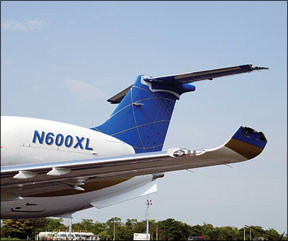
Is a new subscriber, I am very satisfied with the magazine. However, the article, “The Brazilian Midair” (January 2007), contains one statement I consider arguable. Brazilian ATCs pre-takeoff clearance to the Legacy is quoted as, “N600XL, Clear, 370, Manaus,” followed by the statement that “Any pilot receiving this clearance while still on the ground would have been justified in believing their flight had been cleared to climb and maintain FL370 all the way to its destination.” Thats where I disagree.

Read More »

Behaving Badly

Three articles in your December issue pushed my buttons and prompted me to write. “…none of your business…” is a great commentary. Although I have never been outright verbally abused by a controller, I have many times received short, unhelpful responses from controllers when I asked why I was being climbed and descended all over the airspace.

Read More »

Taking Exception

take exception with the statement made in the sidebar “Oil-Changing Tips” in Octobers article, “Is Oil Analysis Worth It?” You state, “If you are the owner, changing your own aircraft oil and filter is completely legal with the FAA.” Not so!The authorization for this action is in FAR 43.3(g), which states: “The holder of a pilot certificate issued under Part 61 may perform preventative maintenance on any aircraft owned or operated by that pilot which…

Read More »

Ditching Class

I thoroughly enjoyed Bryan Websters recent ditching article (“Top Five Ditching Myths,” September 2006). I flew single-engine planes from Aruba in the 50s and 60s. When leaving on any overwater flight, I would take the time to climb to 10,000 feet or so while circling, before heading out over the water. Of course, this minimized the likelihood of having to ditch after an engine failure. …

Read More »

Safer Trainers

In the August 2006 article, “Five Ways to Better NPAs,” the author made an error by confusing straight-in approaches with straight-in landings. In the highlighted box called “Defining the Non-Precision Approach” the writer defined a straight-in approach as “a procedure where the final approach course is aligned to within 15 degrees of the runway heading….” This is incorrect; a straight-in approach is one in which there is no procedure turn. …

Read More »

Unicom: 09/06

Safer Trainers
I enjoyed your coverage of the new training airplanes safety features (Building A Safer Trainer, August 2006), but I am afraid the future for all three of these choices is very limited. It seems likely they will be replaced with the much less expensive S-LSA airplanes now coming onto the market.

It is not clear to me which of the S-LSA aircraft will prove to be best for primary training. Whichever ones come out best, the lower purchase price and operating costs for these planes are certain to make them the popular choice over any airplanes certified under Part 23.

Paul Mulwitz
Camas, Wash.


The market for light sport aircraft (LSAs) is jus…

Read More »
Pilot in aircraft
Sign-up for newsletters & special offers!

Get the latest stories & special offers delivered directly to your inbox.

SUBSCRIBE