










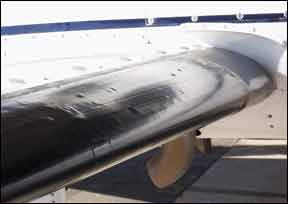
Icing Gear
Each anti- or de-icing technology has benefits and drawbacks. If you’re flying with boots, use them early and often.

Each anti- or de-icing technology has benefits and drawbacks. If you’re flying with boots, use them early and often.

The reports, preliminary and final, too often contain this fateful 10-word sentence: “The pilot did not obtain a weather briefing before departing.” It runs right up there with the tried-and-failed “continued VFR into IMC.” How and why any pilot would fly without a weather briefing almost defies logic these days. Accurate weather information has never before been more plentiful or accessible. The FAA even recognizes a pilot can fulfill all legal requirements of a pre-flight briefing without dialing a Flight Service Station on 1-800-Wx-Brief. Thanks to the wonders of technology, even flight-critical information—Notams, TFRs and the like—can be accessed independently.
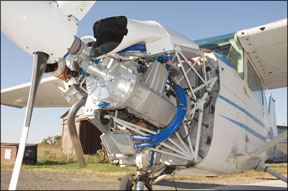
Are you getting the most performance from your airplane? The fact is a considerable amount of unused performance gets overlooked by the average owner/operator. Both performance and range can be improved through common operational techniques, performing regular maintenance procedures and careful planning. Most of this “hidden performance” can be gained back from wasted fuel and increases in the airplanes useful range. In turn, you can reduce the annual operating costs. And with average aviation fuel prices nudging $6 a gallon in the U.S., who wouldnt want to enhance their airplanes efficiency? Thankfully, its not as complicated as it may seem. You just need to make the machinery work the way it was designed to work. One method is to ensure the airplane is as mechanically sound as it can be. Then, well look at improving its basic aerodynamics, followed by some smarter flight planning. Finally, well look at ways to save fuel while airborne.
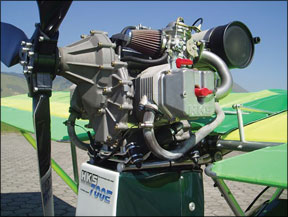
Aircraft engines these days come in a lot more flavors and configurations than they used to, thanks largely to the advent of two forms of alternative aviation: most recently, the light sport aircraft (LSA) market and, much earlier, the 1990s surge in experimental/amateur kit-built aircraft. Where some of the more-popular experimental designs and several legacy-S-LSA models employ familiar powerplants, the majority fly with engines from BRP-Rotax in Austria, HKS in Japan and Jabiru in Australia. Who are these companies and whats their track record in making flying-machine engines? How do they compare to the “traditional,” FAA-certified offerings from Continental and Lycoming? Who sets the standards? And whats their safety record? These newer engines can spur concerns among ardent fans of the familiar, tried-and-true air-cooled flat aircraft engines from Textron Lycoming and Teledyne Continental Motors. Often, it seems, those concerns grow out of unfamiliarity. The differences in care and feeding and in systems fuels debates about their reliability and, in turn, safety of the newer engines.
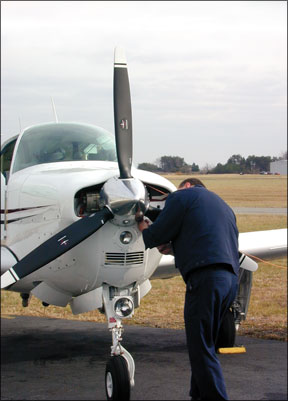
My grandmother loved an adage. “Never put off until tomorrow what you can do today.” “A stitch in time saves nine.” “If you dont find time to do it now, when will you find time to do it later?” All fine words to live by, but my grandmother never paid for an aircrafts annual inspection. With the base price of a straight-leg single-engine airplane annual at some shops hovering around $1500-thats the price if nothing is actually wrong with the airplane-some of the adages heard around the shop are “It flew in, itll fly out.” “You said it was fine that way last year: why is this year different?” and the most common, “I cant afford that-just sign it off now and well get it on the next annual.” To fix or not. What will it cost now versus the price later? Does it affect airworthiness? What does the FAA say about it? Whats the worst that can happen?
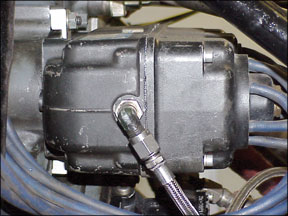
Those of us flying aircraft with reciprocating engines should be performing what is commonly referred to as a mag check, or magneto check, prior to every flight. During the engine run-up, we turn the ignition key to the Left position to disengage or ground the right magneto, noting the rpm change, before turning the key back to Both. We then repeat this process by turning the key to Right to ground the left magneto. In addition to noting the rpm drop, if any, we also should be examining other instrument indications-fuel flow, if so equipped-and especially, the EGT values presented on a multi-probe engine monitor if one is installed.
The modern piston-engine airplane is really a technological marvel. For not that much more in fuel than a large SUV, one can operate an airplane in and through most weather conditions, over long distances and with navigational accuracy unheard of just a few years ago. At our fingertips are all kinds of aeronautical data and weather graphics. We have airborne sensors alerting us to thunderstorms and nearby airplanes. With the right equipment, we can send e-mail or make telephone calls, all from the comfort of our left seat.
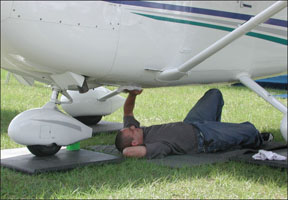
Just because it was fine when you landed doesnt mean your airplane is ready to fly again. Checking a few items now can mean an easy pre-flight next time.
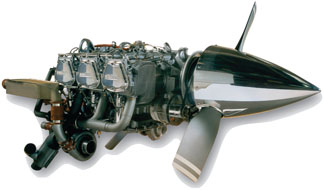
How you fly the first few hours after installing new cylinders can mean the difference between a reliable engine and another top-end job.
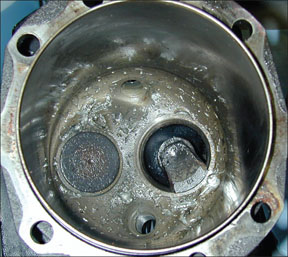
Why engines fail is easy to understand. Getting more pilots to do their part in preventing failures is the hard part.

Get the latest stories & special offers delivered directly to your inbox.
SUBSCRIBE