Aviation Safety

Getting Down

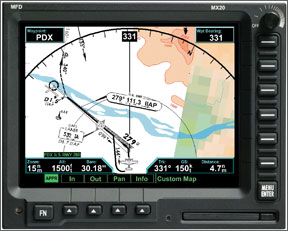
After some 3000 hours of flight time-not including military flight experience-gathered over a 50-year period, I recently had occasion to fly into the Portland (Ore.) International Airport (PDX) several times over a short time span. The Mooney 201 I bought new in 1989 was my chosen aircraft. At the time, PDX was undergoing major runway renovations, with Runways 10L/28R closed for all operations and 21 closed to landings. On an earlier flight, I was directed onto the right downwind for Runway 3 and to start my descent from 2000 feet after crossing over the tower. Even with idle power, full flaps and gear down, it takes a little while to slow down a Mooney and descend. On that flight, I extended my downwind past the end of the runway before turning base. All worked well.
Read More »

Engines And Accessories

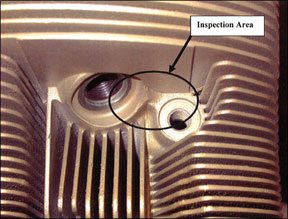
On July 14, 2009, Teledyne Continental Motors (TSM) published the latest revision to its Mandatory Service Bulletin MSB09-1B. In it, TCM states it has determined a tool used to manufacture new TCM-brand cylinders “created an area of reduced thickness” between the upper spark plug bore and the fuel injector/primer nozzle bore “that may result in a crack after prolonged operation.” The MSB includes a list of affected engine models and engine/cylinder serial numbers dating back to August 2006 that may be affected.

Read More »

Inadvertent IFR

There are times when every pilot wishes. Wishes the weather was better; wishes the airplane was newer; wishes it was better equipped and wishes that he hadnt promised passengers they would be home on time. And thats usually the way it begins. Wishful thinking for weather-involved flight, in marginal VFR conditions. Fog, rain and low ceilings are important causes of weather-related general aviation accidents. These accidents can be further broken down; inadequate preflight planning and preparation make up a large percentage. Trying to fly VFR in IFR weather is another. Major risks are those pilots who operate beyond their ability, beyond their IFR currency and beyond their experience levels in IFR.

Read More »

Why Cant We Make Cylinders?

Every so often, it becomes apparent the general aviation industry suffers from some kind of systemic problem affecting its underlying infrastructure. A few years ago, first Continental and then Lycoming discovered issues with new crankshafts. A few years before that, it was Cessnas failure to properly prepare its new airplanes for a different paint technology, which resulted in widespread corrosion until they were stripped and properly repainted. Now, its cylinders. And its nothing new, either. In 2004, some 2000 cylinders manufactured by Engine Components, Inc. (ECi), were the target of an airworthiness directive (AD). Another AD, effective September 9, 2009, targets an estimated 8000 Superior Air Parts, Inc. (SAP) cylinders installed on big-bore Continental engines. And in July, Continental was forced to revise a recent service bulletin adding more cylinders to a recall program it established in February. To its credit, Continental is replacing cylinders subject to the new service bulletin at its expense. (Full disclosure: My airplane is equipped with SAP cylinders subject to the new AD.)

Read More »

Questions And Comments

If youre flying along and reduce power while maintaining the established pitch attitude, what happens to airspeed? It starts decreasing, right? To maintain the desired airspeed, wed want to pitch the nose down, wouldnt we? Depending on how stable the airplane is in its pitch axis, it may naturally pitch down, without pilot intervention; if its unstable, its pitch may not change. This behavior depends on how the airplane is designed and loaded. All the Cirrus AFM/POH is saying is that a good short-field technique requires touching down at the minimum airspeed. To achieve that objective, coordinating power reductions and pitch attitude is necessary for optimum performance. As it is in any airplane weve ever flown, including the Cirrus models. That said, some airplanes require a different technique. For example, airplanes like the Seabee or Lake amphibians-with their single pusher engines mounted on a pylon-respond opposite to other singles when power is adjusted. Instead of the nose wanting to drop when power is reduced, in these airplanes it may want to rise.

Read More »

July 1, 2009, Oshkosh, Wis., Remos G-3/6000

The instructor pilot reported the fuel quantity tube indicated tank of fuel, or about 11 gallons, during the preflight inspection. After approximately 30 minutes of flight, the engine stopped. The pilot executed a forced landing to a field, and the airplane nosed over during the landing roll. The fuel system was empty, and the engine ran when fuel was provided. The fuel quantity tube was “discolored” and there was a crease in the tube at the halfway point, making it appear there was tank of fuel.

Read More »

July 1, 2009, Santa Teresa, N.M., Cessna T210L Turbo Centurion

At 0820 Mountain time, the airplane was substantially damaged when its left main gear collapsed during landing. The private pilot was not injured. Visual conditions prevailed. The pilot reported lowering the landing gear handle and heard the gear cycle down but could not recall if he saw green, gear-down indicator lights. While in the landing flare, he heard someone call “gear, gear, gear” on the radio, but it was too late for him to go around. The left main gear collapsed on touchdown and the airplane exited the side of the runway.

Read More »

July 2, 2009, Steamboat Springs, Colo., Mooney M20

Prior to departing on a cross country, the private pilot remained in the traffic pattern for a touch-and-go landing. The airplane crossed 30 feet above the runway “numbers” at 67 to 68 knots. The pilot reduced engine power for the landing and the airplane stalled at approximately 7 to 10 feet above the runway. After experiencing a hard landing, the airplane bounced back into the air and the pilot elected to perform a go-around.

Read More »

July 3, 2009, Albuquerque, N.M., Cessna 441 Conquest II

The airplane was substantially damaged at approximately 0540 following an intentional gear-up landing. Night visual conditions prevailed. The airline transport pilot and two crew members were not injured. While on final approach, the landing gear switch was selected “down” and the landing gear circuit breaker popped. The pilot initiated the “Emergency Landing Gear Would Not Extend Normally” checklist, but the landing gear did not extend. Despite troubleshooting the malfunction, the gear was confirmed in the retracted position by another pilot utilizing night vision goggles during a low approach.

Read More »

July 4, 2009, Tehachapi, Calif., Aero Vodochody L-29

At about 1329 Pacific time, the airplane was destroyed when it impacted terrain while maneuvering. The commercial pilot and pilot-rated passenger were killed. Visual conditions prevailed. Witnesses reported three jet airplanes overflew the area on a westerly heading at about 500 feet agl. The accident airplane was observed trailing low and to the right of the other two airplanes, and was slightly oscillating to the left and right.

Read More »
Pilot in aircraft
Sign-up for newsletters & special offers!

Get the latest stories & special offers delivered directly to your inbox.

SUBSCRIBE